 |
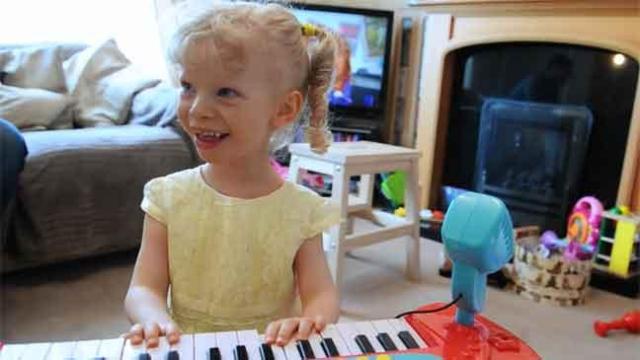
Lauren TaylorThree-year-old British woman with Williams syndrome
Country:
 Great Britain Great Britain |
A Friendly Little Girl with Williams Syndrome
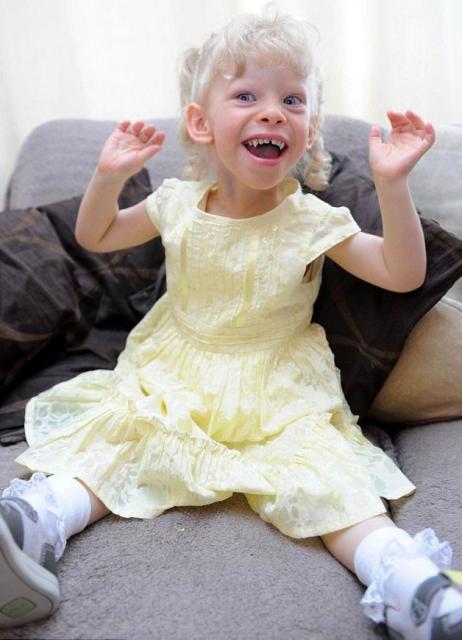
Biography of Lauren TaylorCatherine Taylor, a 37-year-old woman from Barnsley, doesn't have to worry about her daughter being too shy or timid. Her three-year-old daughter, Lauren, suffers from a condition that makes her extremely sociable and friendly.
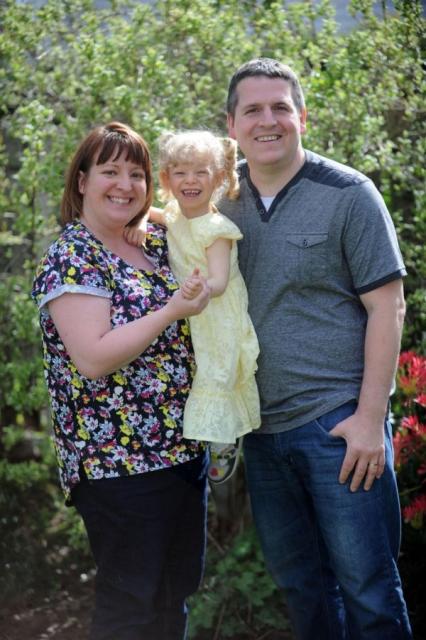
Lauren has Williams Syndrome, which, besides its unpleasant aspects, has an unusual "side effect." The little girl is never afraid to interact with strangers and is ready to communicate with anyone she meets around the clock. Catherine says that a trip to the supermarket with her daughter can take several hours because Lauren must greet everyone she encounters along the way. Due to her rare and unusual condition, Lauren is also developmentally delayed compared to her peers, approximately by one year. Catherine explains, "Lauren can exchange a few words and say 'hello' to anyone, all because of her illness, which deprives her of any fear of strangers." She continues, "It's nice to know that we will never have to worry about her shyness. But she wants to talk to everyone, so she stops at every step. People always greet her in return. They say she looks like a little doll."
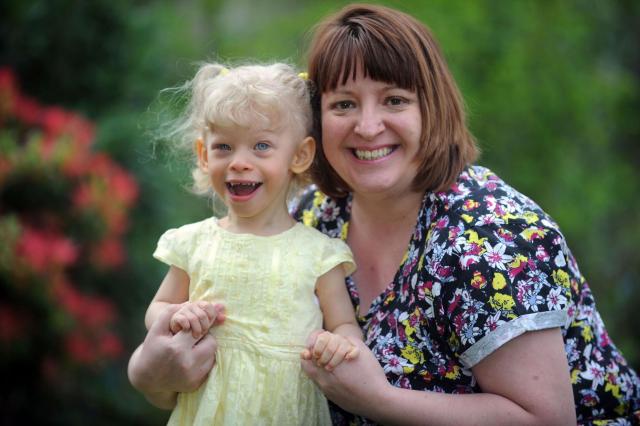
Catherine and her husband, 38-year-old Paul, learned that their baby was smaller than usual when they had an ultrasound at twenty weeks of pregnancy. The couple spent the remaining time anxiously worrying about their firstborn's health. Catherine says, "At 36 weeks, I developed symptoms of preeclampsia, so I had an emergency caesarean section. Lauren was born weighing 1.7 kg. She was immediately taken to the neonatal intensive care unit, where she stayed for 22 days."
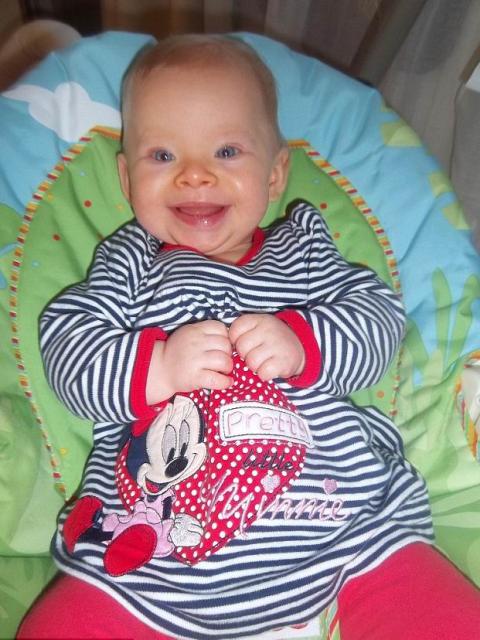
When Lauren turned four months old, she underwent genetic tests that revealed she had Williams Syndrome—a rare chromosomal rearrangement. It occurs in about one in 10,000 to 20,000 newborns. Estimates suggest that there are around 20,000 children with Williams Syndrome in the UK and 20,000 to 30,000 in the US. The condition causes cardiovascular problems, developmental delays, speech and motor difficulties, hypersensitivity to noise, and sleep disturbances. However, along with this unfortunate combination of symptoms, Lauren gained an additional trait—extra friendliness. Catherine says, "For us, every little progress is a huge achievement. Recently, Taylor learned to sing 'Twinkle Twinkle Little Star' in her own way, and it was a proud moment for our family."

Lauren is very popular among her peers. All the children want to help her and accompany her when she walks on the playground. The little girl is extremely sensitive to noise. Any sudden sound, such as an engine starting or even a sneeze, startles Lauren. She can experience anxiety attacks and endure real stress.
The parents of the girl have met other families whose children also suffer from Williams Syndrome through a charitable foundation that supports people with this condition. The foundation helps families affected by this rare disorder and provides the latest information on medical research.
While Lauren's future remains uncertain, her parents find comfort in communicating with other people and enjoy meeting other families at picnics and celebrations. Lauren's father, Paul, is preparing to participate in the "Great Yorkshire Run" charity race in September. All the proceeds will go to the Williams Syndrome Support Foundation.
Usually, children with Williams Syndrome, also known as "elfin face" syndrome, require expensive and long-term medical care. As they grow up, they face challenges with orientation, struggle with numbers, and have deficits in visual-spatial skills. Simple tasks become a real struggle for them.
Almost all people with Williams Syndrome are very sweet and polite. They have an amazing ability to make people like them with their expressive language skills. They are talkative, love to imitate, and have a relatively large vocabulary.
Typically, children with this syndrome are obedient, friendly, and good-natured. They are not afraid of strangers and show a greater interest in interacting with adults than with their peers.


