 |
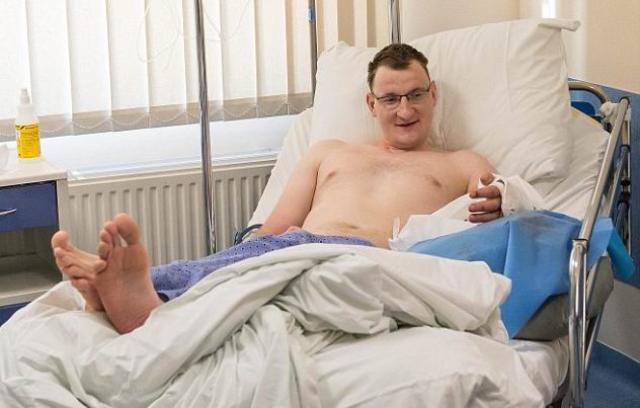
PiotrMan Born Without Arm Receives Successful Donor Arm Transplant
Date of Birth: 01.01.1984
|
Content:
- World's First Successful Adult Arm Transplant
- The Groundbreaking Surgery
- Newfound Mobility
- A Medical Breakthrough
- Hope for the Future
- A Second Chance
- The Intricate Process of Transplantation
World's First Successful Adult Arm Transplant
A Man Born Without a HandPiotr, a 32-year-old man, was born without a left arm. Despite facing challenges throughout his life, Piotr became the first person in the world to undergo a successful hand transplant from a deceased donor.
The Groundbreaking Surgery
A team of surgeons at the University Hospital in Wroclaw, Poland, led by Dr. Adam Domanasiewicz, performed the 13-hour operation. They attached the amputated hand from a donor, securing the bones with titanium plates and screws. Muscles, tendons, and blood vessels were then meticulously connected.
Newfound Mobility
Currently, Piotr can only move the fingers of his left hand, but doctors are optimistic about his recovery. As blood flow continues to improve, mobility in the transplanted hand is expected to increase.
A Medical Breakthrough
Dr. Domanasiewicz declared, "This is the first-ever upper limb transplant in an adult with a congenital defect. It's a significant breakthrough in neurophysiology and transplantation, as it was previously believed that detailed transplants were impossible with this type of birth defect."
Hope for the Future
The surgery opens up new possibilities for hundreds of thousands of people worldwide who were born with limb differences. Adam stated that before Piotr's case, such patients could only hope for prosthetics.
A Second Chance
Previous limb transplants have been performed on newborn Siamese twins in Indonesia and Canada, and on patients who lost limbs through amputation. Globally, around 80 hand transplants have been performed, giving hope for a second chance.
The Intricate Process of Transplantation
Hand transplants involve a complex procedure that typically lasts between six and 12 hours. Surgeons remove the donor limb, while a separate team prepares the recipient. They use titanium plates and screws to stabilize the bones, just as they would in a typical bone fracture.
Key tendons and muscles are then connected, followed by the blood vessels. Once blood flow is established, remaining nerves, tendons, and muscles are attached, allowing the hand to gradually regain sensation over time.


