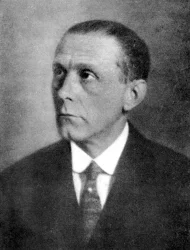
Abbot Suger
Suger of Saint-Denis rose from humble beginnings to become one of the most influential churchmen in twelfth-century France. As abbot of the royal monastery of Saint-Denis, he transformed its church with a daring new architectural program that helped shape early Gothic building. He was also a close adviser to two kings, a historian of royal power, and regent of France while Louis VII was away on the Second Crusade.
From monastery school to abbacy
Suger was born around 1081, probably to a family connected with the region around Saint-Denis. As a boy, he entered the abbey school at Saint-Denis-de-l’Estrée, where one of his classmates was the future Louis VI. Their early association developed into a lasting political partnership.
Suger spent time in the administration of the abbey’s lands and served in diplomatic roles before being elected abbot of Saint-Denis in 1122. He worked to improve the monastery’s management, restore its finances, and strengthen its standing as a royal foundation. Saint-Denis was closely linked to the French monarchy through the cult of Saint Denis and the memory of earlier kings, giving Suger’s leadership both religious and political importance.
A new church at Saint-Denis
The abbey church had become too small for its growing community and the ceremonies associated with the royal monastery. Suger began a rebuilding program that produced a new western façade and an expanded eastern end. The west front was consecrated in 1140, and the new choir was dedicated in 1144.
The reconstruction brought together sculpted portals, ribbed vaults, pointed arches, and stained-glass windows in a design that allowed more light into the church. These features were not the work of Suger alone, and they drew on developments already under way in the region. Yet the project at Saint-Denis became one of the formative monuments of early Gothic architecture. Suger described the building program in his own writings, presenting its beauty and light as part of the monastery’s spiritual purpose.
The project was also a demonstration of royal and ecclesiastical prestige. Saint-Denis served as a symbolic center of the French kingdom, and rebuilding its church strengthened its role as a place where religious devotion and monarchy met.
Adviser and regent
Suger remained a trusted adviser to Louis VI and Louis VII. He wrote a biography of Louis VI, known as the Life of Louis the Fat, and an account of his own administration as abbot. These works offer important evidence about the monarchy and the church in twelfth-century France, though they also reflect Suger’s own political perspective.
When Louis VII departed on the Second Crusade in 1147, he appointed Suger regent. The abbot managed the kingdom for roughly two years, handling royal administration while the king was abroad. Suger initially opposed the expedition, concerned that the absence of the king could leave France vulnerable to powerful nobles. His government helped maintain stability until Louis returned.
Suger’s power did not rest on military command. He relied on his administrative experience, close ties to the crown, and the authority of Saint-Denis. His career illustrates how a medieval abbot could shape both the spiritual life of a monastery and the political affairs of a kingdom.
Legacy
Suger died in 1151. His building program at Saint-Denis became a landmark in the emergence of Gothic architecture, while his writings remain valuable sources for the history of the French monarchy and the abbey itself. Later generations sometimes credited him with inventing Gothic style single-handedly, but the movement developed through the work of many patrons, builders, and communities.
His lasting influence came from the way he joined these roles. He was a reforming abbot, a royal adviser, a writer, and a patron whose church expressed both religious devotion and political authority.