Abdu Jalol
- Legendary Potter of 19th Century Rishtan
- Masters of Faience and Mentors to the Valley
- Architectural Masterpiece: The Palace of Urda
- Embellishments and Artistic Techniques
- Recognition and Legacy
- Preserved Legacy
Legendary Potter of 19th Century Rishtan
In the late 18th century, the renowned potter Abdu Jaloil, also known as Usto Jalil, emerged as a master craftsman in Rishtan, a city in the vibrant heart of the Kokand Khanate. Together with his brother, Abdu Jamil (Usto Kuri), they embarked on a remarkable journey to revive the ancient technique of producing faience, known as "chinni."
Masters of Faience and Mentors to the Valley
Through their travels to distant lands like Kashgar and Iran, the brothers acquired the knowledge and expertise to restore this lost art in Rishtan. They generously imparted their skills to their gifted pupil, Abdullo Kulol (Kali Abdullo), who became a master potter in his own right. Abdu Jaloil, revered as "Usto" (Teacher), became a beacon of knowledge and inspiration for countless potters throughout the Fergana Valley.
Architectural Masterpiece: The Palace of Urda
The architectural marvel of the 19th century, the Palace of Urda, standing testament to the artistry of Rishtan's potters. Built from 1863 to 1870 under the patronage of Kokand ruler Hudoyar Khan, the palace featured intricate ceramic embellishments. The brothers Abdu Jaloil and Abdu Jamil, along with Abdullo Kulol, led a team of skilled craftsmen in the meticulous execution of the palace's facade.
Embellishments and Artistic Techniques
The ceramic decor on the facade of the palace reflects the mastery of Rishtan potters. They employed a wide array of techniques, including intricate mosaics of glazed bricks in various shapes, such as oblong, square, diamond, and star. The facade is further adorned with ten calligraphic inscriptions in Kufic script, their white bricks contrasting elegantly against a rich ultramarine background. The vibrant palette and detailed vegetal designs on the glazed tiles add to the overall aesthetic appeal.
Recognition and Legacy
Hudoyar Khan held the work of Abdu Jaloil, Abdu Jamil, and Abdullo Kulol in the highest esteem. He not only rewarded them materially but also commissioned a Kufic inscription on the palace's south facade that reads: "The artist whose artistry rivals that of Behzad has adorned the stone slabs." This inscription immortalized them alongside the palace and Hudoyar Khan in the annals of Central Asian history.
Preserved Legacy
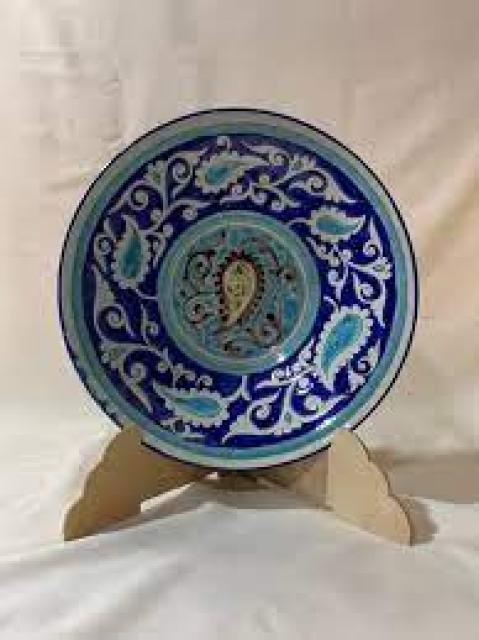
Today, Abdu Jaloil's (Usto Jalil) creations can be admired in the collection of the State Museum of Arts of Uzbekistan, ensuring that his exceptional craftsmanship continues to inspire generations of artists and art enthusiasts alike.