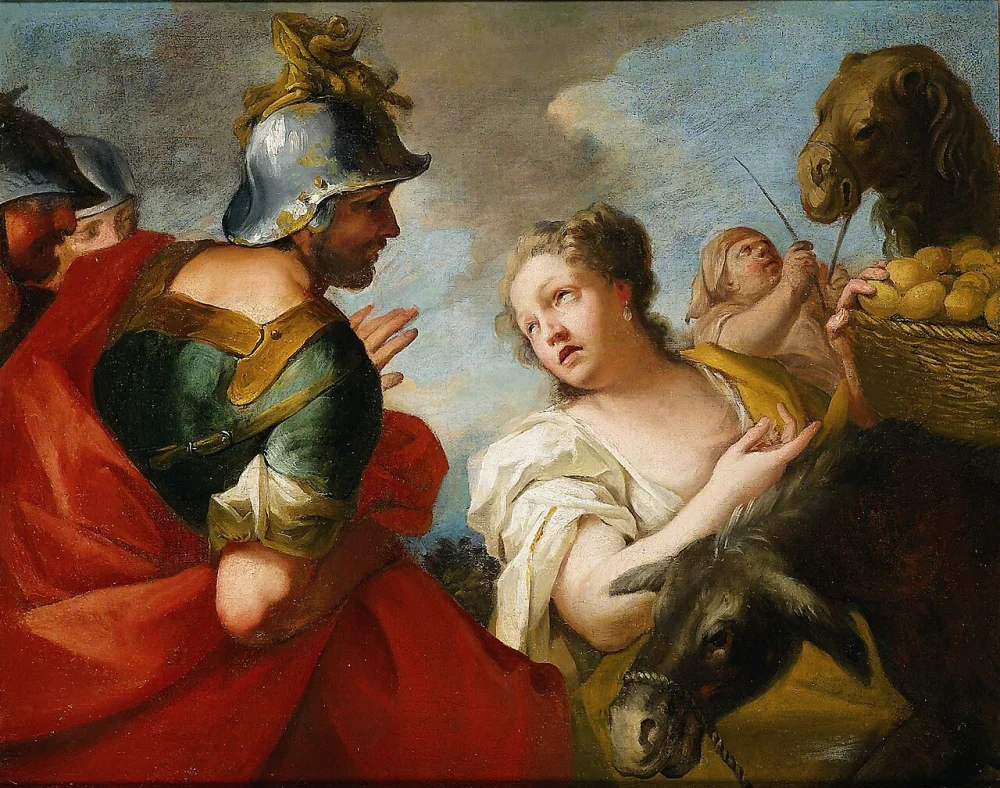
Abigail
In the biblical story of David’s rise, Abigail steps into a crisis that could have become a massacre. Her husband had insulted the future king, and David was riding out in anger with armed men. Abigail met him with provisions and a carefully argued appeal that persuaded him to turn back. The narrative remembers her not only as beautiful, but as a woman whose judgment changed the course of events.
Abigail and Nabal
The account in 1 Samuel describes Abigail as the wife of Nabal, a wealthy landowner in Carmel in Judah. The text presents Nabal as harsh and foolish, while Abigail is portrayed as intelligent and discerning. During sheep-shearing season, David and his followers were in the wilderness near Nabal’s flocks. David’s men had protected the shepherds, and David sent messengers asking Nabal for food in return.
Nabal rejected the request and insulted David. When one of the servants warned Abigail that David’s men had guarded the flock and that danger was now approaching, she acted quickly. Without waiting for her husband’s permission, she gathered a substantial supply of bread, wine, meat, grain, and fruit, loaded it onto donkeys, and went out to meet David.
The Meeting with David
Abigail’s encounter with David is the central episode of her story. She bowed before him, accepted responsibility for the offense, and asked him to spare her household. Her appeal went beyond the immediate danger: she reminded David that vengeance could bring bloodguilt and trouble later, and spoke of his future as a ruler protected by God. Her speech combines diplomacy with moral persuasion, recognizing both David’s power and the kind of king he might become.
David praised her for preventing him from taking revenge with his own hands. He accepted the food and dismissed his men. The scene stands out in the biblical narrative because Abigail’s discernment restrains a powerful warrior at the moment he is about to retaliate.
Marriage to David
After returning home, Abigail found Nabal feasting. She waited until the next morning to tell him what had happened. The account says he suffered a sudden collapse and died about ten days later. David then sent messengers asking Abigail to become his wife, and she accepted.
Abigail accompanied David during the period when he lived as a fugitive from King Saul. At one point, she was captured with David’s other wife Ahinoam when Amalekites raided Ziklag; David later rescued them. After David became king at Hebron, Abigail bore him a son. Second Samuel calls the boy Chileab, while First Chronicles gives the name Daniel. The biblical texts provide little further information about either mother or son.
Legacy in the Biblical Narrative
Abigail’s story is preserved chiefly in 1 Samuel 25, with brief references to her marriage and son in later books. It gives her an unusually active role in a political and military crisis: she reads the danger, organizes resources, speaks directly to David, and persuades him to choose restraint. The narrative presents her intervention as a turning point, saving her household and helping David avoid an act that could have damaged his claim to rule.
Because the surviving information comes from biblical narratives, details about Abigail’s wider life remain unknown. Within those accounts, however, she emerges as one of the most memorable figures in David’s early story—a negotiator whose courage and clear judgment mattered as much as the force surrounding her.