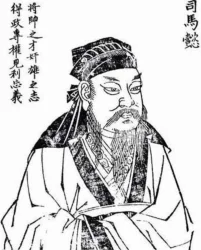
Abul Kalam Azad
- Early Life and Scholarship
- Congress Leadership and the Independence Struggle
- First Education Minister of Independent India
- Personal Life and Later Years
- Legacy
A scholar who became a freedom leader, Abul Kalam Azad joined Islamic learning, Urdu journalism, and a vision of a united India. His newspaper Al-Hilal challenged British rule and urged Muslims to take part in the independence movement. He later led the Indian National Congress through the final years of the struggle, opposed Partition, and became independent India’s first education minister, helping shape the institutions that would guide the country’s schools, universities, and arts.
Early Life and Scholarship
Azad was born Muhiyuddin Ahmad in Mecca on 11 November 1888. His father, Khairuddin, was an Indian Muslim scholar, and his mother came from an Arab family. In 1898 the family returned to India and settled in Calcutta. Azad received a traditional education at home, studying Arabic, Persian, theology, philosophy, and literature. He also read widely in modern political thought and developed a reputation for his learning while still young.
As a teenager he adopted “Azad,” meaning “free,” as a pen name. His writing combined the vocabulary of Islamic scholarship with a growing commitment to Indian self-rule. In 1912 he launched Al-Hilal, an Urdu weekly from Calcutta. The paper criticized British policy and argued that Indian Muslims should join the wider anti-colonial movement. It attracted a large readership, but the colonial government suppressed it in 1914 under press restrictions. Azad started another paper, Al-Balagh, which was also shut down; authorities interned him in Ranchi until 1920.
Congress Leadership and the Independence Struggle
After his release, Azad joined the Khilafat and Non-Cooperation movements and became an important ally of Mahatma Gandhi. He served as president of the Indian National Congress in 1923, becoming its youngest president at the time. He was elected to the post again in 1940 and remained president through the war years, when many other Congress leaders were imprisoned.
In 1942 he supported the Quit India resolution and was arrested with other senior Congress leaders. He remained imprisoned at Ahmednagar Fort until 1945. After his release he took part in negotiations with the British government, including the Cabinet Mission discussions of 1946.
Azad strongly opposed dividing India along religious lines. He argued for a united country with substantial provincial autonomy and shared central responsibilities. The growing communal violence and political deadlock ultimately led to Partition in 1947. Azad accepted the outcome as a political reality, but continued to regard the division as a grave mistake. His position reflected a conviction that Muslims could retain a strong religious and cultural identity while sharing a common Indian nationality.
First Education Minister of Independent India
After independence, Azad became India’s first minister of education, serving from 1947 until his death in 1958. He argued that education should be available to all children and promoted universal elementary schooling, adult education, women’s education, and scientific and technical training.
Under his leadership, the government established new institutions for higher learning and research. These included the Indian Institute of Technology at Kharagpur, opened in 1951, and the University Grants Commission, formally inaugurated in 1953 and given statutory status in 1956. He also supported bodies for literature, visual art, music, and drama, as well as the Indian Council for Cultural Relations. The institutions grew through the work of many people, but Azad’s ministry gave them a national framework and lasting public purpose.
He continued writing throughout his career. His works included a Qur’anic commentary and the reflective essays later collected as Ghubar-e-Khatir. His memoir, India Wins Freedom, offered his account of the final political negotiations and the decisions that led to Partition.
Personal Life and Later Years
Azad was married to Zulaikha Begum, who supported him during years of political pressure and imprisonment. Their only son died young, and Zulaikha died in 1943 while Azad was still in prison. He rarely made his private grief the focus of public life, but his family losses formed part of the difficult personal cost of his long political struggle.
Azad died in Delhi on 22 February 1958, aged sixty-nine. In 1992 he was posthumously awarded the Bharat Ratna, India’s highest civilian honor. His birthday is observed as National Education Day in recognition of his work in education.
Legacy
Azad’s career bridged religious scholarship, journalism, anti-colonial politics, and public education. He helped draw Muslim readers into the independence movement, argued passionately for a plural and united India, and then devoted his post-independence years to building cultural and educational institutions. His legacy endures in the schools, universities, academies, and public ideals he helped establish.