Achaemenes
Achaemenes is remembered as the namesake ancestor of the Achaemenid dynasty, the Persian royal house that later ruled one of the largest empires of the ancient world. Yet unlike Cyrus the Great or Darius I, he is not securely documented in contemporary records. What can be said about him comes chiefly from genealogies recorded generations later, leaving historians unsure whether he was a historical ruler, a distant ancestor, or a dynastic figure shaped by royal tradition.
An Ancestor in the Royal Genealogy
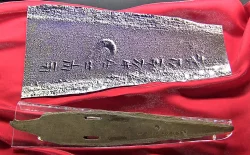
The Old Persian form of the name is Haxāmaniš; Greek writers rendered it as Achaemenes. In the inscription at Behistun, Darius I traced his family line through Teispes to Achaemenes. Herodotus also gave a genealogy connecting Achaemenes with the Persian kings. These accounts made the name central to the dynasty’s identity: “Achaemenid” means a descendant or member of the house associated with Achaemenes.
The evidence does not establish that Achaemenes personally ruled an empire or even a clearly defined kingdom. The first firm records of the Achaemenid rulers come much later, with Cyrus I and his successors. No contemporary inscription or document securely identifies Achaemenes as a seventh-century monarch.
History and Dynastic Tradition
Some reconstructions place Achaemenes in the seventh century BCE and suggest that he may have led Persians in Parsumash, a small polity that was under the influence of the Medes. This remains a hypothesis rather than a confirmed episode in his life. The available evidence cannot tell us where he lived, what territory he controlled, or whether he held a royal title.
The genealogy also served a political purpose. Darius came to power in 522 BCE, after a succession crisis, and his inscription emphasized an inherited line connecting him to earlier rulers. Naming Achaemenes as the dynasty’s ancestor presented the new king as part of an established royal house. Later Greek accounts preserved and elaborated similar traditions, but they were written long after the supposed founder’s lifetime.
Historians therefore distinguish between the Achaemenid dynasty as a real ruling family and the details of its earliest genealogy. The empire and its later kings are firmly historical; the life of the man whose name the dynasty carried is not.
A Name Larger Than a Biography
Achaemenes occupies an unusual place in ancient history: he is important because later rulers claimed descent from him, not because surviving sources describe his actions. He may have been a real ancestor whose life left no independent record, or a founding figure fashioned to explain the family’s origins. The evidence does not settle the question.
His enduring significance lies in the way dynasties build legitimacy. By presenting themselves as descendants of a common founder, the Achaemenid kings linked their rule to a shared past. Achaemenes thus remains at the threshold of Persian imperial history, a name preserved by powerful successors while the person behind it remains largely unknown.