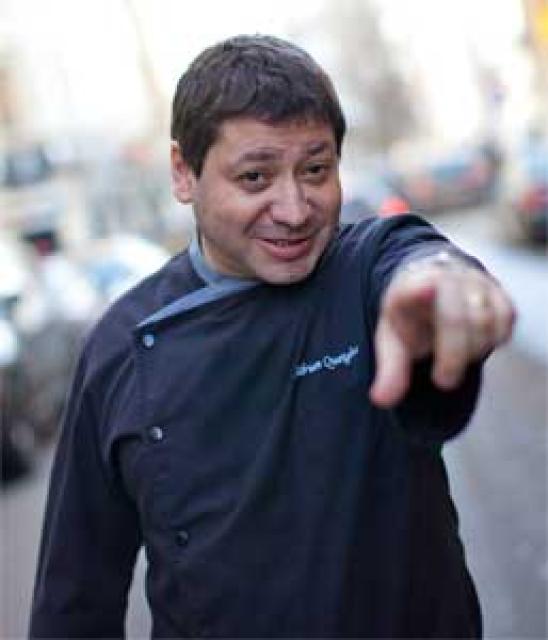
Adrian Quetglas
 Spain
Spain- Adrian Ketglas: A Biography
- Early Life and Culinary Roots
- Culinary Journey and Career
- The Moscow Culinary Scene and Success
- Culinary Philosophy and Approach
- Challenges and Creativity
Adrian Ketglas: A Biography
Adrian Ketglas, a renowned chef in Russia, has consistently ranked among the top three chefs in the country for several years. He is the concept chef of the restaurant 'The Garden' and the wine bars 'Grand Cru', as well as the brand chef of the restaurant '16thLINE'. Additionally, he has been involved in the creation of the Moscow-based projects 'Cipollino' and 'Doce Uvas', both of which were included in the world's best restaurants ranking. Ketglas is compared to a breath of fresh air that has swept through the Moscow gastronomy scene. While his cuisine is considered innovative and unique, Ketglas himself describes it as simple and honest.

Early Life and Culinary Roots
The Ketglas family's roots trace back to Mallorca, Spain. Adrian's father moved to Argentina due to his involvement in the shoe business, where he maintained the family traditions, including a special appreciation for food. Family dinners became culinary rituals, with a strong emphasis on the freshness and quality of ingredients, as well as unique cooking techniques. The family later returned to Mallorca, and at the age of 18, Adrian opened his own bar, where his grandmother prepared the food. However, after his grandmother's health declined and the bar had to be closed, Adrian heeded her words about the importance of being a good cook to succeed in the restaurant business.
Culinary Journey and Career
After studying the fundamentals of classical French cuisine at the Marie-Blachère school in Paris, Adrian Ketglas began his culinary career at 'Quo Vadis' restaurant in London. The renowned restaurateur Marco Pierre White was known for his perfect organization and discipline in the kitchen, which Ketglas, who did not speak English at the time, had to learn through dictionaries and videos. However, Ketglas considers chef Marc Fosh from 'Reads Hotel' in Mallorca as his main mentor, specializing in Mediterranean cuisine. Under Fosh's guidance, Ketglas rose from a line cook to the head chef of the Michelin-starred restaurant 'Bacchus' within two years. It was during this time that he also met his future wife, Martina, a mathematics teacher from Slovakia, with whom he has two children, Sasha and Nico.
The Moscow Culinary Scene and Success
In 2005, Mark Fosh and Adrian Ketglas accepted an offer from a Moscow restaurateur and founded the restaurant 'Cipollino'. Initially specializing in Mediterranean cuisine, Ketglas eventually mastered Russian dishes as well. In 2010, inspired by the success of 'Cipollino', he opened his own restaurant 'Doce Uvas', which focused on traditional Spanish cuisine. That same year, he began collaborating with the 'Grand Cru' network. Ketglas believes that traditional products from different countries embody the soul of their people. Working in Moscow and St. Petersburg, he highly appreciated the unique characteristics of Russian cuisine, such as buckwheat, pearl barley, beets, and Borodinsky bread. He also enhanced the recipes for traditional Russian dishes such as okroshka, vinaigrette, and borscht, which he considers the highlight of his career.
Culinary Philosophy and Approach
Ketglas has created modern approaches to preparing dishes such as borscht, jellied sturgeon, and Olivier salad, which garnered significant interest at the International Gastronomic Congress in 2008. While he acknowledges the advancements in molecular gastronomy, he insists that food should be understandable to the person consuming it. Ketglas considers himself a proponent of simple cuisine, emphasizing that simplicity can be brilliant. He also believes that a chef is not only a culinary expert but also the brain behind the restaurant, responsible for its organization and management at all levels.
Challenges and Creativity
Russian gastronomic traditions initially surprised Ketglas. The owner of 'Cipollino' restaurant insisted on combining two seemingly contradictory concepts - high gastronomic quality and fast-paced service. A compromise was reached by opening two separate dining areas with different menus. Ketglas acknowledges the high quality of Russian products and strives to use them as much as possible. However, he criticizes the lack of packaging culture and preservation methods, as well as the limited choice, which restricts the creativity of chefs. Nevertheless, Ketglas made a splash with unconventional dishes such as veal cheeks and calf sweetbreads. He approaches creating a dish as if painting a picture, believing that a chef's uniqueness and individuality should manifest in the intensity of flavors, presentation, and the ability to see familiar things from a new perspective. At the core of true gastronomy, Ketglas believes, is preserving the natural taste of ingredients and careful selection.


