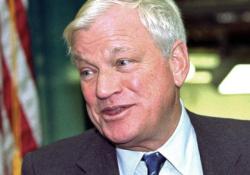
Agha Hasan Abedi
 Pakistan
Biography of Agha Hasan Abedi
Agha Hasan Abedi, also known as Agha Sahab, was born in 1922 in Lucknow, India. His parents immigrated to Pakistan after the partition of India in 1947. Abedi worked as a bank employee and eventually became the president and chairman of the board of directors of United Bank Ltd (UBL) in Pakistan. However, he felt unsatisfied with the prospect of remaining a simple bank employee for the rest of his life and decided to start his own business.

In 1959, Abedi founded the United Bank of Pakistan (UBL), which became the second-largest bank in the country within 10 years. However, in 1972, the government of Zulfikar Ali Bhutto nationalized all banks in Pakistan, including UBL. This was a significant blow to Abedi, considering that he had secretly financed Bhutto's election campaign when he was in opposition. Despite this setback, Abedi came up with a new idea - the creation of a new bank that would operate worldwide and not be subject to any government.

The Birth of BCCI
In 1972, Abedi's dream became a reality with the establishment of the Bank of Credit and Commerce International (BCCI). Registered in Luxembourg, BCCI's headquarters were located in a luxurious office in London. Abedi managed the business from there. The initial capital for the bank was obtained from the Bank of America, which owned 25% of BCCI's shares but had no voting rights in its management.
Abedi strategically propagated the idea that BCCI had vast oil wealth from Arab sheikhs behind it, even though this was not the case. This myth helped attract depositors to the bank, as it created an image of a solid institution associated with the wealth and fame of Arab sheikhs. BCCI quickly gained a reputation as a bank for wealthy depositors.
Influence and Controversies
Abedi continued to be an influential figure in the political and financial spheres and played a role in the creation and international recognition of the United Arab Emirates. He was known for his calculated moves and befriended prominent politicians from various countries, including UN Secretary-General Perez de Cuellar, British Prime Minister James Callahan, and US President Jimmy Carter.
However, BCCI's success was marred by controversies. It was revealed that the bank engaged in questionable activities, including money laundering, arms trading, and even international terrorism. One of the most significant revelations was BCCI's involvement in supporting the Afghan heroin trade.
Downfall and Death
As investigations into BCCI intensified, Abedi's influence and charisma couldn't save him. The bank faced scrutiny at multiple levels, and several dubious practices were uncovered. In the mid-1980s, Abedi suffered a severe stroke and never faced trial. Despite receiving top-notch medical treatment, he was unable to return to his banking activities.
Abedi retired, and his financial empire began to crumble. Although official charges of massive fraud and manipulation were made, no official action could be taken against the bank as its headquarters were relocated, and Pakistani authorities refused to extradite Abedi. BCCI was eventually closed in the early 1990s, and questions arose about its very existence.
Agha Hasan Abedi died in seclusion on August 5, 1995, in Karachi, Pakistan. He is considered one of the most successful fraudsters on a global scale, yet he is also recognized for his deep understanding of psychology, incredible personal charm, and ability to win people over.