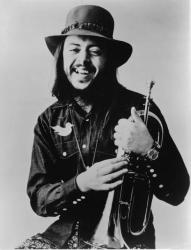
Al Hirt
 USA
USABiography of Al Hirt
Al Hirt, born Aluis Maxwell Hirt on November 7, 1922, in New Orleans, Louisiana, was an American trumpet player. The son of a policeman, he was known as "Al" or "Jumbo". At the age of six, he received his first trumpet as a gift, bought at a local pawnshop. He played in a musical group of children of policemen until the age of sixteen. By this time, he had already become a professional, often playing with his friend Pete Fountain.

Early Career
In 1940, Hirt moved to Cincinnati, Ohio, to attend a conservatory. After serving as a bugler in the US Army during World War II, Hirt began playing with various swing big bands. In 1950, he became the lead trumpeter and soloist in Horace Heidt's Orchestra. Upon returning to New Orleans, he worked with various Dixieland groups.

Rise to Fame
Despite Hirt's claim a few years later that he was not a jazz trumpeter, he made several recordings in the 1950s that demonstrated his ability to play in jazz styles, particularly with jazz orchestra leader Monk Hazel. Hirt's virtuosity and beautiful tone soon caught the attention of national recording studios. Twenty-two of Hirt's albums reached the Billboard charts in the 1950s and 1960s. His albums "Honey In The Horn" and "Cotton Candy" reached the top ten bestsellers in 1964. In the same year, Hirt had a major hit with the composition "Java", which reached the fourth position on the national charts and earned him a Grammy Award.
Later Career and Personal Life
In the 1960s, Hirt also became known for recording the music themes for popular television shows, including the immensely popular music for "The Green Hornet" show. His composition, inspired by Rimsky-Korsakov's "Flight of the Bumblebee", became the pinnacle of Al Hirt's technical mastery. In 2003, it experienced a resurgence after being featured in the film "Kill Bill".
In 1962, Hirt opened his own club on Bourbon Street in New Orleans, which he managed until 1983. In 1987, Hirt performed a solo rendition of "Ave Maria" during Pope John Paul II's visit to New Orleans, a performance he considered the most significant of his life.
Al Hirt passed away in April 1999 at the age of seventy-six in New Orleans due to liver failure, after spending a year in a wheelchair due to leg swelling. Until his death, he continued to perform in clubs in Louisiana while sitting in a wheelchair. Hirt had eight children, ten grandchildren, and six great-grandchildren. In 1990, he married Beverly Essel, who had been his companion for over forty years. Rumor has it that Hirt's children's names were engraved on his trumpet.