Albert Carre
 France
- Biography of Albert Carré
- Director of Opéra-Comique
- Reforms and Innovations
- Legacy
- Retirement and Personal Life
Biography of Albert Carré
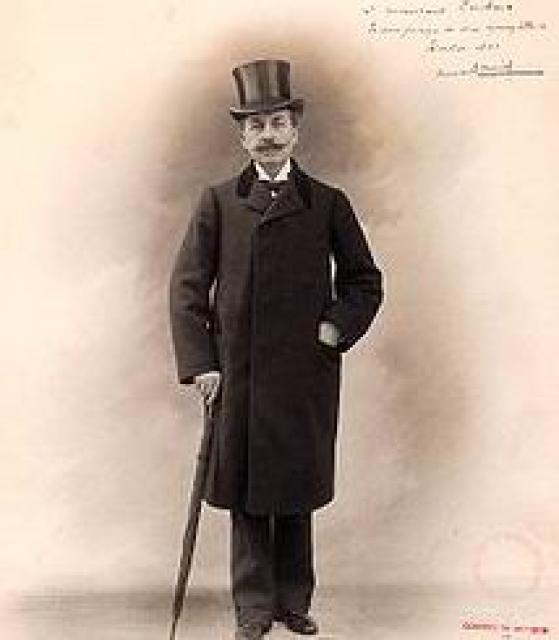
Albert Carré was a French theatrical and opera director, actor, and librettist. He was born on June 22, 1852, in Strasbourg, Alsace. Carré studied dramatic arts at the Paris Conservatoire, where he won the second prize for comedy. He began his career at the Théâtre du Vaudeville and later became the director of the Théâtre-Libre and the Comédie-Française.
Director of Opéra-Comique
Carré's most significant contribution to the opera world was as the director of Opéra-Comique. He held this position from 1898 to 1914 and then again from 1919 to 1925, alongside Émile Isola and Vincent Isola. Under Carré's leadership, the musical standards of Opéra-Comique continuously improved. The theater saw premieres of many leading French composers, including Claude Debussy's "Pelléas et Mélisande," Gustave Charpentier's "Louise," Paul Dukas's "Ariane et Barbe-bleue," and works by Reynaldo Hahn, Alfred Bruneau, and Georges Hüe.
Reforms and Innovations
Carré was more progressive than his predecessor, Léon Carvalho, and implemented numerous reforms and modern methods at Opéra-Comique. He wrote a report for the government on managing opera theaters in Germany and approached his duties with a thirst for reform. He established a strict rehearsal schedule and eliminated unauthorized absences by artists. Under Carré's direction, Opéra-Comique experienced a new era of success and growth.
Legacy
Carré's efforts led to the first French productions of several Italian operas, including "Tosca" in 1903 and "Madama Butterfly" in 1906. He also championed the revival of Emmanuel Chabrier's comedic opera "Le roi malgré lui" in 1929, bringing it back to the repertoire of leading theaters worldwide. Carré collaborated with Alexandre Bisson on librettos for vaudevilles, comedies, and comic operas.
Retirement and Personal Life
Carré retired in 1936 and wrote his memoirs. During World War I, he worked for the French army's intelligence service, specifically in the Tenth Bureau, which recruited Alsatians while the region was still part of Germany. Despite being a polite and open person, Carré did not speak to his sister for over forty years after she married a German officer.
Albert Carré passed away on December 12, 1938, in Paris. He left a lasting legacy as a central figure in the theatrical and musical life of the city.