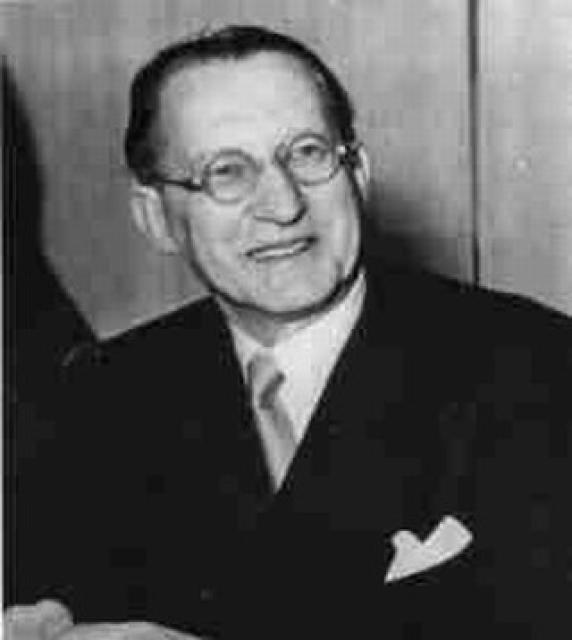
Alcide De Gasperi
 Italy
ItalyBiography of Alcide De Gasperi
Alcide De Gasperi was an Italian statesman and politician, and the founder of the Christian Democratic Party. From December 10, 1945, to August 17, 1953, he served as the Prime Minister in eight consecutive coalition governments. His 'eight-year rule' remains a benchmark for the political longevity of a national leader in modern Italian politics. As a conservative Catholic, he was one of the founding fathers of the European Union, alongside Frenchman Robert Schuman and German Konrad Adenauer.
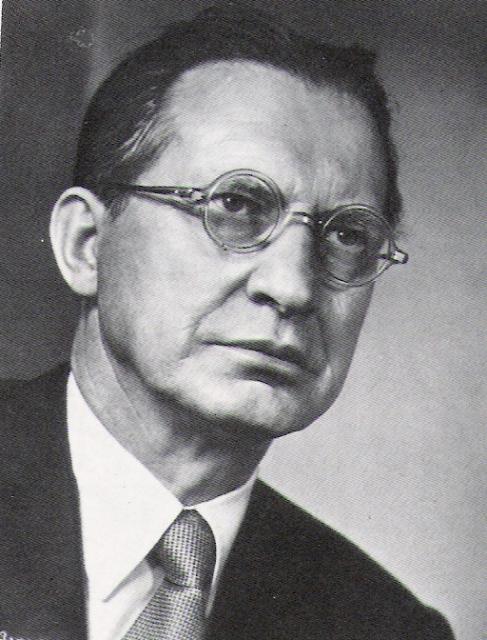
Alcide De Gasperi was born on April 3, 1881, in the town of Pieve Tesino, which was then part of Austria-Hungary, located 40 km east of Trento. His father was a local police officer with limited means. Since 1896, De Gasperi actively participated in the social-Christian movement. In 1900, he enrolled in the Faculty of Literature and Philosophy in Vienna, where he played a significant role in shaping the Christian student movement. In 1904, De Gasperi was one of the key participants in a student demonstration advocating for universities where teaching is conducted in Italian. He even spent three weeks in prison with other protesters. In the same year, he obtained a degree in philology. He became the editor of the newspaper 'La Voce Cattolica,' and later, in September 1906, he joined 'Il Trentino' as its editor. In his newspaper, he often advocated for the cultural autonomy of Trentino and the defense of Italian culture in Trentino against the plans of German nationalist radicals to fully Germanize the population in Tyrol. Interestingly, De Gasperi never questioned whether Trentino should belong to Austria-Hungary or not and believed that in a referendum, 90% of Trentino's population would prefer the popular Austrian Emperor Franz Joseph I and the prospect of joining Italy.
Political Career
In 1911, he became a member of parliament representing the People's Political Union of Trentino, a position he held for six years. He remained politically neutral during the First World War, which he spent in Vienna. When his native region was transferred to Italy as part of post-war settlements, he acquired Italian citizenship.
In 1919, De Gasperi became one of the founders of the Italian People's Party and served as a deputy in the Italian parliament from 1921 to 1924, a period when Italian fascism was on the rise. Initially, he supported Benito Mussolini but soon disagreed with him on several issues and became the secretary of an anti-fascist group in May 1924. In November 1926, facing open violence and intimidation from fascists, the party was dissolved. De Gasperi was arrested in March 1927 and sentenced to four years in prison. The Vatican managed to negotiate his release in July 1928, but De Gasperi's health was undermined during his time in prison, and he became unemployed. He faced serious financial difficulties until 1929 when he obtained a job as a cataloger in the Vatican Library, where he worked for the next 14 years until the defeat of Italian fascism in July 1943.
In 1944, he became the first Secretary-General of the Christian Democrats, a new party that would dominate the parliament for the next few decades. From 1945 to 1953, he served as the Prime Minister in eight consecutive Christian Democratic governments. During this time, Italy became a republic (1946), signed a peace treaty with the Allies (1947), joined NATO (1949), and became an ally of the United States, which helped in the revival of the Italian economy through the Marshall Plan. In the same years, Italy also became a member of the European Coal and Steel Community, which eventually evolved into the European Union. De Gasperi was appointed as the President of the Community in 1954, and though the project ultimately failed, he contributed to the development of the idea of a common European defense policy. In 1952, for his contributions to European integration and the peace process, he received the prestigious Charlemagne Prize in Aachen, Germany.
Legacy
Alcide De Gasperi passed away on August 19, 1954, in his hometown of Trento at the age of 73. His political career and contributions to European integration and peace have left a lasting legacy in Italian and European politics.


