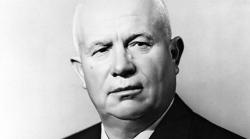
Alexander III Romanov
 Russia
- Alexander III: The Reign of Reaction
- Early Life and Education
- Intellectual Limitations
- Personal Characteristics
- Family Life
- Political Reign
- Health and Death
- Legacy
Alexander III: The Reign of Reaction
After the assassination of Alexander II on March 1, 1881, his son, Alexander III, ascended to the Russian throne, ushering in an era that historians and contemporaries alike have described as a period of political reaction masked by the slogans of "nationality and Orthodoxy."
Early Life and Education
Grand Duke Alexander Alexandrovich Romanov was the second of six sons born to Alexander II. He was born in 1845 and was not initially considered the heir to the throne. "Alexander III was not prepared to be emperor at all," wrote Sergei Witte in his memoirs. "One could say he was somewhat neglected: neither his education nor his upbringing received much attention." The heir was his elder brother, Nicholas.
Intellectual Limitations
According to the recollections of his tutors and his personal diaries, Alexander III was not particularly intellectually curious. Although he studied history with Sergei Solovyov, law with Konstantin Pobedonostsev, and strategy with General Mikhail Dragomirov, his academic achievements were unremarkable. Alexander lacked military prowess as well. As his tutor, Gogelev, recalled, he "was always lazy" and only began to study seriously after becoming the heir.
Personal Characteristics
In his early years, Alexander III was known for his shyness, which made him appear abrupt and awkward. His family affectionately nicknamed him "bulldog." In adulthood, he was described as "not handsome, with more of a... bearish demeanor; he was very tall, but despite his stature, he was not particularly strong or muscular, and was rather stout and plump."
Family Life
Alexander III was a devoted family man. After the death of his elder brother, Grand Duke Nicholas, in 1865, he inherited not only the throne but also his fiancée, the Danish princess Dagmar (who, upon converting to Orthodoxy, adopted the name Maria Feodorovna). Alexander loved and remained faithful to his wife. After their marriage, the couple settled in the Anichkov Palace. They had six children: Nicholas, George, Michael, Xenia, Olga.
Political Reign
Upon taking the throne, Alexander III consolidated autocratic rule and expanded the powers of the secret police. He pursued a policy of "Russification," seeking to assimilate non-Russian nationalities into the Russian Empire. He implemented conservative reforms in education and the judiciary, curtailing academic freedom and limiting the rights of minorities.
Health and Death
Alexander III suffered from kidney disease for many years. In the late 1880s, he was forbidden from drinking alcohol, but he continued to indulge in secret with his companion, General Pavel Cherevin. In 1888, the imperial train in which he was traveling crashed near Borki station. Alexander emerged from the wreckage unharmed and calm. However, his health declined rapidly in the years following the disaster. He died in Yalta on October 20, 1894, at the age of 49.
Legacy
Alexander III's reign, marked by reaction and repression, left a lasting impact on Russian history. His policies set the stage for the revolutionary turmoil that followed his death. He was succeeded by his son, Nicholas II, who inherited a deeply divided and unstable empire.