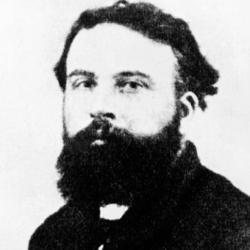
Alexander Kalam
 Switzerland
Biography of Alexander Calame
Alexander Calame was a Swiss artist known for his contribution to the birth of a new direction in Swiss landscape painting, creating a romanticized epic alpine landscape. In the Swiss art world, there is a traditional distinction between two lines, which are considered provincial branches of leading European schools. There is even an extreme point of view that denies the existence of independent Swiss art. However, Swiss painting did contribute to art history with Conrad Witz and Urs Graf during the Renaissance, and portraitists with European names like J.-E. Liotard, A. Graff, and A. Kauffman in the 18th century. The 19th century brought a revival of artistic life, with expanded connections not only with France and Germany but also with Austria, England, and Russia. The list of well-known Swiss artists beyond the country was further enriched in the 19th century with the names of Henry Fuseli, Charles Gleyre, Alexander Calame, Arnold Bocklin, and Ferdinand Hodler. Calame's work was linked to the birth of a new direction in Swiss landscape painting, creating a type of romanticized epic alpine landscape. He depicted majestic panoramas of mountain ranges ("Four Seasons," Geneva, Museum of History and Art), rugged and inaccessible peaks ("Montros," 1843, Neuchatel, Museum), impenetrable forests ("Firs in the Mountains," Moscow, Pushkin State Museum of Fine Arts), and picturesque mountain lakes ("Lake of Four Cantons," Geneva, Museum of History and Art). However, Calame brought more than just new motifs to painting. He developed a fundamentally new system of painting compared to the classical landscape of the 17th century. This system was the reason behind his short-lived European fame. Calame's landscape system had a compromising character, corresponding to the transitional period in European painting in the mid-19th century. His works combined the romantic motif of untouched nature with the "pictoriality," the effect of painting from nature, and the construction according to the "laws of art."
Early Life
Alexander Calame was born in the small town of Vevey on Lake Geneva in the family of a poor stonemason. After the death of his father, he moved to Geneva, where he initially learned the family trade. In 1830, he entered the workshop of the renowned artist Francois Diday. Strictly speaking, Diday was the first Swiss painter of romantic and dramatic alpine landscapes. But it was only with Calame's arrival that this type of landscape took on the form that led to talk of an "alpine landscape school." Calame quickly surpassed his teacher, took his place as the head of the Geneva School of Art, and in 1837, he exhibited his painting "Forest near Avranche" in Hamburg, marking the beginning of his rapid rise to fame. European recognition came to Calame after his painting "Storm on Handeck" (Geneva, Museum of History and Art) was exhibited at the Salon in Paris in 1839. It caused a sensation, capturing the imagination of the French audience with its majestic pathos depicting the fury of the elements and impeccable compositional mastery. A French traveler who saw this painting ten years later in Geneva praised Calame and alpine landscapes in his enthusiastic praise: "Calame nurtured his genius by contemplating the grandeur of nature. His talent, severe and strict, is inspired more by sentiment than by art. What majestic turmoil! You can almost hear the wind howling in these deep gorges; storm clouds hang low over the earth, and beneath them, you can make out the dark head of a giant who seems to have summoned this storm." "Storm on Handeck" became the symbol of the "Calame school," serving as a model for a whole series of alpine views that the artist provided Europe for a quarter of a century.
Artistic Career
The key to the success of Calame's landscapes lay in the recognizable details, the realistic accuracy of specific locations. By abandoning the attributes of classical landscape, such as ruins, mythological characters, and bright, even sunlight, Calame developed his own recipes and created a universal landscape concept. He combined different views in his paintings, creating a sort of average "artificial" landscape ("Mountain Landscape," Paris, Louvre). Nevertheless, these landscapes, composed of natural fragments, with their purely theatrical grandeur and conditional color perspective based on gradual lightening of tones in the distant parts, maintained the illusion of genuine, "wild and untamed" nature. This illusion was achieved through Calame's masterful construction of the intrigue in his works. The play of light contrasts added dramatic tension to the invented scenes, infusing them with life. Calame gained a reputation as the "creator of alpine painting, the greatest Swiss landscape painter, and one of the best European artists of his time." He received numerous awards at international exhibitions and was made a Knight of the Legion of Honor in 1842. He was elected a member of the St. Petersburg and Brussels Academies. Calame made trips to Germany and the Netherlands in 1839, England in 1840, France in 1842, and Italy in 1845. He studied the works of Dutch landscape painters of the 17th century, Nicolas Poussin, and Claude Lorrain, and familiarized himself with the contemporary English landscape school and the Barbizon experience in France. However, he remained faithful to his synthetic landscape system, transforming natural sketches from different countries and landscapes according to its laws. Calame's sharp vision, precise drawing, taste, and technical perfection were best demonstrated in his etchings and lithographs, where he was less constrained by the tyrannical will of the developed picture type.
Later Years and Legacy
In the 1850s, Calame's influence spread widely, and there were followers of his style in almost every European country. In Russia, for example, a whole generation of landscape artists belonged to the "Calame school," including well-known artists of their time like A. I. Meshchersky, V. D. Orlovsky, and P. A. Sukhodolsky. European "Calamists" successfully applied his techniques to depict their national landscapes. In 1863, the renowned painter went to Menton for treatment but died the following year from tuberculosis. In 1865, at a posthumous auction of Calame's paintings in Paris, mainly consisting of small preliminary studies and sketches, the total income reached a fantastic sum of 180,000 francs for that time. However, a decade later, being compared to Calame became synonymous with criticism in art reviews, and the once celebrated painter's works appeared artificial and conditional in the context of the further development of European landscape painting.