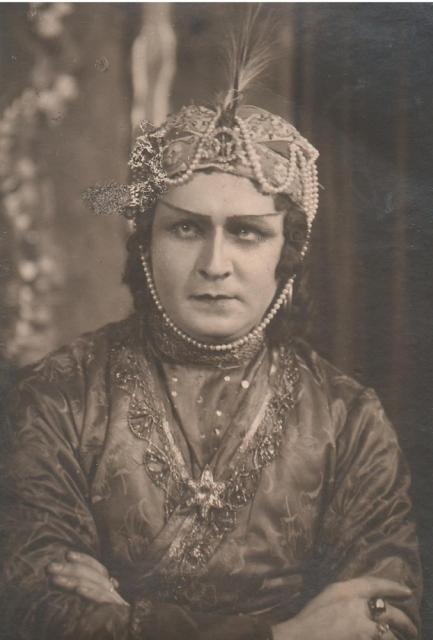
Alexander Korobeichenko
 Ukraine
- Early Life and Influences
- Education and Career Beginnings
- Italian Opera Legacy
- Operatic Journey
- Political Oppression and Illness
- Heartbreaking Farewell
Early Life and Influences
Alexander Korobchenko was born in Kyiv, Ukraine, to a railway mechanic father and a homemaker mother. From an early age, his father instilled in him the importance of financial independence. Korobchenko attended technical school and worked as a hydrotechnician and film projectionist before discovering his exceptional singing voice.
Education and Career Beginnings
Despite his father's skepticism about a singing career, Korobchenko enrolled in Kyiv Conservatory. To support himself, he mastered shoemaking and crafted fashionable footwear while attending classes. After being invited to sing at the theater in his fourth year, he abandoned shoemaking but continued to create and repair footwear for himself and others throughout his life.
Italian Opera Legacy
Korobchenko studied under Professor Vladimir Tsvetkov, a disciple of Camillo Everardi, a renowned Belgian vocal professor who performed throughout Europe and Russia. Through this lineage, Korobchenko inherited the Italian school of singing and later passed on the tradition to his protégé, Anatoliy Solovianenko.
Operatic Journey
Korobchenko performed in numerous opera theaters throughout the USSR, including Kyiv, Odessa, Svedlovsk, Baku, Kharkiv, Leningrad, and Donetsk. He notably premiered the role of Calaf in Puccini's "Turandot" in the Soviet Union.
Political Oppression and Illness
Korobchenko faced political adversity and received his Honored Artist title later than other performers due to his refusal to sing at a dinner party at Kliment Voroshilov's request. In 1960, he was forced to leave the stage, and his health declined significantly.
Heartbreaking Farewell
After Korobchenko's passing, his widow, Natalia Grishkovskaya, recounted the theater's lack of support during his final days and the insincerity displayed at his funeral. The orchestra's false playing prompted Grishkovskaya to implore them to stop.


