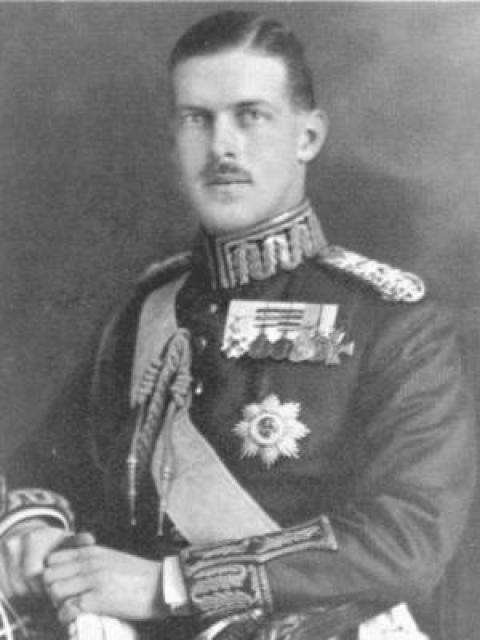
Alexander of Greece
 Greece
- Alexander, the King of Greece
- Early Life and Ascension to the Throne
- Controversial Marriage and Scandal
- The Sevres Treaty and Tragic Death
- Legacy and Family
Alexander, the King of Greece
Alexander, the King of Greece, ruled the country from 1917 to 1920. He died in a rather unusual manner - from sepsis, which he acquired from being bitten by two monkeys during a walk in the royal garden.
Early Life and Ascension to the Throne
Alexander was born on August 1, 1893, in the Tatoi Palace near Athens. He was the second son of Constantine I and his wife Sophia of Prussia. In 1917, Constantine I insisted that Greece maintain neutrality in the First World War, while the then Prime Minister Eleftherios Venizelos was determined to join the Allies. British and French troops entered Greek territory at the invitation of Venizelos. In June 1917, there were threats to bomb Athens if the king did not abdicate, prompting Constantine I and his eldest son George to leave Greece. Alexander, a supporter of the Great Idea, ascended the throne. However, in reality, the monarch had no real power and was a figurehead for the Prime Minister. Alexander's only task was to visit the troops frequently and boost their morale.
Controversial Marriage and Scandal
Alexander caused trouble for Venizelos when he eloped with Aspasia Manos, the daughter of Colonel Petros Manos, on November 4, 1919. This act of the king caused a major scandal and enraged Venizelos. Aspasia was forced to flee from Athens until the situation was resolved peacefully. Although their marriage was officially recognized without her involvement, Aspasia did not become a queen, settling instead for the title of "Madam Manos" and later becoming a princess. Six months later, the young couple went to Paris, under the condition that they would not appear together at official events.
The Sevres Treaty and Tragic Death
Shortly after their departure, in August 1920, the Sevres Treaty was signed. It was extremely favorable for Greece, which gained large territories in Thrace and near Smyrna in modern-day Turkey. Despite popular belief that Alexander, a carefree owner of a pet monkey, died from its bite, the truth is different. Alexander was defending his dog from two attacking monkeys during a walk in the royal garden on October 2, 1920. In the struggle, he sustained several serious bites with torn wounds. The infection from the bites gradually poisoned Alexander's entire body. After both monkeys were killed, it was discovered that they were diseased. Several days later, the monarch developed a severe reaction to the infection. Alexander fell into critical condition on October 12 and died from sepsis in Athens on October 25.
Legacy and Family
Alexander's father, Constantine I, was allowed to return to Greece and reclaim the throne. Eventually, Constantine involved the country in the Greco-Turkish War, which led to Greece's defeat and the end of the Great Idea. A quarter of a million soldiers and civilians were killed, and Winston Churchill later wrote that "the monkey bite was the cause of death for 250,000 people."
Alexander's only child was Princess Alexandra, who was born after his death in 1921. She married Serbian King Peter II.