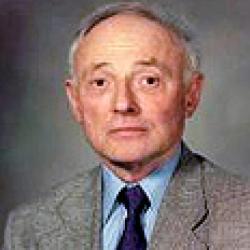
Alexander Vandermond
 France
- Alexandre-Théophile Vandermonde: French Mathematical Prodigy
- Mathematical Breakthrough
- Contributions to Mathematics
- Recognition and Legacy
- Scientific Collaborations and Diverse Interests
- Conclusion
Alexandre-Théophile Vandermonde: French Mathematical Prodigy
Early Life and Passion for MusicAlexandre-Théophile Vandermonde was born on February 28, 1735, in Paris, France. Despite a deep passion for music, playing the violin with remarkable skill, he did not turn to mathematics until the age of 35.
Mathematical Breakthrough
In 1771, Vandermonde's first mathematical publication, "Mémoire sur la résolution des équations," propelled him to the forefront of the field. His study of symmetric functions and the resolution of circular polynomials foreshadowed the later Galois theory, earning him recognition as the founder of modern algebra. According to Leopold Kronecker, "With the first work of Vandermonde, modern algebra begins."
Contributions to Mathematics
Over the following year, Vandermonde published three additional papers that cemented his legacy in mathematics:
- "Remarques sur des problèmes de situation" (1771): Explored the knight's tour problem.
- "Mémoire sur des irrationnelles de différents ordres avec une application au cercle" (1772): Addressed combinatorics.
- "Mémoire sur l'élimination" (1772): Laid the foundations of determinant theory. Notably, the Vandermonde determinant was not explicitly mentioned in this work.
Recognition and Legacy
Vandermonde's contributions were widely recognized. Matrices of a particular type are known as Vandermonde matrices, and an elementary equality in combinatorics is called the Vandermonde convolution. His work influenced the development of group theory, with some claiming that the fundamental ideas belong to Vandermonde rather than Lagrange.
Scientific Collaborations and Diverse Interests
Beyond mathematics, Vandermonde pursued diverse scientific endeavors. In collaboration with Bezout and Lavoisier, he investigated low temperatures in 1777. A decade later, he teamed up with Gaspard Monge and Berthollet to publish articles on steel production, aiming to enhance the quality of steel for bayonets.
Conclusion
Alexandre-Théophile Vandermonde was a brilliant mathematician and versatile scientist whose contributions spanned music, algebra, and applied science. His pioneering work in determinant theory and the foundations of modern algebra continues to inspire researchers today.