Alexandr Kusikov
- Early Life and Education
- Political and Literary Career
- International Travel and Criticism
- Artistic Evolution and Disillusionment
- Later Years and Death
Early Life and Education
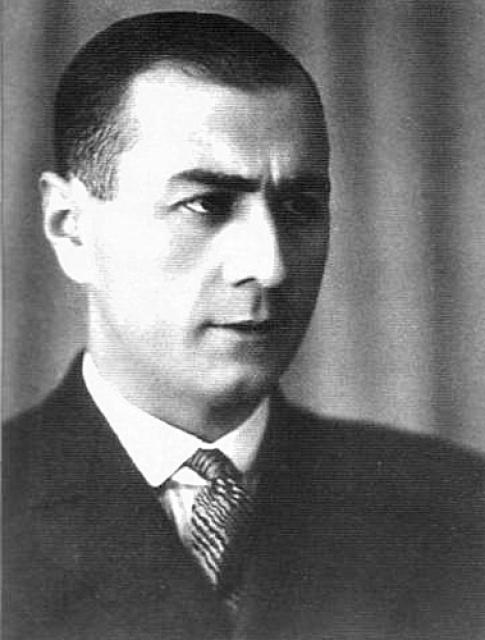
Alexander Borisovich Kusikov, a Russian poet known for his imagist style and romantic persona, was born in Armavir on September 17, 1896, into a large Armenian family. His real surname was Kusikian.
Kusikov's early life is shrouded in mystery, with much of the information he provided about himself being unreliable. He romanticized his image, claiming a Circassian heritage, which he emphasized in his writings, attire, and demeanor.
He attended high school in Batalpashinsk and briefly studied at a university before being conscripted into the North Dragoon Regiment in 1915. He fought in World War I and was wounded.
Political and Literary Career
After the February Revolution, Kusikov became a military commissar in Anapa. He later joined the Bolshevik Party and left for Moscow during the October Revolution.
In Moscow, he immersed himself in literary circles, meeting notable poets such as Valery Bryusov, Vladimir Mayakovsky, and Konstantin Balmont. He published his first collection of poems, "The Mirror of Allah," in 1918.
Kusikov joined the "Order of Imagists" in 1919 and became one of its most active members. He established his own publishing house, "Chikhi-Piki," and released several collections of poetry.
International Travel and Criticism
In 1922, Kusikov traveled to Berlin with Boris Pilnyak. He adopted an anti-emigrant stance, declaring his loyalty to the revolution and earning the nickname "Chekist" (secret police agent) from emigrant circles.
Kusikov published several collections of poetry in Berlin and had his poems translated into German, French, and Yiddish. He performed his works alongside renowned poets such as Sergei Yesenin and Anna Akhmatova.
Artistic Evolution and Disillusionment
In the 1920s, Kusikov's poetry underwent a transformation. He became disillusioned with Imagism and criticized his fellow members, particularly Yesenin. His poems lost their characteristic qualities, including contrast, exoticism, and vivid imagery.
Despite his international success, Kusikov's reputation back home faded. He expressed a desire to return to Russia but never did.
Later Years and Death
In the 1930s, Kusikov abandoned literature. He spent his remaining years in Paris, where he passed away on July 20, 1977.