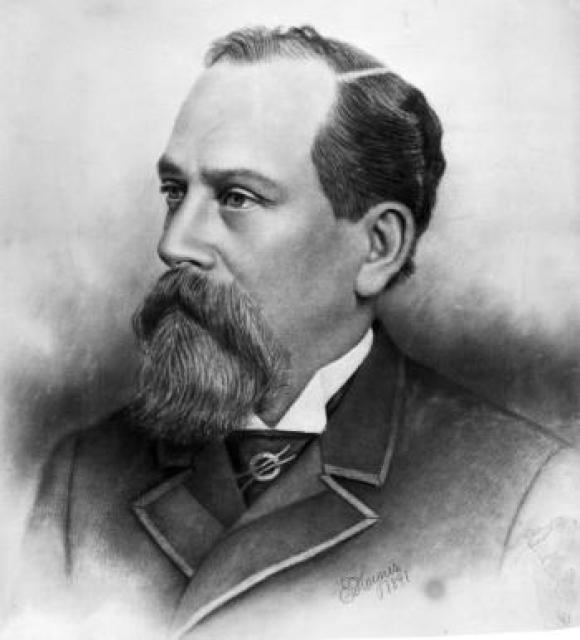
Alfred Fouillee
 France
- Biography of Alfred Fouillée
- Education and Career
- Philosophical Synthesis
- Volition and Will
- Psychology of Peoples
- Sociological Views
- Ethics and Morality
- Legacy
Biography of Alfred Fouillée
Alfred Fouillée was a French philosopher known for his integration of voluntarism and positivism, as well as his support for organicism in sociology. He was born on October 18, 1838, in La Pouëze, France.
Education and Career
Fouillée received his education at the École Normale Supérieure in Paris, where he later became a professor from 1872 to 1879. He was greatly influenced by the ideas of philosophers such as Plato and Descartes.
Philosophical Synthesis
Fouillée believed in the necessity of uniting and reconciling opposing viewpoints through a "higher synthesis." He sought to find commonalities among different philosophical systems and establish connections between diverse ideas. His philosophical framework, known as immanent monism, encompassed various principles ranging from Platonism to positivism.
Volition and Will
Drawing upon Descartes' famous statement, "Cogito ergo sum" ("I think, therefore I am"), Fouillée opposed thought with will, declaring "Volo ergo sum" ("I will, therefore I am"). He ascribed will and purpose to matter, imbuing it with consciousness and presenting the entire cosmic movement teleologically.
Psychology of Peoples
In addition to his philosophical pursuits, Fouillée conducted research on the psychology of peoples. He authored works such as "Psychologie du peuple français" (Psychology of the French People) in 1898, which explored the psychological characteristics of the French nation.
Sociological Views
Fouillée's sociological views aligned with organic theories of society. However, unlike Spencer, he placed particular importance on higher forms of intellectual activity in social progress. His contributions to sociology focused on understanding the role of ideas-forces as driving forces of evolution.
Ethics and Morality
Fouillée's approach to ethics was eclectic, seeking to establish a logical foundation for morality based on scientific principles. While he believed that the goal of morality was to achieve well-being, he also emphasized the obligations of moral law, rejecting the sovereignty of moral duty.
Legacy
Alfred Fouillée's works include "La morale des idées-forces" (The Morality of Ideas-Forces) in 1908 and "L'évolutionnisme des idées-forces" (The Evolutionism of Ideas-Forces) in 1920. He also made significant contributions to the history of philosophy and wrote on topics such as temperament, character, and contemporary social science. Fouillée's ideas continue to be studied and his influence on philosophy and sociology is recognized.


