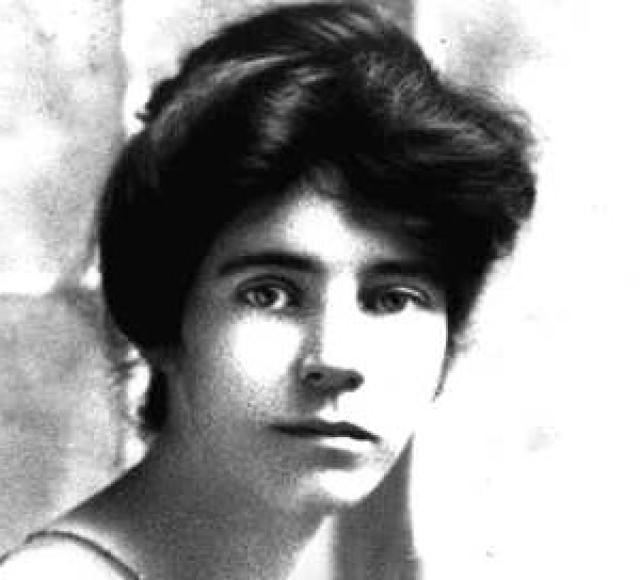
Alice Paul
 USA
USA- Biography of Alice Paul
- Early Life and Education
- Activism for Women's Suffrage
- Civil Disobedience and Imprisonment
- Legacy
Biography of Alice Paul
Alice Paul was an American suffragist and activist who played a vital role in the successful campaign for women's suffrage in the United States. Alongside Lucy Burns and other activists, Paul led the movement that resulted in the passage of the Nineteenth Amendment to the Constitution in 1920.
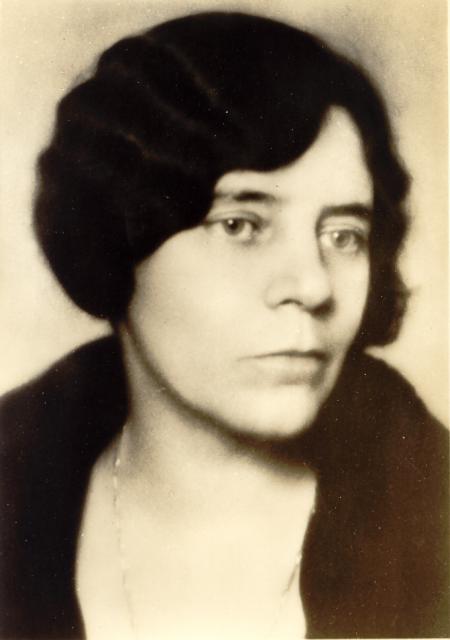
Early Life and Education
Alice Paul was born on January 11, 1885, in Mount Laurel Township, New Jersey. She attended Swarthmore College, where she pursued her undergraduate studies. Afterward, she earned a master's degree and a doctorate from the University of Pennsylvania. In 1922, Paul obtained a law degree from the Washington College of Law at American University. She furthered her legal education by earning a master's degree in 1927 and a doctorate in civil law in 1928, both from American University.
Activism for Women's Suffrage
Following her time at the University of Pennsylvania, Paul joined the National American Woman Suffrage Association (NAWSA) and was appointed as the chair of their Congressional Committee in Washington, D.C. Her initial task was organizing a parade in Washington, D.C., which took place successfully a day before President Woodrow Wilson's inauguration in 1913. The association's focus shifted towards advocating for a constitutional amendment that would grant women the right to vote. Paul's methods caused tension between her and NAWSA leaders, who believed that the timing for such an amendment was not yet ripe.
When her lobbying efforts proved futile, Paul and her colleagues established the National Woman's Party (NWP) in 1916, adopting some of the tactics used by suffragettes in the United Kingdom. The party was financially supported by Alva Belmont, a millionaire who became passionate about feminist ideas after the death of her second husband. During the 1916 presidential election, Paul and her party opposed President Wilson and other Democrats' refusal to support the suffragettes' efforts for an amendment.
Civil Disobedience and Imprisonment
In January 1917, NWP members organized the first political protest action by picketing the White House. They held signs demanding suffrage rights, exemplifying nonviolent civil disobedience. In July 1917, the picketers were arrested for obstructing traffic, and many, including Paul, were found guilty and sent to prison. While in prison, Paul initiated a hunger strike to protest the horrendous conditions. As a result, she was transferred to the psychiatric ward and forcibly fed raw eggs through a tube. The combination of prison protests, demonstrations, and media coverage put pressure on President Wilson's administration. In January 1918, Wilson declared that women's suffrage had become a necessity and urged Congress to change legislation accordingly.
Legacy
The Nineteenth Amendment to the United States Constitution was passed in 1920. In 1923, Alice Paul authored the proposed Equal Rights Amendment (ERA) to the U.S. Constitution. Although the ERA was only brought to a vote in the Senate in 1972 and failed to pass, nearly half of the states incorporated it into their own constitutions. Alice Paul's lifelong dedication to women's rights led Swarthmore College to name their Women's Center and Dormitory in her honor. Montclair State University in New Jersey also named one of its buildings after her. In the 2004 film "Iron Jawed Angels," Alice Paul was portrayed by actress Hilary Swank. Both the United Kingdom and the United States released postage stamps commemorating her, in 1981 and 1995 respectively, as part of their "Great Americans" series. Alice Paul passed away on July 9, 1977, at the age of 93 in Moorestown Township, New Jersey, near her childhood home at Paulsdale, which currently serves as a museum.



