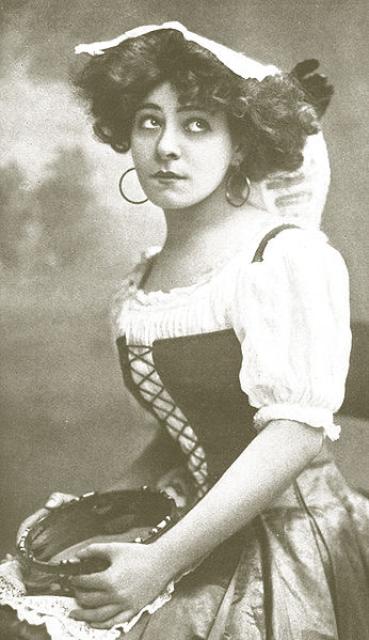
Alla Nazimova
 USA
USA- Alla Nazimova: A Talented Actress with an Exotic Charm
- Early Life and Family
- Early Career in Theater
- Struggles and Success in Russia
- Emigration and Hollywood Success
- Reputation and Legacy
- Return to the Stage and Final Years
Alla Nazimova: A Talented Actress with an Exotic Charm
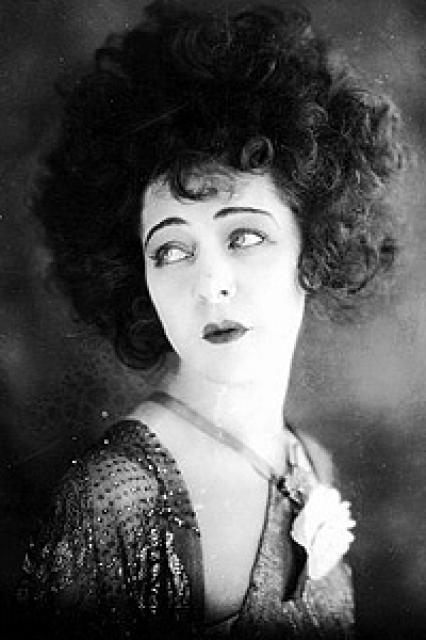
Alla Nazimova, born Miriam Adelaide Leventon in 1879 in Yalta, Crimea, was an American theater and film actress, producer, and screenwriter. She was blessed with both talent and striking beauty, captivating audiences from the moment she stepped on stage. With her enigmatic and flexible personality, Nazimova had an aristocratic origin. Her distant ancestors were black-haired and almond-eyed Spanish nobles, the Levenders, who emigrated from Spain in the 16th century. Similarly, the fate of this beautiful girl unfolded in a similar way.
Early Life and Family
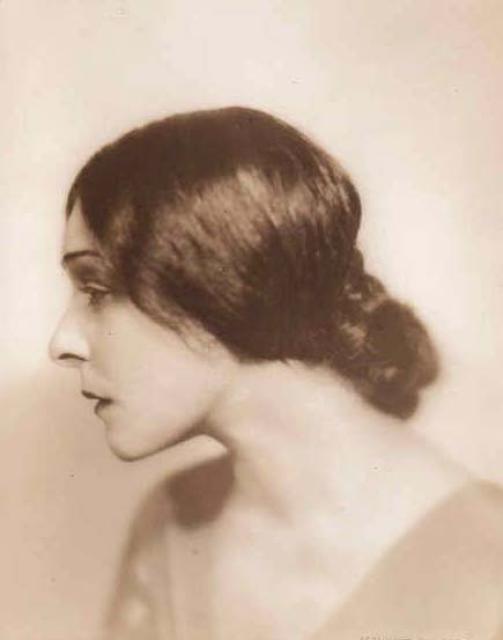
Alla Nazimova was born into an affluent Jewish family in Yalta. During her early years, she was known as Adel, but her mother later decided that the name Alla sounded more melodious and suited her daughter better. She had two siblings, Vladimir and Nina. Her parents had a turbulent relationship, often marked by conflicts and even physical fights. Her father, a despotic and quick-tempered man prone to fits of anger, was the instigator of these conflicts. Nazimova's childhood was far from happy, growing up amidst constant quarrels. The family later moved to Switzerland, near Zurich, where the final rupture between Nazimova's parents occurred. Her father kicked her mother out of the house, forcing her to leave for Odessa, leaving the children behind with their father. Eventually, her father and the children returned to Yalta, where he remarried.
Early Career in Theater
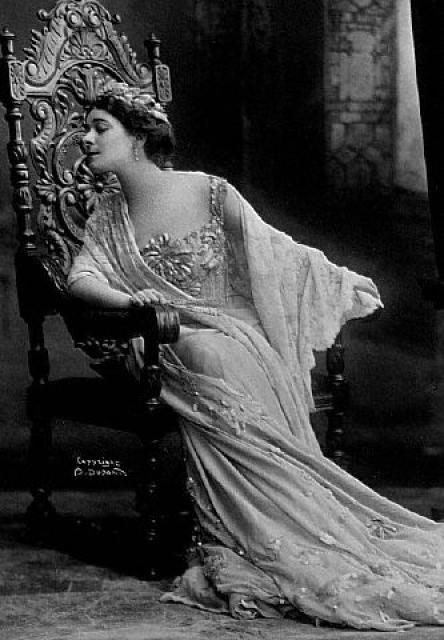
Alla Nazimova showed her talent from an early age. She had a beautiful voice and learned to play the violin. In addition, she had a knack for sewing and came up with new clothing designs. As an exceptional child, she was invited to perform at concerts, but her strict father forbade her from appearing in public under her own name. She chose the surname of the heroine from her favorite book, "Children of the Streets" by Nadezhda Nazimova, as her stage name. At the age of fifteen, she began attending a Catholic girls' school in Odessa. However, her academic performance was mediocre. Her behavior was often less than ideal, as she would make fun of her teachers, often imitating them, which amused her fellow students. The dry and dull school routine did not appeal to her as much as the theater did. Her dream was to be on stage, so she moved to Moscow to pursue her passion.
Struggles and Success in Russia
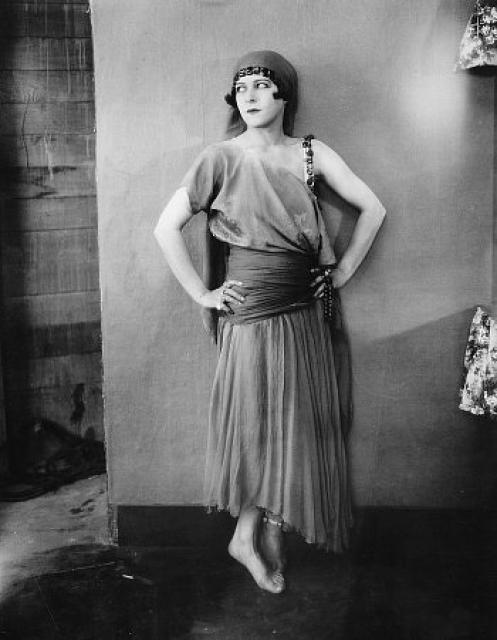
In Moscow, Nazimova managed to enroll in the V. Nemirovich-Danchenko Music and Drama School, despite her southern accent. After her father's death, her sister Nina's fiancé managed to squander their father's inheritance. This left Nazimova penniless and forced her to work as a hotel chambermaid to support herself. Eventually, her financial situation improved, along with her career. While continuing her studies at the theater school, Nazimova began performing at the Moscow Art Theatre. However, she mostly played minor roles or maids. Realizing that she would not get the significant roles that would showcase her talent at the Moscow theater, she left for the province, to Bobruisk.
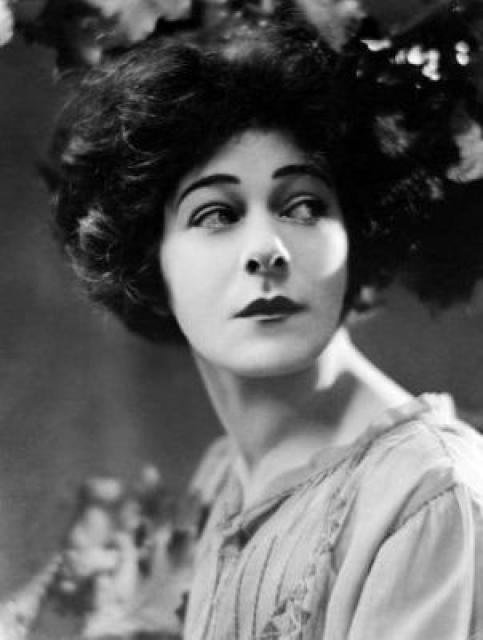
In Bobruisk, her marriage to Sergei Golovin, a theater school student, did not work out. After a short-lived marriage, she had to return to Moscow and again play only minor roles. In 1900, fortune smiled upon the provincial actress Nazimova. She met the famous actor and impresario Pavel Orlenev and married him. In her husband's theater productions, Alla played the leading roles, which became an excellent school of professional skill for her. Her performances enjoyed success in St. Petersburg. During a tour in Yalta in 1904, Nazimova met Anton Chekhov. The writer was impressed by her acting talent.
Emigration and Hollywood Success
In the autumn of the same year, Orlenev and his theater troupe went on tour first in Europe and then in America. At that time, there were many Russian immigrants in the United States, for whom the troupe performed plays by Chekhov, Gorky, and Ibsen. However, Nazimova faced difficult times again. She had mediocre success on stage and a turbulent personal life at home. Orlenev often drank excessively and, while intoxicated, was uncontrollable, causing scandals with his wife. Driven to despair, Alla followed in her mother's footsteps and left her husband, going to Russia.
In 1905, Moscow was too unsettled, with revolutionary sentiments and street demonstrations dispersed by armed Cossacks. Frightened by what she saw and heard in her own country, Alla Nazimova realized that life in America would be much more peaceful for her than in Russia. She decided never to return to Russia. In America, she understood that she could only rely on herself from now on. Nazimova was determined to conquer the American audience at any cost. Within four months, she polished her English and performed in her first English-language play in the autumn of 1906, playing one of her best roles as Hedda Gabler. This marked the beginning of the long-awaited success: unanimous support from theater critics who proclaimed Alla Nazimova the "queen of the stage."
Reputation and Legacy
Thanks to Nazimova's support, the Russian Charitable Fund was established in America to assist Russian actors. The fund received donations from American billionaires and Russian emigrant businessmen. Her acting became wildly popular, and as newspapers at the time wrote, "The fragile Russian woman outshone all the audience favorites." Eugene O'Neill, the future renowned playwright, attended a performance where Nazimova played Hedda Gabler ten times! It was Nazimova who introduced the American audience to Stanislavski's method, which was unheard of at the time. She also popularized the idea that "there are no small roles, only small actors" and explained the principles of ensemble acting. For America at that time, it was a revelation and a sensation. The actress skillfully presented herself on stage, using makeup effectively and compensating for her small stature with high heels and even chairs hidden beneath the drapery of her extravagant dresses.
Nazimova quickly became a celebrity, and she was invited to the White House, where she met Theodore Roosevelt. In 1912, Nazimova married her stage partner Charles Bryant. Despite being a tall and handsome man, Bryant was not a particularly talented actor. However, he surrounded his wife with attention and care. Unfortunately, their marital happiness did not last long, and a few years later, Nazimova grew tired of him. Nevertheless, she did not want to part ways, fearing loneliness and striving to maintain her status as a married woman. Additionally, Bryant managed her business affairs and helped her improve her English language skills.
In 1916, producer David Selznick convinced Alla to try her hand at the film industry. She starred in her first American film, "War Brides." At thirty-seven years old, it was not the best age to start a film career, but Nazimova was never afraid to start afresh and take risks. Her reward was global fame. She became one of the wealthiest actresses in America, with a minimum weekly salary reaching $13,000 - a dream for many Hollywood stars. Nazimova was offered roles in films such as "Camille" with Rudolph Valentino, another future Hollywood superstar (who would later deeply hurt her by marrying her friend, Natalia Rambova).
Nazimova acquired a luxurious Spanish-style mansion on Sunset Boulevard and named it "The Garden of Alla." The estate featured a large pool designed to resemble the Black Sea, surrounded by a vast park with orange trees and palms. Six servants attended to the estate. Bryant chauffeured his wife in a Rolls-Royce, as Nazimova never learned how to drive. The house became a gathering place for elite Hollywood parties, attended by celebrities such as Charlie Chaplin and Fyodor Chaliapin. Guests watched European films, while Nazimova sang Russian songs for them. In her homeland, movie enthusiasts knew little about their talented compatriot. If during the New Economic Policy (NEP) era in the Soviet Union, films featuring her were accessible to viewers, from the 1930s, films with Nazimova no longer reached the Soviet screens.
In 1923, a troupe from the Moscow Art Theatre toured America, and Stanislavski himself visited. Although he did not attend any of Nazimova's performances, he sent her a bouquet of flowers with a note: "To Alla Nazimova, for being with us during the days of our creative childhood." Nevertheless, Stanislavski and Nazimova eventually met and had a long conversation. From their conversation, the actress concluded that it was better for her not to return to Moscow. Nazimova always dreamed of something more significant than just playing romantic heroines. One day, she took another risk and invested her own money in two projects - "A Doll's House" and "Salome." However, the public received them rather coldly. Her financial situation was shaken, and she had to sell her magnificent villa. At this time, Bryant moved away from her to New York.
Return to the Stage and Final Years
Later, Nazimova had a series of stable but dull roles in films. She grew tired of the film industry and decided to return to the theater, realizing that her true calling had always been the stage. She toured in London and Paris, performing plays by Chekhov and George Bernard Shaw. However, she did not completely leave the world of cinema and appeared on screen even in the 1940s, albeit in small roles. Nazimova played her last role in 1944.
During her final years, Nazimova lived quietly and modestly, dressed plainly, and walked to the store herself. She wrote memoirs and left behind an unpublished book of memories and thirty films in which she had acted. At her funeral, passages from two books, "Ethics" by Spinoza and "Meditations" by Marcus Aurelius, which were underlined by her own hand, were read aloud. These passages spoke of the relativity of everything in the world, the fleeting nature of loud fame, and how even memories of oneself quickly fade into oblivion.
It is worth noting that Alla Nazimova was friends with actress Edith Luckett and became the godmother of her daughter Nancy, who would later become the wife of the 40th President of the United States, Ronald Reagan. Her brother, Vladimir Leventon, also emigrated to America and gained fame in the 1940s as the renowned film producer Val Lewton.


