Amanullah Khan
 Afghanistan
- Reign of Amanullah Khan
- Declaration of Independence and Anglo-Afghan War
- Diplomacy and Military Actions
- Modernization Reforms
- Travel and Prestige
- Economic Challenges and Revolt
- Abdication and Exile
- Later Years and Legacy
Reign of Amanullah Khan
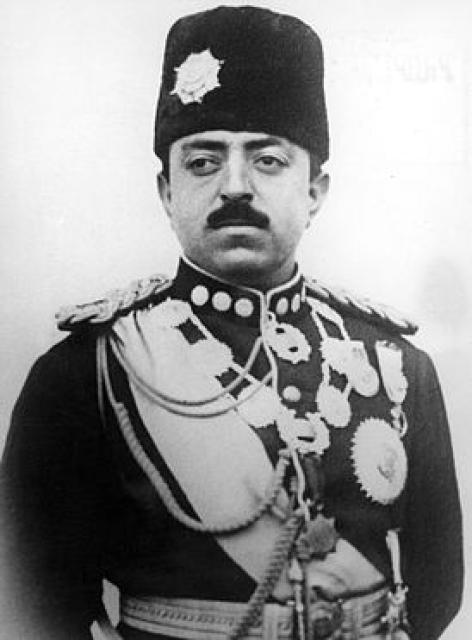
Amanullah Khan ascended to the throne of Afghanistan as King in 1919 and was later proclaimed Padishah in 1926. The son of Emir Habibullah Khan, he was influenced by the ideals of the Young Afghan Movement.
Declaration of Independence and Anglo-Afghan War
Upon his accession, Amanullah Khan declared the full independence of Afghanistan on February 28, 1919. This bold move led to the Anglo-Afghan War of 1919.
Diplomacy and Military Actions
In 1921, Britain recognized Afghanistan's independence. Amanullah Khan expanded his diplomatic reach by establishing relations with the Russian Soviet Federative Socialist Republic (RSFSR) in 1919. In 1926, he signed a Neutrality and Non-Aggression Pact with the USSR.
Modernization Reforms
Inspired by Young Afghan thought, Amanullah Khan implemented reforms aimed at modernizing the country. A constitution was adopted in 1923, free land trading was legalized, and natural taxes were replaced with a monetary system. New schools and educational institutions were also established.
Travel and Prestige
From 1927 to 1928, Amanullah Khan embarked on a significant journey to various regions, including India, the Middle East, Europe, and the USSR. These travels showcased Afghanistan's modernization efforts.
Economic Challenges and Revolt
However, Amanullah Khan's reforms strained the economy and increased taxes, leading to peasant unrest. In 1928, a rebellion erupted in eastern Afghanistan, followed by Bachgai Saqao's march on Kabul.
Abdication and Exile
Amidst the turmoil, Amanullah Khan abdicated on January 14, 1929, and fled to Kandahar. His attempt to regain power with Soviet support failed, forcing him to flee to India and eventually Europe.
Later Years and Legacy
In 1948, Amanullah Khan declared his recognition of Muhammad Zahir Shah and his dynasty. He passed away in 1960 in Zurich, Switzerland, and was buried in Jalalabad. Amanullah Khan's efforts to modernize Afghanistan left a lasting impact on the nation's development.