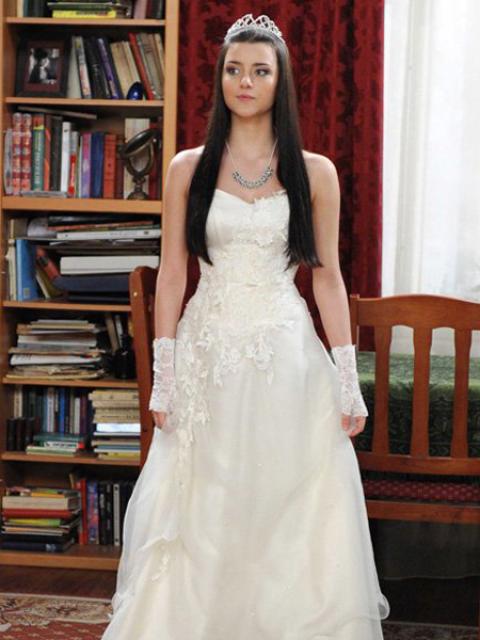
Anastasia Sivaeva
 Russia
Anastasia Sivaeva (born November 10, 1991) is a Russian actress best known for playing Dasha Vasnetsova, the rebellious second daughter in the long-running sitcom *Daddy’s Daughters*. The role grew with her from a goth-minded teenager into an adult with a family of her own, making Sivaeva one of the series’ most recognizable performers.

From dance and modeling to the screen
Born in Moscow, Sivaeva began dancing as a child and trained in performance through youth modeling and theater programs. She appeared in the humor series *Yeralash* before making her feature-film debut in Ivan Solovov’s *Words and Music* (2004), in which she played the daughter of one of the central characters. In 2005, she also appeared in the television play *Through Line*, adapted from a work by Lyudmila Ulitskaya.

These early roles brought her into film and television while she was still young. Her larger breakthrough came in 2007, when she was cast in the family sitcom *Daddy’s Daughters*.

Dasha in *Daddy’s Daughters*
The series follows a father raising five daughters, each with a distinct personality. Sivaeva’s Dasha begins as a student drawn to goth style and music, giving the show a darker, dryly comic counterpoint to her sisters. Over the sitcom’s original run, the character’s story widened from school and family life to romance and adulthood.

Sivaeva played Dasha from 2007 through the original series’ conclusion in 2013 and reprised the role in the 2012 follow-up film *Daddy’s Daughters: Superbrides*. The role brought her broad recognition and became the defining part of her screen career.

Returning to a familiar character
After a long period away from regular screen work, Sivaeva returned to Dasha in the new series *Daddy’s Daughters: New* in 2023. The revival reunited her with a character now living a different stage of life, while introducing a new generation of the family. She also appeared in the 2024 feature *Daddy’s Daughters: Mom Returns*.

Sivaeva’s career is closely tied to one of Russian television’s most durable sitcom families. Her work gave Dasha an arc that moved from adolescent rebellion to adulthood, and her return allowed longtime viewers to see how the character—and the actress who made her memorable—had changed over time.