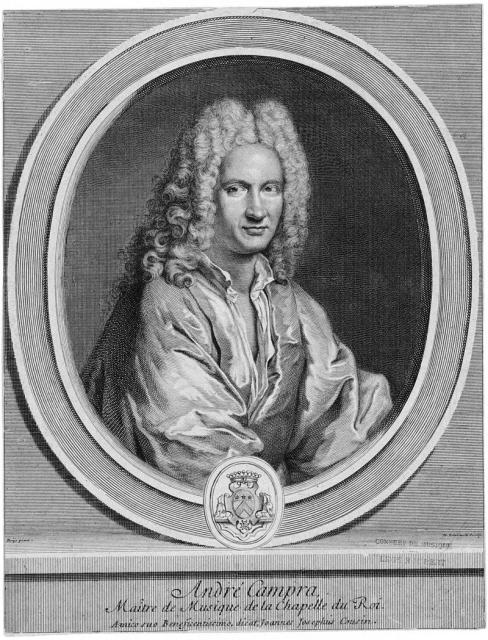
Andre Campra
 France
- André Campra: A Renowned French Composer
- Ecclesiastical Career
- Entry into the World of Opera and Theater
- Royal Patronage and Artistic Development
- Late Career and Legacy
- Posthumous Recognition
André Campra: A Renowned French Composer
Early Life and EducationAndré Campra was born in Aix-en-Provence, France, to a physician father who also enjoyed music. The young Campra received his spiritual and musical education at the city's cathedral, where he composed his first work, "Deus noster refugium," at the tender age of 17.
Ecclesiastical Career
In 1678, Campra became a priest. He held music teaching positions in Toulon, Arles, Toulouse, and Montpellier. From 1694 to 1700, he served as music director at Notre Dame Cathedral in Paris.
Entry into the World of Opera and Theater
In 1695, Campra published his first collection of motets. From 1697 onwards, he began composing for the stage, specializing in tragédie en musique (tragedy with singing) and opera-ballet. In 1700, he left his post at the church to fully immerse himself in theater.
Royal Patronage and Artistic Development
Prince Conti became Campra's patron, enabling him to secure the position of assistant director at the Chapelle Royale in Versailles. During this time, Campra cemented his reputation as a leading composer, replacing Lully as the dominant figure in French music.
Late Career and Legacy
In 1720, Campra returned to composing sacred music. He was inducted into the Order of Saint Lazarus in 1726 and became general inspector of the Paris Opera in 1730. Campra died in poverty, despite his earlier fame.
Posthumous Recognition
Rescued from obscurity by the early music movement in the late 1960s, Campra's works have been revived by renowned baroque ensembles and directors. His opera-ballets have inspired the name of Fabio Biondi's ensemble. The composer's name graces a college in the heart of Aix-en-Provence.




