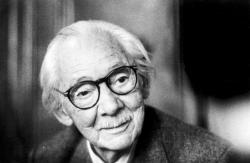
Andre Kertesz
 Hungary
- Early life and first photographs
- Paris and the modernist years
- New York and a changed career
- Recognition and legacy
André Kertész was a photographer who found lasting meaning in fleeting scenes: a child at play, a reader absorbed in a book, a familiar street seen from an unexpected angle. Born in Budapest on July 2, 1894, he developed a personal, poetic approach to photography that helped reshape modern picture making. His career carried him from Hungary to Paris and New York, and his images remain admired for the quiet feeling and sharp visual intelligence they bring to everyday life.
Early life and first photographs
Born Andor Kertész, he grew up in Budapest in a Jewish family. His father, Lipót, was a bookseller, and his family expected him to pursue a secure career in finance. After studying at the Academy of Commerce, Kertész began working at the Budapest stock exchange. Photography, however, drew him away from that path. He bought his first camera in 1912 and began making pictures in his free time, often photographing friends, rural life and the streets around him.
The First World War interrupted his early development. Serving in the Austro-Hungarian army, Kertész carried a camera and recorded soldiers’ lives, including scenes away from the battlefield. A wound in 1915 kept him in hospital for a period, but he continued photographing when he could. The experience deepened his interest in ordinary people and unguarded moments, subjects that would remain central throughout his career.
Paris and the modernist years
In 1925 Kertész moved to Paris, where he joined a lively community of artists and writers and began working as a freelance photographer. He made portraits, photographed studios and streets, and contributed to European magazines. He was drawn to the city’s buildings and daily rhythms, but his pictures rarely felt like conventional reportage. He used reflections, shadows, unusual viewpoints and careful framing to give a scene an almost dreamlike balance.
A small Leica camera, which he acquired in 1928, made it easier to move through the city and respond quickly to what he saw. Among his best-known Paris photographs are Chez Mondrian, a view into the spare home of the painter Piet Mondrian, and Meudon, a layered street scene that brings together a man carrying a painting, a train and distant architecture. In 1933 he created Distortions, a series of nudes reflected in curved mirrors. The warped bodies turn the human form into an inventive study of line and shape.
Kertész married Elizabeth Saly in 1933. The couple had known each other in Budapest and reunited in Paris. Their marriage became an important source of companionship during a life shaped by frequent moves and uncertain work.
New York and a changed career
In 1936 Kertész and Elizabeth left Europe for New York, where he had accepted work with the Keystone press agency. He expected the move to open new professional doors, but the American magazine business often asked for a direct, tightly controlled style that did not fit his more personal way of seeing. A Life magazine editor rejected his work with the remark that he “talked too much with his pictures.” He later worked for Condé Nast publications, including House & Garden, producing commissioned photography while continuing to make pictures on his own terms.
New York gradually became a subject in its own right. From the windows of his apartments, Kertész watched rooftops, changing light and the people in Washington Square Park. He returned repeatedly to familiar views, allowing small changes in weather and human activity to transform them. His long series of images of readers, later gathered in the book On Reading, similarly turned a simple everyday activity into a study of concentration and solitude.
Recognition and legacy
For many years, Kertész felt that American audiences and editors had not fully understood his work. A major retrospective at the Museum of Modern Art in 1964 helped change that, bringing wider recognition to the pictures he had made across several decades. He continued photographing and publishing books, and received honors including a Guggenheim Fellowship and France’s Legion of Honor. After Elizabeth died in 1977, he spent more time revisiting the photographs and memories of their life together.
Kertész died in New York on September 28, 1985, aged 91. His influence can be seen in the work of generations of photographers, including Henri Cartier-Bresson, who praised how much Kertész had accomplished before his own career began. His photographs joined the spontaneous with the carefully composed, finding expressive shapes and human feeling in scenes that might otherwise have passed unnoticed.