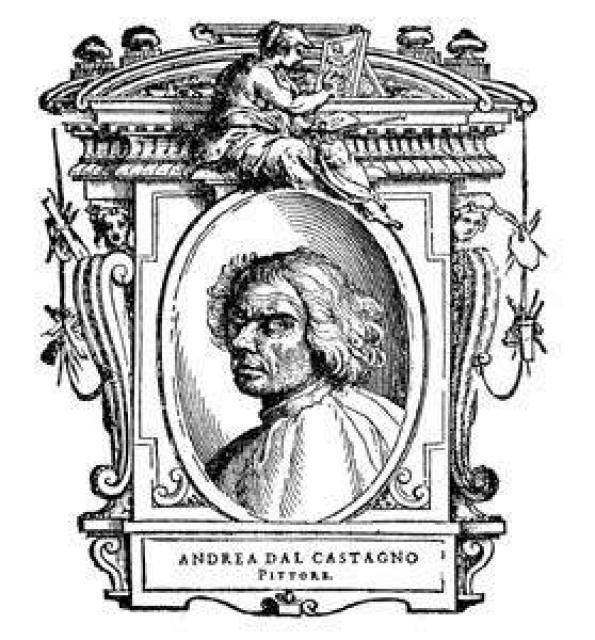
Andrea Del Castagno
 Italy
ItalyEarly Life and Beginnings
Born in the humble village of Castagno in the Tuscan region of Mugello, Andrea del Castagno began his life as a shepherd, forced to tend flocks after losing his father at a young age. However, his artistic talents emerged serendipitously when he sought shelter from rain in a chapel where a village painter was at work. Mesmerized by the process, Castagno's desire to create art ignited, leading him to scratch figures on walls and stones. His exceptional talent caught the attention of a Florentine nobleman, Bernadetto de' Medici, who brought him to the city to pursue his artistic training.
Artistic Career
In Florence, Castagno honed his skills under the guidance of renowned masters. He created numerous paintings, including those in the church of San Benedetto, which were unfortunately destroyed during the siege of Florence. His career primarily unfolded in Florence, though he embarked on projects elsewhere, such as frescoes in the chapel of San Tarazio in Venice (1442). Upon his return to Florence in 1444, he painted notable works like "The Deposition from the Cross" and "The Assumption of the Virgin."
Controversy and Legacy
Castagno's reputation was later marred by accusations of murdering his rival artist, Domenico Veneziano. Largely due to Giorgio Vasari's account, this rumor persisted for centuries. However, 19th-century historians absolved Castagno of this crime and established that he had died four years before Veneziano. Consequently, many of his frescoes remained forgotten, but during the 19th century, they were rediscovered and uncovered, bringing Castagno's art back into the limelight.