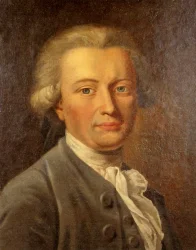
Andrew Comyn Irvine
Andrew Comyn Irvine, known as Sandy, was an Oxford student and gifted engineer whose brief life became bound to one of mountaineering’s greatest mysteries. At 22, he vanished high on Mount Everest with George Mallory during a British summit attempt in 1924. Irvine’s skill with machinery helped keep the expedition’s oxygen equipment working, and the pair’s final climb left a question that remains unanswered: did they reach the summit before they died?
An inventive Oxford student
Irvine was born in Birkenhead, England, on 8 April 1902. He studied chemistry at Merton College, Oxford, where he became known as a strong rower as well as a practical problem-solver. He competed in the Oxford-Cambridge Boat Race and showed an unusual aptitude for mechanical work. Friends and fellow climbers remembered his energy, modesty, and ability to repair or improve equipment.
Although still young and relatively inexperienced in technical mountaineering, Irvine joined the 1924 British Mount Everest expedition. He had travelled and climbed in Norway and the Alps, and he worked hard to gain experience in snow and ice. His mechanical talents made him particularly valuable to the team. He examined and modified the expedition’s oxygen apparatus, repaired stoves, and turned his tent into a workshop. The equipment was vital for climbing at extreme altitude, where the thin air made every step more demanding.
The final attempt
After earlier summit parties failed, Mallory selected Irvine as his partner for one last push toward the summit. On 6 June 1924, the two climbers set out from the North Col, carrying supplemental oxygen. On the morning of 8 June they began the attempt along Everest’s northeast ridge.
Later that day, expedition member Noel Odell reported seeing two figures high on the ridge, moving toward the final pyramid. Clouds soon obscured the view, and neither climber returned. Odell was the last person known to have seen them alive. The team searched but could not determine what had happened, and the monsoon season was approaching. The expedition left the mountain without its two climbers.
The mystery endures
For decades, climbers and historians debated whether Mallory and Irvine might have reached the summit before falling. The possibility was tantalizing: if they had, they would have stood on the highest point on Earth nearly three decades before the first confirmed ascent by Edmund Hillary and Tenzing Norgay in 1953. But the available evidence could not settle the question.
Mallory’s body was found on Everest in 1999, with injuries consistent with a fall. Irvine and the camera that the pair may have carried remained missing. In 2024, a National Geographic team found a boot, sock, and foot below Everest’s north face; the sock bore a label with Irvine’s name. The discovery strongly suggested that some of his remains had been found, although DNA confirmation was still pending in the reports of the find. The camera has not been recovered, and nothing discovered so far proves whether the climbers reached the summit.
Irvine’s legacy
Irvine’s story is remembered both for the unsolved summit attempt and for his own contributions to the expedition. He was not simply Mallory’s young companion: his engineering work helped prepare the oxygen equipment on which the climbing team relied. His letters, diary, and the objects preserved by his family and college reveal a curious, energetic student whose aptitude was already taking him far beyond the classroom. His disappearance made him part of Everest’s legend, but the surviving record also keeps in view a young man valued for his ingenuity, courage, and friendship.