Andy Summers
 Great Britain
- Andy Summers: From Rock to Jazz
- A Journey to Jazz
- Exploring Monk's Music
- A Diverse Jazz Journey
- Creating His Own Sound
- Pursuing True Passion
Andy Summers: From Rock to Jazz
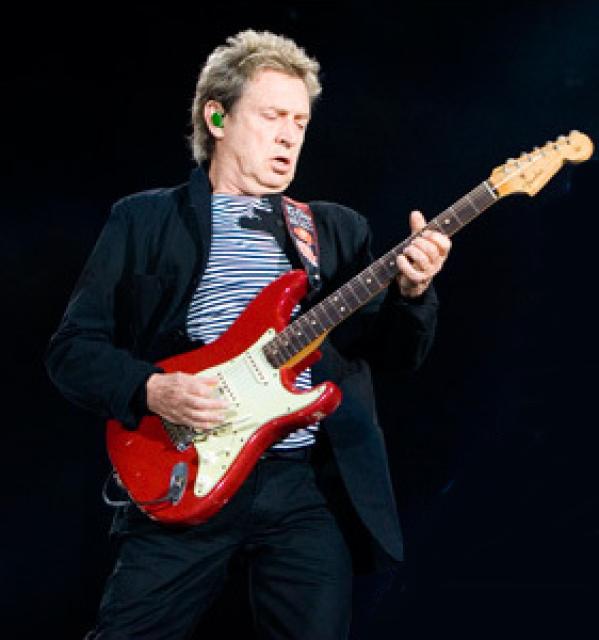
Andy Summers, an English rock musician, recently delighted the ears of several hundred visitors to the Manhattan club "Birdland" over the course of two evenings. However, the famous guitarist of the 80s made no nostalgic statements about returning to his previous rock career at a new level. Summers preferred to return to his jazz roots.
A Journey to Jazz
When Andy Summers, as a member of the rock supergroup "The Police," visited New York 15 years ago, he had to perform in front of tens of thousands of fans at Shea Stadium. Such a grand show hadn't been held here since the Beatles' tours. Last autumn, Summers performed in a more intimate setting. For two evenings, his trio entertained several hundred visitors at the Manhattan club "Birdland." However, there were no nostalgic statements from one of the most famous guitarists of the 80s about returning to his previous rock career at a new level. Summers preferred to return to his jazz roots.
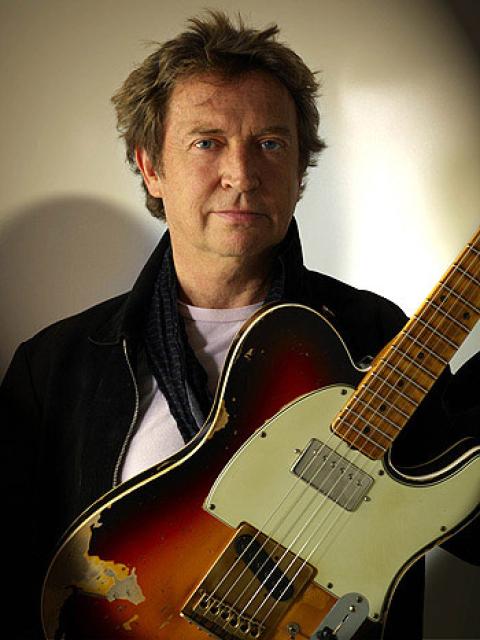
"Over time, I have played in various rock bands, but I never liked the pretentiousness," Summers says. "Often, rock music limited me musically. I'm not completely dismissing it, but my main interests lie elsewhere. I've always wanted to play instrumental guitar music, which was not always possible in the rock scene. Eventually, those who want to do it end up on the jazz stage."
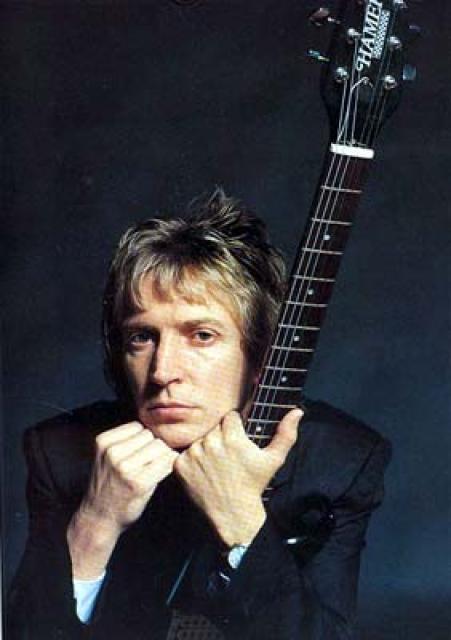
Exploring Monk's Music
At "Birdland," Summers, casually interacting with the audience, performed a set of compositions, mostly from his new album "Green Chimneys: The Music Of Thelonius Monk" (RCA Victor). Compared to his "Police" days, Summers' guitar sounded simpler and warmer. The electronic effects (and their corresponding aesthetics) gave way to a more concise style.
However, those familiar with the cultural foundation of British rock were not surprised that the ex-"Police" member played jazz. Like other British rock stars of his generation, such as Charlie Watts and Ginger Baker, 56-year-old Summers played jazz before venturing into rock.
"When I was still a teenager, I started with jazz," Summers said in a phone interview from his Los Angeles home. "There was an excellent combo in a jazz club in a small English town where I lived. The guys played all the American jazz of that time: Coltrane, Miles Davis, Monk. That's where I first got into what I still do today..."
A Diverse Jazz Journey
After the breakup of "The Police" in 1985, Summers included compositions by Monk, Wayne Shorter, Charles Mingus, and other jazz greats in his solo projects, such as "Invisible Threads" (1993) and "The Last Dance Of Mr. X" (1997), both of which were released as jazz trios. In 1998, he released the album "Strings Of Desire," a recording of an acoustic duo with guitarist Victor Biglione, featuring a spontaneous mix of jazz improvisations with Brazilian melodies.
When Summers took on the album "Green Chimneys," he made a bold move since he had never before recorded an album entirely dedicated to the music of one composer. However, Summers is more devoted to Monk than any other composer, according to his own words, for his angular-dissonant melodies and shifting rhythms.
"When someone gave me a listen to 'Monk At Town Hall,' I was immediately immersed in another world—none of the music I had heard before had the same effect on me. It was like being at the bottom of existence. I had never heard anything more realistic—this, to me, is the quintessence of jazz... When I was 16, I attended a Monk concert in London, and I was instantly hooked..."
Creating His Own Sound
Summers realized that there was no need to make another traditionally avant-garde album as a tribute to Monk. He also didn't want to release a collection of Monk's best hits in his own interpretation.
"What I thought about the most was how to make these themes feel like they have my personal stamp while still retaining the essence of Monk," Summers explained. "I recorded rhythmic soundtracks with drummer Peter Erskine and bassist Dave Carpenter. After that, I gathered the whole band to brainstorm. I experimented with different guitar tones. The only analogy is painting. You try this color, that one... and eventually, you find what you need. Discoveries are made this way."
Summers decided not to use the piano to avoid any comparisons with Monk's distinctive piano playing. While Monk composed most of his songs in a medium swing tempo, Summers explored various rhythmic standards, including those inherent in calypso and reggae. New Orleans shuffles coexist with hip-hop.
For the recording of the Monk version of "'Round Midnight," Summers reunited in the studio with Sting after 10 years.
"I didn't want to bring in a clearly jazz vocalist. Sting, like me, has a jazz background, and I felt that his vocals would bring a freshness to the recording, as he sings without vibrato. We worked together wonderfully on this track.
Pursuing True Passion
"I think it's important to focus on what truly interests you without being distracted by everything else. Perhaps today my views may seem hopelessly idealistic, but I truly believe this. I want to belong to the world of jazz, and I will strive to make everything I do on this path as good as possible. This journey is not easy, but those who pursue it are rewarded by playing music."