Anita Berber
 Germany
Biography of Anita Berber
Anita Berber was a German dancer and actress known for her performances in silent films during the 1920s. She gained fame for her provocative and erotic dance numbers as well as her scandalous behavior.

Early Life and Education
Anita was born on June 10, 1899, in Leipzig, Germany. Her father, Professor Felix Berber, was a renowned violinist, while her mother, Lucy, performed as a chanteuse in Berlin cabarets. When Anita was three years old, her parents divorced, and she spent her childhood in Dresden, where she was raised by her maternal grandmother. She attended a girls' school until 1913.
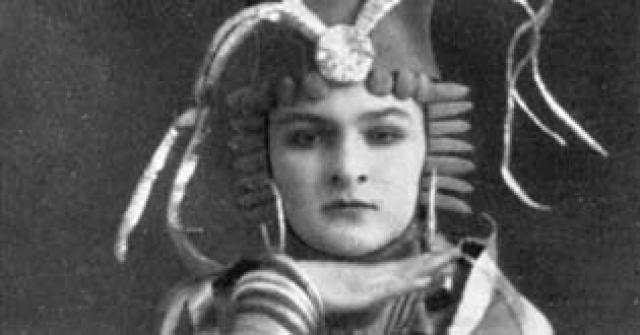
During World War I, Anita and her grandmother returned to Berlin to live with her mother in the Wilmerdorf district. At the age of fourteen, she began taking acting lessons from actress Maria Moissi and attending a dance school run by famous dancer Rita Sacchetto. Anita made her stage debut on February 24, 1916, as part of a group performance with other students from Sacchetto's school.
Stage and Film Career
In 1917, Anita left Sacchetto and embarked on a successful solo career. She performed as a soloist at the Apollo Theater in Berlin and danced at the Wintergarten and Rudolf Nelson-Revuen variety shows. In 1918, she went on tour in Switzerland, Hungary, and Austria. From the beginning, her dances shocked and scandalized audiences, adding a sense of notoriety to her fame.
Returning to Berlin in 1919, Anita married artist Eberhard von Nathusius. That same year, she made her film debut with a small role in Richard Oswald's "The House of Three Girls." She then starred in Oswald's film "The Story of Dida Ibsen." Anita continued to collaborate with Oswald, appearing in five more films: "Peer Gynt," "Prostitution: The Yellow House," "Around the World in 80 Days," "Not Like Everyone Else," and "Sinister Stories." In the last four films, she co-starred with well-known German actor Conrad Veidt.
In 1920, Anita presented a new program titled "Sounds and Smoke" and continued to act in films, including a supporting role in Fritz Lang's "Dr. Mabuse the Gambler" in 1922. That same year, she divorced Nathusius and entered a relationship with her friend Susi Wanowski. She then began a romance with her dance partner, a homosexual man named Sebastian Droste, and they married in Budapest in 1922. The couple shocked the public with their joint performances titled "Dances of Vice, Horror, and Delight," which featured numbers named "Corpse on the Autopsy Table," "Morphine," "House of Illusions," and "Night of the Borgias." The show, in which Berber and Droste danced naked, attracted a large audience. However, the Viennese moral guardians intervened, leading the scandalous couple to move to Hungary.
In 1923, Anita and Droste published a collection of equally provocative poems and stories based on their dance routines. They later returned to Berlin, where a new scandal unfolded. Droste, addicted to cocaine, committed theft to fund his drug habit and fled to America to avoid prosecution. In the same year, Anita annulled their marriage.
Later Career and Death
In 1923, Anita appeared in the film "Lights of the Deep" alongside Nora Gregor. After Droste's departure, her new partner became American homosexual Henry Schatten-Hoffman. They married on September 10, 1924. Anita and Schatten-Hoffman caused a sensation with their performances, featuring dances such as "Rocket," "Spotlights," "White Mouse," and "Sounds and Smoke." They toured Cologne, Dusseldorf, Leipzig, and Wroclaw (then Breslau). In Hamburg, they presented an updated program called "Dances of Eroticism and Delight."
In 1928, Anita and Schatten-Hoffman embarked on a tour of the Middle East, which turned out to be her final one. While performing in Damascus in July, she experienced severe illness on stage. She was transported back to Berlin, where she passed away in the hospital on November 10 of the same year. Tuberculosis, exacerbated by her cocaine addiction, was the cause of her death. Anita Berber was only twenty-nine years old.
In 1987, filmmaker Rosa von Praunheim, an activist for gay rights in Germany, released a movie titled "Anita," depicting the story of a middle-aged woman who loses her sanity, imagining herself as Berber.
In 1926, avant-garde artist Otto Dix painted a portrait of Berber titled "Portrait of a Lady in Red." The painting is currently housed in the gallery of Stuttgart. Additionally, Rosenthal, a porcelain company, released three porcelain figurines depicting Anita in various dance poses.