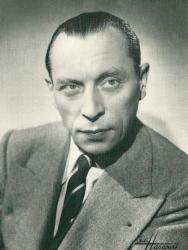
Antonio De Macedo
 Portugal
Biography of Antonio de Macedo
Antonio de Macedo is a Portuguese film director, writer, professor, and lecturer. He was born in Lisbon in the year 1931. In 1958, he graduated from the Higher School of Fine Arts in Lisbon, specializing in architecture. Antonio then worked as an architect at the Lisbon City Hall.
In 1964, Antonio decided to leave architecture behind and pursue a career in cinematography. He became involved in directing and writing screenplays. Alongside his work in film, Antonio actively engaged in the study of literature, particularly focusing on various aspects of religion and spirituality. In 2010, he earned a doctorate degree in Sociology of Culture, with a specialization in Sociology of Religion.
Antonio played a significant role in the development of Portuguese "New Cinema" (Cinema Novo) and was one of the founders of the first Portuguese film community, the "Center of Portuguese Cinema" (Centro Português de Cinema).
Antonio's directorial debut came in 1963 with his avant-garde short films "Verão Coincidente" and "Nicotiana." These films caught the attention of producers Francisco de Castro and António da Cunha Telles, who encouraged Antonio to direct his first full-length feature film, "Domingo à Tarde." The film was successful and even selected to be screened at the Venice Film Festival.
During the time of Prime Minister António de Oliveira Salazar and later Marcello Caetano, Antonio frequently clashed with Portuguese censorship. His films "Domingo à Tarde" and "Promessa" faced significant censorship issues. Another one of Antonio's films, "Nojo aos Cães," was completely banned. Despite these challenges, Antonio's work as a director gained popularity. "Promessa" received warm reception at the Cannes Film Festival and won first place at the Cartagena Film Festival. "Nojo aos Cães" was sent to the Bergamo Film Festival and received positive reviews, even earning a nomination for the top prize.
Before the Carnation Revolution, Antonio co-founded a new film company called "Cinequanon" with a group of fellow filmmakers. He served as the director of the company until 1996. His final film with Cinequanon, "Santo António de Todo o Mundo," was released in 1996.
In 1974, with the fall of the Salazar and Caetano dictatorship, Antonio became actively involved in television, particularly in programs dedicated to crimes of the previous regime. He continued to work on feature films, including successful works such as "O Princípio da Sabedoria" and "As Horas de Maria." However, his film "As Horas de Maria" caused a significant rift with the Portuguese Catholic Church, as religious authorities deemed it sacrilegious and offensive.
In 1979, Antonio released the film "Os Abismos da Meia-Noite," which became a major success in Portuguese cinema. It won three prestigious national awards, including Best Portuguese Film, Best Script, and Best Sound Design. Additionally, the film won Best Actor at the Rimini Film Festival.
More recently, Antonio has shifted his focus away from filmmaking due to funding issues. He now primarily works as a professor and is involved in writing activities.