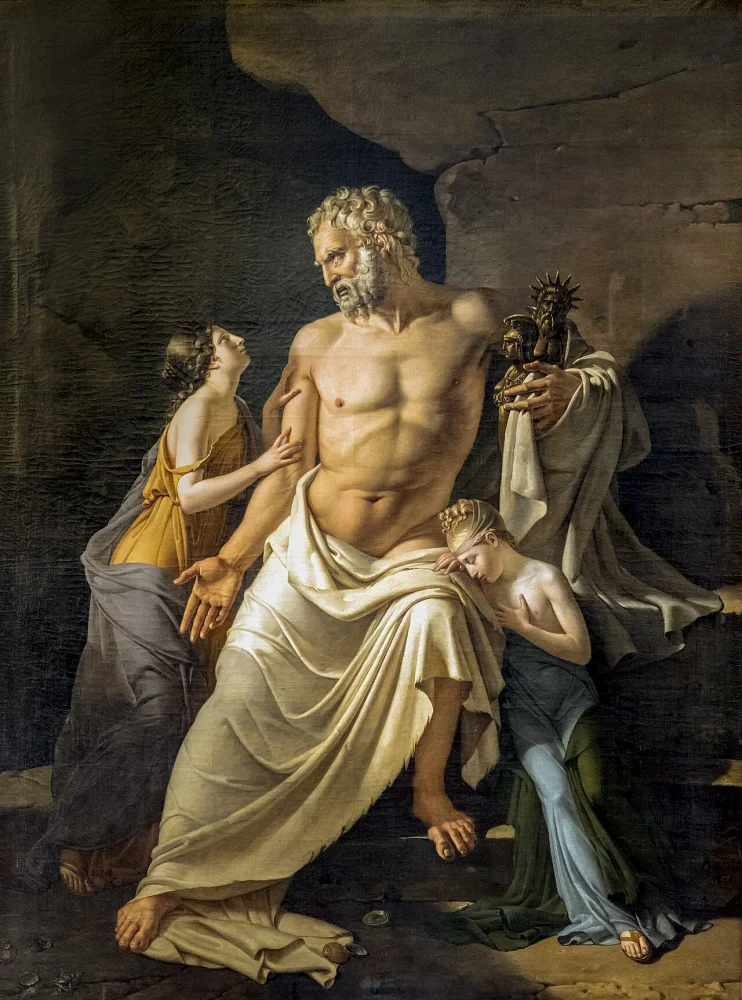
Aristides
Aristides the Just was an Athenian statesman and general remembered for his integrity during the wars with Persia and the formation of the Delian League. He competed politically with Themistocles, experienced exile through ostracism, and returned to help defend Greece from invasion. His later reputation for fairness made him one of the most admired figures in Athenian history.
Athenian Statesman
Aristides was the son of Lysimachus and came from a respected Athenian family. He held public office in the early fifth century BCE and served as archon around 489/488 BCE. Ancient accounts portray him as a conservative political figure whose ideas often differed from those of Themistocles, who favored building Athens’ naval power.
The two leaders’ rivalry became so intense that Aristides was ostracized in 482 BCE. Ostracism was a vote by which Athenians could exile a citizen for a fixed period, not necessarily as punishment for a crime, but to prevent political dominance or factional conflict. Aristides was recalled in 480 BCE as the Persian invasion approached, joining Athenians who returned to defend their city and allies.
The Persian Wars
At the Battle of Marathon in 490 BCE, Aristides was one of the Athenian generals. Later writers tell a story that he yielded his turn in command to Miltiades, believing unity mattered more than personal prestige. The anecdote may be shaped by later admiration, but it captures the reputation for civic duty that became central to his memory.
In 479 BCE, Aristides commanded the Athenian contingent at the Battle of Plataea, where the Greek alliance defeated the Persian army led by Mardonius. The victory ended the immediate threat of Persian conquest on the Greek mainland and strengthened Athens’ position among the Greek city-states.
The Delian League
After the war, Greek cities formed a maritime alliance to continue opposing Persia and defend their communities. This coalition, known as the Delian League, was initially led by Athens. Aristides was entrusted with assessing the contributions each member city would provide, either in ships or money.
Ancient sources say that the allies accepted his assessment as fair, which helped cement his title “the Just.” The league eventually became an instrument of Athenian power, and Athens increasingly controlled the alliance’s treasury and military decisions. Aristides’ role belongs to the league’s early period, when it was still presented as a shared defense against Persia.
Reputation and Legacy
Aristides died around 468 BCE. Later stories describe him as modest and even poor, though ancient authors disagreed about his wealth and family circumstances. Much of what is known about him comes from writers who lived generations later, especially Plutarch, whose biography helped shape the image of Aristides as a model of political virtue.
His reputation rests on a combination of military service, political rivalry, and the trust allies placed in his judgment. Whether every anecdote is literal or not, Aristides became an enduring symbol of fairness in public life. His story also reflects Athens’ transformation from a city defending itself against Persia into the leading power of a maritime empire.


