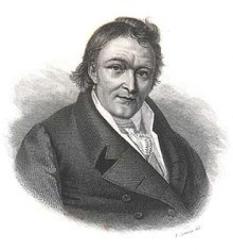
Artemezia Gentileschi
 Italy
Italy- Artemisia Gentileschi: Biography of an Italian Painter
- Early Life and Tragic Events
- Artistic Career and Travels
- Legacy and Popularity
Artemisia Gentileschi: Biography of an Italian Painter
Artemisia Gentileschi was an Italian artist and the first woman to be elected as a member of the Academy of Fine Arts in Florence, the first artistic academy in Europe. Born into a family of painters, she was the daughter of Orazio Gentileschi, a prominent figure in the Caravaggio school of painting.
Early Life and Tragic Events
Artemisia's mother passed away when she was only twelve years old, leaving her to be raised by her father. In 1612, she was violated by the Florentine painter Agostino Tassi, who had previously worked with her father. Following a seven-month-long trial that was humiliating and torturous for Artemisia, Tassi was found guilty and sentenced to one year in prison. The emotional turmoil caused by this traumatic event found expression in Artemisia's most famous work, "Judith Slaying Holofernes" (1612-1613). She revisited this subject multiple times in her career, along with other recurring themes such as Lucretia, Cleopatra, and the Queen of Sheba.
Artistic Career and Travels
After getting married, Artemisia moved to Florence in 1612. She worked under the patronage of Cosimo de' Medici II and formed friendships with renowned figures like Galileo Galilei. In 1621, she worked in Genoa before relocating to Venice, where she met artists such as Anthony van Dyck and Sofonisba Anguissola. She later returned to Rome and, between 1626 and 1630, settled in Naples. During her time in Naples, Artemisia received her first commission for a fresco painting in the town of Pozzuoli, just outside Naples. From 1638 to 1641, she lived and worked in London alongside her father, under the patronage of King Charles I. She eventually returned to Naples, where she lived until her death.
Legacy and Popularity
Artemisia Gentileschi's achievements as a female artist were exceptional for her time, and her work continues to inspire and captivate audiences. Her life story has been the subject of various artistic interpretations, including a novel by Italian writer Anna Banti in the 1940s, which gained international success. This biography also served as the foundation for the play "Heidi Chronicles" by American playwright Wendy Wasserstein in 1988, and the play "Life Without Instruction" by Canadian writer Sally Clark, which was staged between 1988 and 1991. In 1997, a French film titled "Artemisia" was made by director Agnès Merlet, with Valentina Cervi in the leading role. In 1998, French author Alexandra Lapierre wrote a novel about Artemisia, and in 2002, American writer Susan Vreeland's novel "The Passion of Artemisia" became an international bestseller, translated into twenty languages.