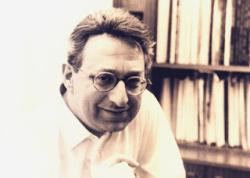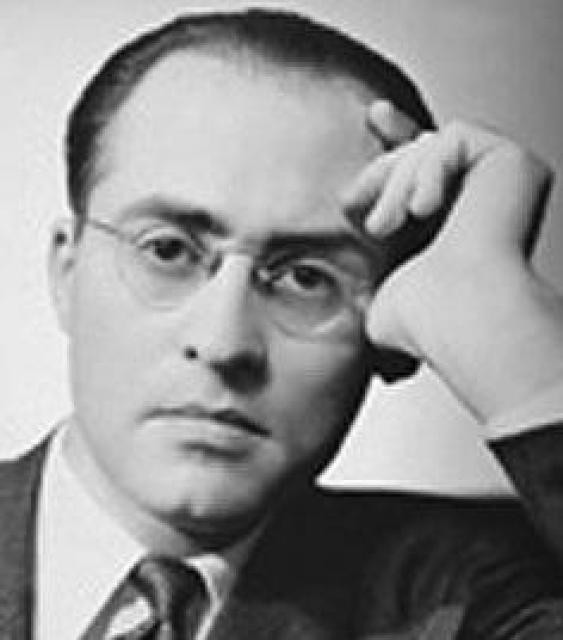
Artur Balsam
 USA
Artur Balsam was a Polish-born American pianist whose career brought him from the concert halls of Europe to the center of chamber music in the United States. Praised for his sensitivity as a partner to singers and instrumentalists, he played with some of the 20th century’s leading performers and made hundreds of recordings. His influence also reached through the classroom: he taught generations of pianists, including Emanuel Ax and Murray Perahia, and helped establish collaborative piano as a respected art in its own right.
Early promise in Poland and Berlin
Balsam was born in Warsaw on February 8, 1906. He studied in Łódź and made his public debut as a pianist at the age of 12. He continued his training in Berlin at the Hochschule für Musik, where he studied with Artur Schnabel and Curt Boerner. The combination of early performance experience and rigorous study prepared him for a career that would move between solo repertoire and chamber music.
In 1930, Balsam won the Berlin International Piano Competition. The following year, he and violinist Roman Totenberg received the Mendelssohn Prize for chamber music. That recognition helped open doors to touring and collaboration. In 1932, Balsam accompanied the young violinist Yehudi Menuhin on a concert tour of the United States, bringing his playing to audiences well beyond Europe.
A trusted partner to great musicians
Balsam settled in New York in 1940 as the Nazi regime made Europe increasingly dangerous for Jewish musicians and artists. He became one of the most sought-after accompanists in the country, a pianist whose role was to support a soloist without diminishing the music’s energy or clarity. Over the decades, he performed with violinists including Zino Francescatti, David Oistrakh, Leonid Kogan, Isaac Stern, Nathan Milstein, Oscar Shumsky, and Roman Totenberg, as well as cellist Mstislav Rostropovich and the Juilliard String Quartet.
His work went well beyond accompaniment in the narrow sense. Balsam treated the piano part as an active voice in the musical conversation, listening closely and shaping the ensemble’s phrasing, balance, and timing. That approach made him an especially valued partner in sonatas and chamber works, where musical ideas pass from one instrument to another. He also gave occasional solo recitals and performed concerto repertoire, but his particular reputation rested on the trust he built with other musicians.
Balsam recorded more than 250 works across solo and chamber repertoire. His projects included piano music by Mozart and Haydn, Mozart’s violin sonatas with Oscar Shumsky, and Beethoven’s violin and cello sonatas with Joseph Fuchs and Zara Nelsova. The recordings preserved a broad view of his musicianship, from Classical clarity to the close-knit interplay of the Romantic chamber repertory.
Teacher and mentor
Balsam taught at the Eastman School of Music, Boston University, and the Manhattan School of Music. He also led summer classes at the Kneisel Hall chamber music festival in Maine. His teaching emphasized listening, style, and partnership: a pianist had to understand not only the keyboard part but also how it fit into the whole musical structure. Among his students were pianists who would go on to prominent performance careers, including Emanuel Ax and Murray Perahia.
At the Manhattan School of Music, where he served on the piano and chamber music faculties from 1965 to 1993, Balsam became closely associated with the school’s collaborative tradition. The institution later named its competition for duos in his honor, reflecting the importance of his work in shaping chamber music education.
Balsam died in New York on September 1, 1994, aged 88. His legacy lies not only in the recordings and celebrated partnerships, but also in the musical ideals he passed to his students: attentive listening, generosity between performers, and a belief that the piano can lead, follow, and converse in equal measure.