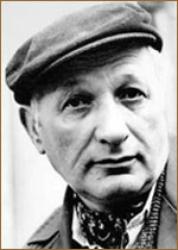
Atis Kronvalds
 Latvia
- Early Life and Education
- Early Career as Educator and Writer
- Neologisms and Educational Activism
- Comprehensive Social and Cultural Activism
- Legacy and Impact
Early Life and Education
Atīss Kronvalds was born on April 15, 1837, in the Durbe estate of the Courland Governorate (Lejas Miķi house, Krotes village, Grobiņa parish). His father, Krišjānis, was a craftsman. The spelling of his name varies in different languages, including Kronvalds, Kronvalds, and Kronvalds.
Kronvalds first studied with the pastor in Krotes and then attended the Mazlāni parish school. At the age of 13, he was taken in by the German pastor, H.E. Katerfelds, and continued his education at Springer's German school in Durbe.
In 1854, Kronvalds enrolled in the Liepāja Higher District School, where he studied for three years but did not complete the course. As a result, Katerfelds withdrew his financial support. In 1858, Kronvalds became a private tutor and worked for the doctor, Pfeiffer, as an educator for his son. Pfeiffer owned the Darbēni estate in present-day Lithuania. There, Kronvalds gained knowledge of the Lithuanian language and traditions, which later proved invaluable in his philological work.
In 1860, Kronvalds traveled with his pupil to the University of Berlin, enrolling as a non-matriculated student in the medical faculty. However, due to financial constraints, he was forced to return home. In Berlin, he witnessed the political debates over the unification of German states into a single entity, which deeply influenced his outlook and inspired him to dedicate his life to Latvian national culture. Despite his lack of a formal education, Kronvalds was later described as a "talented amateur" by his biographer Kārlis Kundziņš in 1905.
Early Career as Educator and Writer
Upon his return to Latvia in 1861, Kronvalds began working as a private tutor in Durbe. Two years later, he initiated meetings of teachers to encourage the use of Latvian in education. These meetings marked a shift away from German as the primary language of instruction.
Kronvalds began contributing to German newspapers and in 1863 entered into a polemic with G. Bergolcs, who had called for the suppression of Young Latvians. Subsequently, Kronvalds published most of his works in German due to the prevailing literary climate and his proficiency in the language. After the Polish Uprising of 1863, the Latvian language was banned from use in schools.
In response, Kronvalds focused on literary and pedagogical activities. In 1865, he published his first book, "Mazā vācu gramatika" ("Small German Grammar"). In its preface and afterword, Kronvalds expressed his strong position in favor of respecting and preserving the Latvian language and warned his fellow Latvians against Germanization. He boldly quoted the "Pēterburgas Avīzes" and Krišjānis Valdemārs' article "Kautrīgie latvieši" ("Shy Latvians").
In autumn 1865, Kronvalds left Durbe for Dorpat (now Tartu), where he enrolled in pedagogical courses to enhance his knowledge and qualify as a teacher in district schools and gymnasiums. Excelling in his studies, he received an attestation approved by the Imperial Dorpat University Council at the age of 30. In 1867, he was appointed as a teacher at the seminary preparing teachers for elementary schools. He was later promoted to "teacher of sciences."
Kronvalds became involved in the publication of Latvian newspapers, notably "Draugs un Biedris" ("Friend and Comrade"), led by Braunsveigs and published until 1869. At literary evenings in Dorpat, he condemned both greedy materialists and fruitless dreamers. He drew inspiration from the finest sources of neighboring cultures and emphasized the importance of equality and cooperation among nations. In his article "Tēvzemes mīlestība" ("Love of Country"), he urged Latvians to take their role seriously as the language and culture faced critical challenges.
Neologisms and Educational Activism
Kronvalds delved into the study of the Latvian language, coining numerous neologisms that became part of the literary language ("vēsture" - history, from the verb "vēstīt" - to narrate, to convey). He sought new vocabulary in dialects, archaisms, and borrowed words from Lithuanian and Old Russian.
He was the first to formulate and elaborate on concepts related to Latvian self-awareness and language. In 1872, his work "Nationale Bestrebungen" ("National Aspirations") argued against the prevailing notion that educated Latvians should adopt German or Russian lifestyles and languages. Kronvalds demonstrated that Latvian was equal to other languages and that the absence of certain modern terms did not hinder its development. He advocated for the removal of Germanisms from the language.
Kronvalds introduced dozens of new terms into Latvian and Lithuanian, which gained widespread acceptance. He believed in replacing Germanisms with Russianisms in the Latvian language as a means of "neutralization." Notably, the Latvian term for the Constitution, "Satversme," was coined by Kronvalds.
His ideas became an integral part of the ideology of the Young Latvians, who supported the national self-determination of the Latvian people. Kronvalds envisioned this growth through improved education, expansion of national schools, and the establishment of civic organizations. He collaborated with the newspaper "Baltijas Vēstnesis" ("Baltic Messenger"), where he wrote articles on Latvian language and culture. In 1873, he resumed the publication of J. Alunāns' almanac "Sēta, Daba, Pasaule" ("Home, Nature, World").
Comprehensive Social and Cultural Activism
Kronvalds' interests extended beyond linguistics. He advocated for the all-round development of his people and their culture. He was the first to attempt a periodization of Latvian history, dividing it into three epochs: ancient (pirmatnes laiki), medieval (vidējie laiki), and modern (jaunākie laiki). His historical framework was later formalized and elaborated upon in the 1920s in the independent Latvian Republic.
In 1869 and 1870, Kronvalds participated in teachers' conferences in Turaida, where his speeches resonated with both supporters and adversaries. Recognizing the challenges, he called for a focus on local and national schools, offering his expertise. In his letters home, Kronvalds expressed a growing desire to return and work directly with his people, but opportunities were scarce. The Riga Latvian Society's plan to establish a gymnasium and appoint him as its director did not materialize.
With selflessness, he declined a well-paying position in Dorpat and returned home on June 21, 1873. He began working as a teacher at the Vecpiebalga parish school. Soon after, he attended the First All-Latvian Song Festival. He challenged the assertion that the German schools deserved credit for the festival, stating that the honor belonged to the Latvians and the "spirit of the people." He disputed Bilenstein's description of Latvian folk songs as "childish," highlighting their noble grandeur.
In the summer of 1873, Kronvalds was elected head of the Latvian teachers' assembly. However, his time in Vecpiebalga was marked by challenges. Inspectors and controllers visited frequently, hoping to dismiss him as a dangerous agitator. He was denied voting rights at several teachers' meetings. Undeterred, he prepared textbooks in Latvian on physics, botany, geometry, history, and Latvian grammar, testing the material with his students. Together with other local intellectuals, he organized literary evenings, theatrical performances, and debates for the residents of Vecpiebalga. Similar activities were arranged for his students.
Despite German resistance, Kronvalds managed to convene the Second All-Latvian Teachers' Conference in the summer of 1874, which once again reflected the spirit of the Young Latvians.
Legacy and Impact
Atīss Kronvalds' life ended abruptly on February 17, 1875. He was buried in Vecpiebalga (today in Cēsis district). Through his pedagogical and literary work, as well as his passionate advocacy for Latvian language and culture, Kronvalds became a pivotal figure in the national awakening of Latvians. His legacy continues to inspire generations of Latvian intellectuals and activists.