Barbara Wootton
 Great Britain
- Early Life and Education
- Marriages and Wartime Involvement
- Academic Career and Social Research
- Honors and Recognition
- The Wootton Report
- Later Years and Death
Early Life and Education
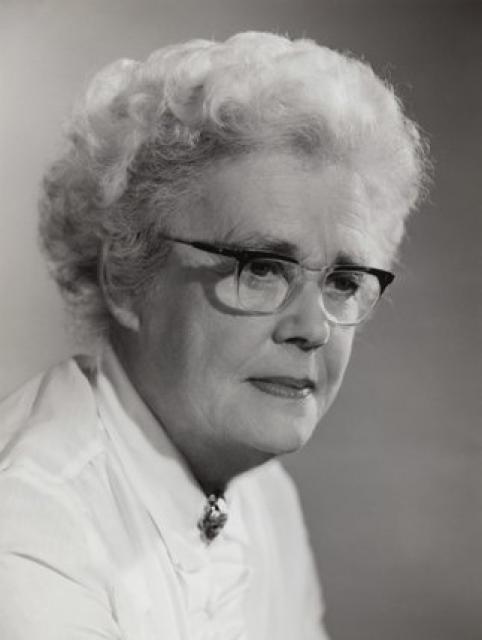
Barbara Wootton was born on April 14, 1897, in Cambridge, England. She attended a private girls' school and went on to study classics and economics at Girton College, Cambridge, from 1915 to 1919.
Marriages and Wartime Involvement
In 1917, she briefly married John (Jack) Wootton, who died a week later from injuries sustained during World War I. She remarried in 1934 to George Wright, who remained her husband until his death in 1964. During the late 1930s, Wootton was a member of the Federal Union, an organization advocating for a federal union of states in post-war Europe.
Academic Career and Social Research
From 1927 onward, Wootton participated in and led numerous sociological committees, including Royal Commissions. In 1948, she became Professor of Sociology at Bedford College, University of London. In 1952, she received a research grant from the Nuffield Foundation. She authored several books on economics and sociology, notably "Testament for Social Science" (1956), which sought to establish a connection between sociology and natural science.
Honors and Recognition
In 1969, Wootton was elected an Honorary Fellow of Girton College, and in 1977 she was made a Companion of Honour. In 1985, she was awarded an honorary doctorate from Cambridge University. In 1984, she was selected as one of six women featured in the "Women of Our Century" series on BBC Two.
The Wootton Report
In 1968, Baroness Wootton chaired the Commission on Marijuana, convened by the British Home Secretary Roy Jenkins, who had previously played a significant role in liberalizing reforms related to homosexuality, capital punishment, and abortion. The Commission's report, presented to Parliament in 1969, concluded that cannabis did not provoke violence or create addicts. It highlighted the historical tendency to vilify substances such as tea, coffee, alcohol, and tobacco. The Commission called for further research on cannabis and for consideration of the realities of its use when revising cannabis laws.
Later Years and Death
Wootton was a member of the London Magistracy. She passed away on July 11, 1988, at the age of 91, in a nursing home in Surrey, England.