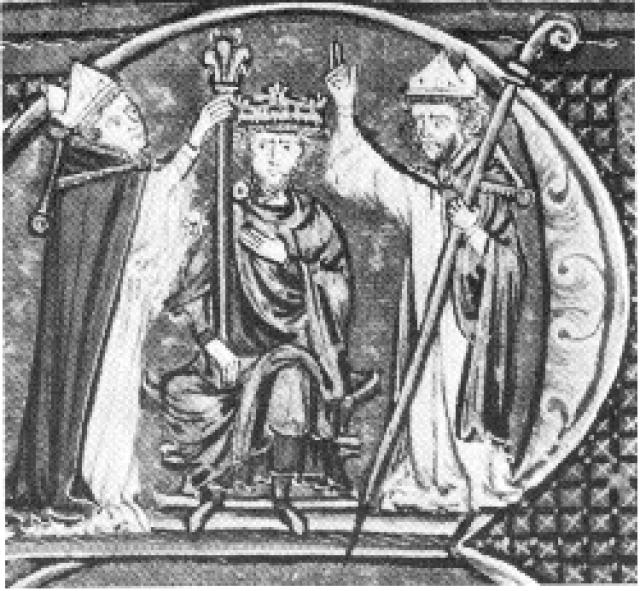
Baudouin I
 Egypt
EgyptBaldwin I of Jerusalem: An Ambitious Crusader Early Life and the First Crusade Conquest of Edessa Establishing Rule in Edessa Baldwin's Tyranny Ascension to the Throne of Jerusalem Conquests and Expansion Personal Life and Death
Baldwin I of Jerusalem: An Ambitious Crusader
Baldwin I, Count of Edessa (1097-1100) and King of Jerusalem (1100-1118), was a brother of Duke Godfrey of Bouillon and a key figure in the First Crusade.
Early Life and the First Crusade
Baldwin's primary objective during the First Crusade was not the liberation of the Holy Sepulchre, but rather the acquisition of land and establishment of his own fiefdom. He separated from the main Crusader army at the Cilician Gates and marched towards Tarsus, aiming to conquer it. However, he encountered resistance from Tancred of Taranto, who refused to share the spoils of the city. Baldwin forcibly expelled Tancred's Norman forces and declared himself lord of Tarsus.
Conquest of Edessa
From Tarsus, Baldwin moved south, encountering opposition from Tancred's troops at the fortress of Mamistra. Despite protests from ordinary Crusaders, the feud between Baldwin and Tancred escalated. Leaving the main army, Baldwin led his forces towards Edessa, becoming the first Crusader to seize a city in the East before reaching Jerusalem.
Establishing Rule in Edessa
Baldwin entered Edessa with 200 knights and a similar number of infantrymen. The Christian population initially welcomed him, and revolts against Muslim garrisons erupted. Edessa's Armenian prince, Thoros, sought Baldwin's aid against approaching Muslim forces. Baldwin agreed and entered Edessa with a small detachment, where he was enthusiastically received.
Thoros offered Baldwin a mercenary position, but the ambitious European demanded recognition as his heir and half of the city's revenue. Thoros reluctantly agreed and adopted Baldwin as his son. Baldwin skillfully manipulated the city's population against Thoros, leading to demands for his sole rule.
Baldwin's Tyranny
After a defeat by the Muslims, Baldwin conspired with Armenian military commander Constantine to seize power in Edessa. With the support of the city's lower classes, they overthrew and killed Thoros, leaving Baldwin as the sole ruler. As Count of Edessa, he expanded his territory but faced a prolonged Muslim siege in 1098. He regained control and began brutal suppression of the local Armenian nobility to consolidate his power.
Ascension to the Throne of Jerusalem
In 1100, upon the death of his brother Godfrey, Baldwin inherited the Kingdom of Jerusalem despite initial resistance from the Patriarch of Jerusalem and other Crusaders. He was crowned at the Basilica of the Nativity in Bethlehem.
Conquests and Expansion
Baldwin spent his reign engaged in constant warfare. He conquered the coastal strip with important cities, ensuring access to the West for his realm. In 1099, the County of Edessa reached its greatest extent, including lands on both sides of the Euphrates River, significantly enhancing Baldwin's power in the East.
Personal Life and Death
Baldwin I's first marriage to Armenian princess Arda was unsuccessful. He banished her to a Jerusalem monastery and later allowed her to leave for Constantinople. His second marriage to Adelaide of Savona, contracted while still married to Arda, made him a bigamist. Patriarch Arnulf, who performed the second marriage, was dismissed but later reinstated on the condition of annulling the invalid union. In 1117, Baldwin was pressured by Arnulf to dismiss Adelaide, who returned to Sicily and died.
Baldwin I died in April 1118 while campaigning in Egypt, leaving a significant legacy as a ruthless and ambitious Crusader who established the first Christian kingdom in the East.