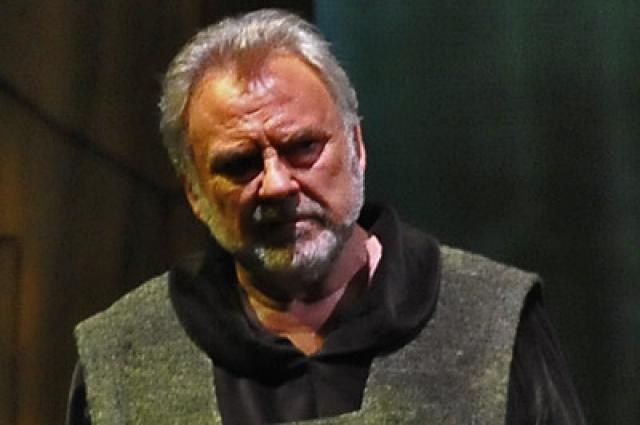
Bernd Weikl
 Austria
- Biography of Bernd Weikl
- Early Career
- Successes and Engagements
- International Career
- Repertoire and Legacy
Biography of Bernd Weikl
Bernd Weikl, an Austrian baritone, was born on July 29, 1942 in Vienna. He studied economics and vocal performance in Mainz and at the Hannover Musikhochschule. In 1968, Weikl won first place at the international vocal competition in Berlin and made his debut as Count Ottokar in 'Der Freischütz' at the Hannover Opera House.
Early Career
After his debut, Weikl joined the Deutsche Oper am Rhein in Düsseldorf, where he worked for three years. In 1972, he made his debut at the Salzburg Festival as Melot in a new production of 'Tristan und Isolde' conducted by Herbert von Karajan. He also made his debut at the Bayreuth Festival as Wolfram in 'Tannhäuser'.
Successes and Engagements
Weikl achieved great success in roles such as Amfortas in 'Parsifal', the Herald in 'Lohengrin', and the title role in 'Der fliegende Holländer'. His performance as Hans Sachs in 'Die Meistersinger von Nürnberg' at the Bayreuth Festival was particularly popular. He appeared at the festival over 160 times. From 1973, Weikl worked with the opera companies in Hamburg and Munich, and from 1974, he also became an artist at the Deutsche Oper Berlin.
International Career
Weikl's international career took off when he performed at Covent Garden in London as Figaro in Rossini's 'The Barber of Seville'. He also sang Gerard in 'Andrea Chénier' and Mandryka in 'Arabella' at the same opera house. In 1976, he made his debut at the Vienna State Opera, and on December 2, 1977, he made his debut at the Metropolitan Opera as Wolfram.
Repertoire and Legacy
Weikl quickly became a favorite of audiences in European theaters, including La Scala, as well as in his native Vienna, Munich, Hamburg, and Berlin. He expanded his repertoire to include Italian, Russian, and French operas alongside his notable interpretations of Wagner and Richard Strauss.
Weikl is known for his performances in roles such as Marquis of Posa, Count di Luna, Ford, Simon Boccanegra, Don Giovanni, Count Almaviva, Tomsky in 'The Queen of Spades', Morone in Pfitzner's 'Palestrina', and Goloud in Debussy's 'Pelléas et Mélisande'.
In addition to his opera career, Weikl regularly performed concerts throughout Europe. He collaborated with renowned opera directors and conducted under the batons of the best conductors of his time.
In the later years of his career, Weikl continued to perform iconic roles such as Hans Sachs under the direction of Wolfgang Sawallisch at La Scala and Christoph von Dohnányi at Covent Garden in 1990. He also portrayed Iago in Stuttgart, the Dutchman in Bayreuth, and Simon Boccanegra in Hamburg in 1991.
Bernd Weikl is considered one of the most famous and versatile opera and concert artists of the second half of the 20th century. Throughout his career, he transitioned from a lyrical baritone to a dramatic one and established himself as a strong and reliable operatic singer. With time, his beautiful and powerful voice deepened, allowing Weikl to add depth to roles such as the Dutchman, Hans Sachs, and Mandryka.
Weikl has an impressive discography and has recorded numerous works for television and radio.


