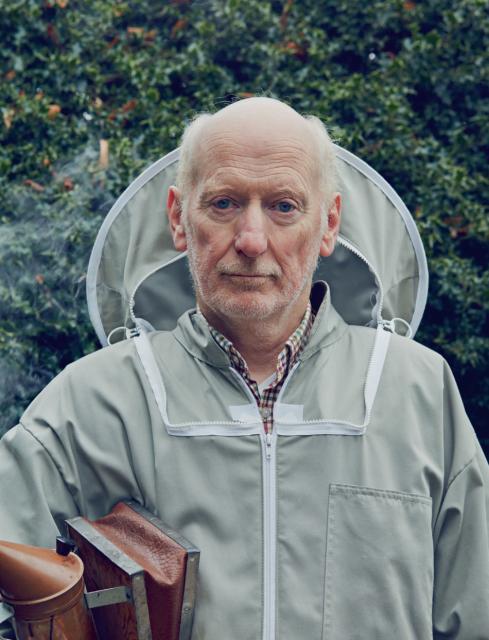
Bill Woodrou
 Great Britain
Biography of Bill Woodrow
Bill Woodrow is an English sculptor and conceptual artist, born in 1948 in Oxfordshire, United Kingdom. He attended the Winchester School of Art from 1967 to 1968, followed by studies at the Saint Martin's School of Art in London from 1968 to 1971. Woodrow furthered his education at the Chelsea School of Art in London from 1971 to 1972.
Woodrow gained international recognition with his participation in several prestigious art events. In 1982, he represented Great Britain at the Biennale in Sydney, and in the same year, he also represented the country at the Biennale in Paris. He further represented Great Britain at the Biennale in Paris in 1985 and in São Paulo in 1983 and 1991.
In 1986, Woodrow became a finalist for the Turner Prize, and in 1988, he was awarded the Anne Gerber Prize by the Seattle Art Museum in the United States. He held various positions within the art world, serving as a trustee of the Tate Gallery from 1996 to 2001 and as a member of the governing council of the Royal Academy of Arts from 2002. Woodrow was also a trustee of the Imperial War Museum in 2003 and served as the rector of the University of the Arts in London in the same year.
Woodrow's work is associated with the group known as the "New British Sculpture." He is known for his assemblages made from discarded household appliances and other objects, often displayed on the gallery floor in a manner reminiscent of artists such as Caro, Morris, and Judd. Initially, Woodrow would disassemble everyday objects and then reassemble them in a different configuration on the floor, as seen in his work "Five Objects" (1980). Later, he began carving one object from another, incorporating references to the domestic world in which they once existed. In the 1990s, Woodrow started working with bronze while maintaining the narrative and stylistic elements of his earlier works. For example, his sculpture "In Awe of the Pawnbroker" (1994) explores the symbols associated with a pawnbroker, featuring numerous elements that resemble an installation rather than a traditional sculpture. Interestingly, Woodrow's later bronze works still retain the aesthetic of his earlier assemblages.



