Bonaventura
 France
- Saint Bonaventure: A Eminent Theologian
- General of the Franciscan Order and Cardinal
- Participation in the Second Council of Lyon
- Canonization and Recognition
- Philosophical Beliefs
- Theology and Contemplation
- Metaphysical Problems
- The Three Eyes of Man
- Notable Works
Saint Bonaventure: A Eminent Theologian
Early Life and EducationBonaventure, a medieval theologian, was born in 1221 in Bagnoregio, Italy. In 1243, he joined the Franciscan order and pursued education in Paris, where he later became a renowned professor of theology.
General of the Franciscan Order and Cardinal
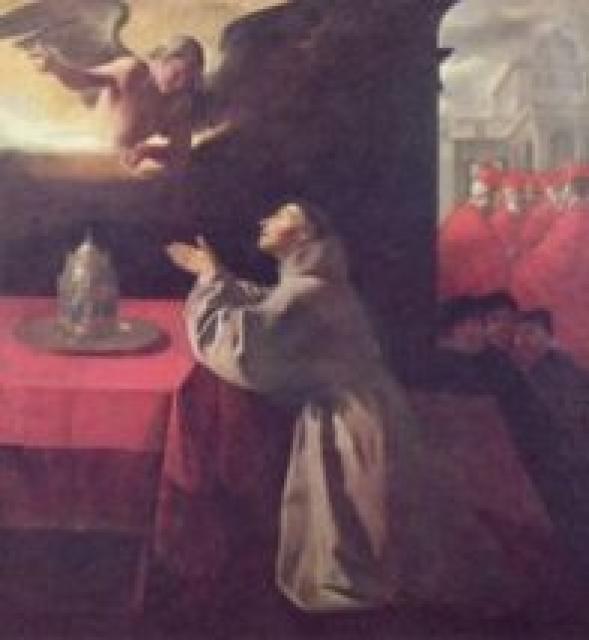
In 1256, Bonaventure was elected General of the Franciscan order. His influence played a significant role in the election of Pope Gregory X in 1273. As a result, the Pope elevated Bonaventure to the rank of Cardinal and Bishop of Albano.
Participation in the Second Council of Lyon
Bonaventure actively participated in the Second Council of Lyon as a papal legate. During the council, he played a pivotal role in theological discussions and contributed to the reconciliation between the Eastern and Western churches.
Canonization and Recognition
In 1482, Pope Sixtus IV canonized Bonaventure as a saint. A century later, in 1587, Pope Sixtus V declared him a Doctor of the Church. Bonaventure's mystical writings were highly esteemed, even by the Protestant reformer Martin Luther.
Philosophical Beliefs
Bonaventure believed that Platonic ideas existed, but only God could fully comprehend them. He held great respect for Saint Augustine and supported Anselm of Canterbury's ontological argument for the existence of God. However, he considered attempts to reconcile Christianity with Aristotelian philosophy as harmful to the faith.
Theology and Contemplation
Bonaventure asserted the supremacy of theology over all secular sciences, which he classified under the umbrella of philosophy. He emphasized the importance of love as the guiding force in the pursuit of union with God through six stages of contemplation. His works "Itinerarium Mentis in Deum" and "Reductio Artium in Theologiam" delve deeply into these concepts.
Metaphysical Problems
According to Bonaventure, philosophy derived its problems from theology. He defined only three essential metaphysical problems: creation, individuation, and reunification with God through divine enlightenment.
The Three Eyes of Man
Bonaventure proposed the existence of three "eyes": the bodily eye, the rational eye, and the contemplative eye. The latter developed through self-reflection, humility, and devotion, leading to a higher state of being.
Notable Works
Besides his theological writings, Bonaventure penned several significant works, including "Breviloquium" and "Centiloquium," which addressed dogmatic issues, and a commentary on Peter Lombard's "Sententiae." His "Biblia Pauperum" simplified the sacred history for lay audiences with allegorical and mystical commentary.