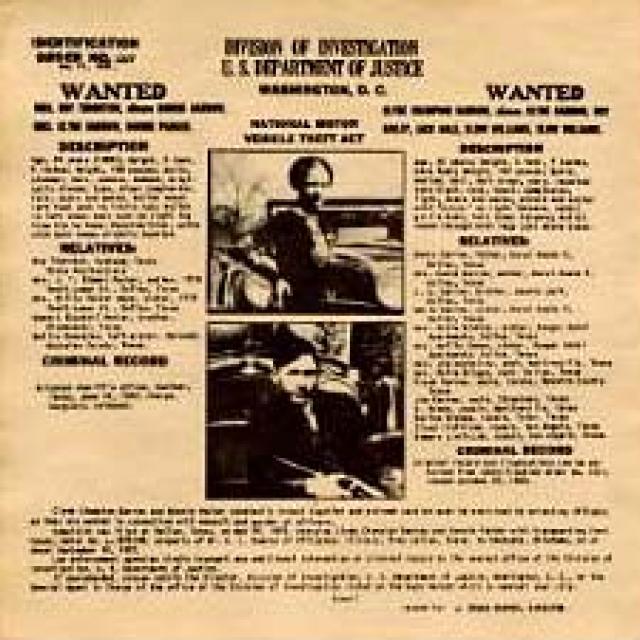
Bonni & Klaid Parker & Barrow
 USA
USABiography of Bonnie Parker and Clyde Barrow
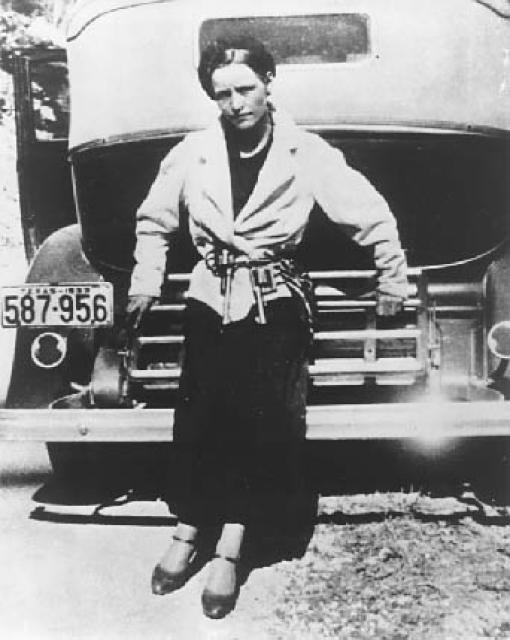
Early LifeBonnie Parker was born in 1910 in the small Texas town of Rowena. Her father, a bricklayer, passed away when she was four years old, and her mother moved with her and her two siblings to Cement City. Bonnie was a good student and had a rich imagination, as well as a flair for acting and improvisation. She was also a bit of a rebel. She completed primary school at the age of 14 and then attended secondary school, where she showed literary talent, but dropped out after two years. She yearned for a more exciting adult life and at 16, she married a man named Roy Thornton. Unfortunately, their marriage was unhappy, and her dreams of a sweet life were shattered. In 1927, Bonnie began working as a waitress in a café, but it closed down two years later due to the Great Depression.
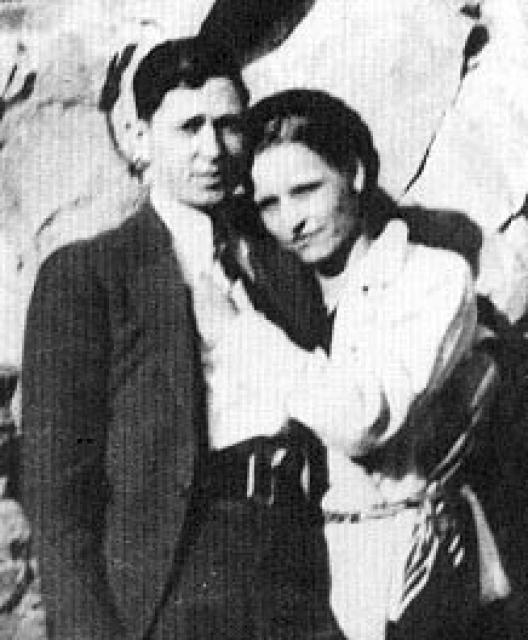
Clyde Chestnut Barrow was also from Texas. He was born in 1909 into a family of illiterate farmers and lived on a farm until the age of 13. He was rarely seen at school and preferred to play with toy guns, wander around the county, and envy the wealthy citizens' cars. In 1922, Clyde's family went bankrupt, and his father moved to West Dallas, where he worked at a gas station. Clyde was forced to regularly attend school. However, like Bonnie, he dropped out at the age of 16 and started working. Another similarity to Bonnie was Clyde's love for elegant dressing. He worked diligently but never stayed at one job for long. In 1926, he was suspected of stealing a car, but the police couldn't prove anything. Meanwhile, Clyde and his younger brother, Buck, joined a teenage gang called the "Rustlers," who stripped cars. In late 1929, a fateful meeting occurred. Clyde was instantly smitten with a petite, red-haired girl named Bonnie. Love. A love that was immense, romantic, and all-consuming. And if you love someone, how can you not share their views? When Clyde was arrested for an armed robbery, Bonnie helped him escape from prison by smuggling in a weapon during their visitation. A week later, the police caught Clyde again, and he was sentenced to 14 years in prison. In protest, Clyde cut off two toes, but it didn't help. Instead, he became an exemplary prisoner and earned parole in 1932. Once out, Clyde continued with petty thefts and robberies. However, the loot was meager, and Bonnie was dissatisfied. She advocated for more significant actions. So Bonnie introduced Clyde to her former lover, Raymond Hamilton. On April 27, 1932, they embarked on a joint venture - robbing a music store. However, when the owner refused to open the cash register and resisted, Clyde shot and killed him. It was Clyde's first murder. They only managed to get away with $40. But now, Clyde had nothing to fear as he had already earned the death penalty if caught. Five months later, while Clyde and Hamilton were drinking whiskey in a dance hall in Atoka, Oklahoma, the local sheriff and his deputy demanded they put away the bottle. Instead of complying, they fired bullets at them. The deputy died, and the sheriff was wounded. Afterward, Bonnie told the boys that it was time to stop playing with toys and start doing real crimes. They began stealing cars, robbing banks, gas stations, and stores. However, the trio's partnership didn't last long. Soon after, Hamilton was arrested and sentenced to 264 years in prison. "After Hamilton's arrest, Bonnie learned to shoot," writes the biographer of the criminal couple, John Shevi. "She developed a real passion for firearms. Their car turned into an excellent arsenal: several automatic rifles, shotguns, dozens of revolvers and pistols, and thousands of rounds of ammunition. With Bonnie's help, Clyde mastered the art of quickly pulling a rifle from a specially stitched pocket along his leg. This kind of skill amused them both. They developed their own elegant style of killing. Bonnie was particularly drawn to the romantic and heroic side of their actions. She understood that she had chosen death, but it was more enjoyable for her than the boredom she had experienced before. The monotony of their surroundings was over forever. She would be famous in her own way. At least, people would talk about her." From then on, Bonnie and Clyde committed murders with extraordinary ease. With the addition of a new member to their gang, 17-year-old William Jones, they stole a car and shot the owner at point-blank range when he tried to stop them. Clyde's next victim was Sheriff Malcolm Davis of Fort Wood, who wanted to check their car's documents. Clyde cut him in half with a burst of gunfire from his rifle. This was his principle - to shoot without hesitation at the slightest sense of danger.
Later Crimes and Capture
In 1933, Clyde's brother Buck was released from prison and joined the gang. Their method of operation was typically the same - Bonnie would sit in the car with the engine running while the guys would enter the bank and shout, "This is a robbery!" In most cases, they didn't even have to use their weapons. Sometimes the police were nearby, but the gang always had more powerful and reliable cars than the police. There is no need to go into detail about all of the gang's numerous exploits or Bonnie and Clyde's incredible luck in escaping seemingly hopeless situations. Once, when the police almost caught them, they found an unfinished poem titled "Dirty Murder" in their temporary hideout. It was written by Bonnie. Another hobby of hers was photography. During the endless shootouts and chases, Buck Barrow was killed, and Jones, unable to handle the pressure, deserted and surrendered to the police. In January 1934, Clyde made a daring attack on the prison farm where Hamilton worked, and after a shootout with guards, he freed Hamilton and a few other inmates. Among them was a shy farm boy named Henry Methvin, who, along with Hamilton, joined the gang. However, after a disagreement during the division of their loot, Hamilton left the gang. At the end of February, Clyde killed two police officers, and in April, he killed one more. Thus, the total number of his victims approached fifteen. Around the same time, Hamilton was arrested in Texas, and in order to avoid the death penalty, he blamed all the crimes on Bonnie and Clyde. Upon learning this from the newspapers, Clyde wrote a mocking letter to the judge, fully corroborating Hamilton's testimony. Bonnie, by the way, periodically sent letters to the newspapers, including poems she had written. In May of the same year, after many failures, Sheriff Frank Hamer, who had sworn to find and neutralize Bonnie and Clyde, managed to set up an ambush on a country road. He used old farmer Methvin, Henry's father, as bait, promising him leniency regarding his son's involvement. On May 22, 1934, Clyde and Bonnie's Ford was riddled with bullets by six policemen lying in wait. 167 bullets pierced the car, 50 of which hit the outlaws.
Frank Hamer, who led the ambush, told journalists, "It's a shame I killed the girl. But the way it was: it was either us or them."
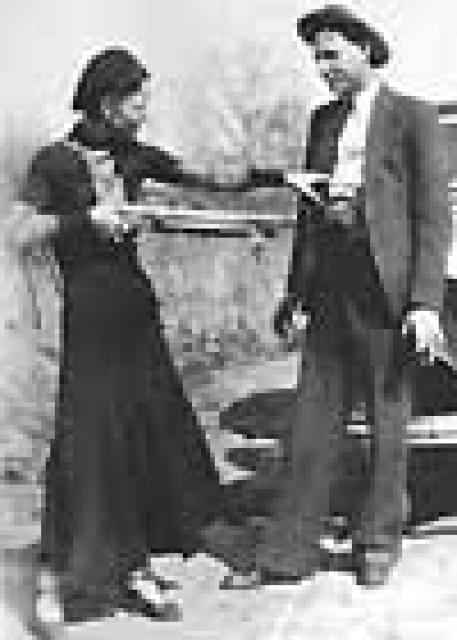
Among Bonnie Parker's "creative legacy" was a poem called "The Story of Bonnie and Clyde," which ended with the following lines:
And if someday
death must find us,
Let us lie, oh, so calm,
in each other's embrace.
And the world will see,
we're together,
As we lie side by side,
forever in peace.