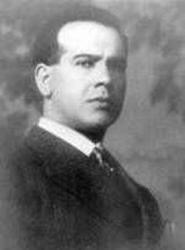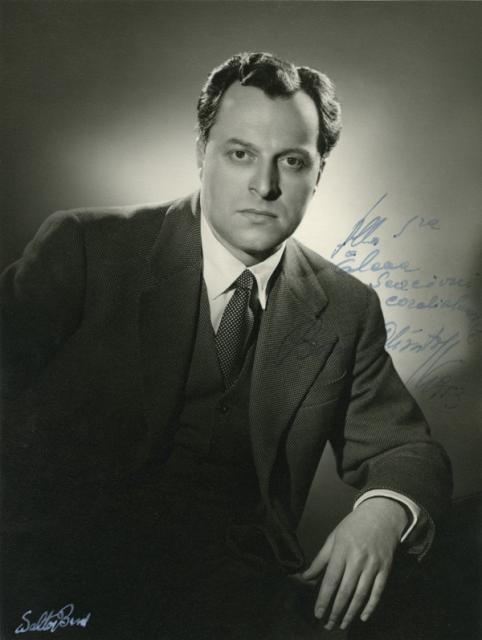
Boris Christoff
 Bulgaria
Boris Hristov - Biography
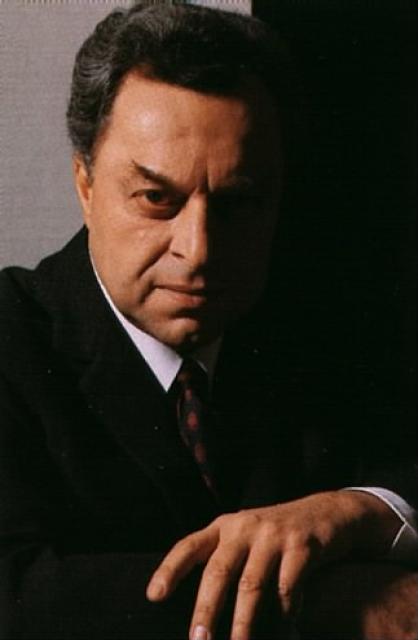
Boris Hristov was a Bulgarian opera singer, renowned for his powerful bass voice and exceptional talent. He was born on May 18, 1914, in Plovdiv, shortly before the outbreak of World War I. At a young age, Hristov demonstrated his vocal abilities and sang in the choir of the Alexander Nevsky Cathedral in Sofia.
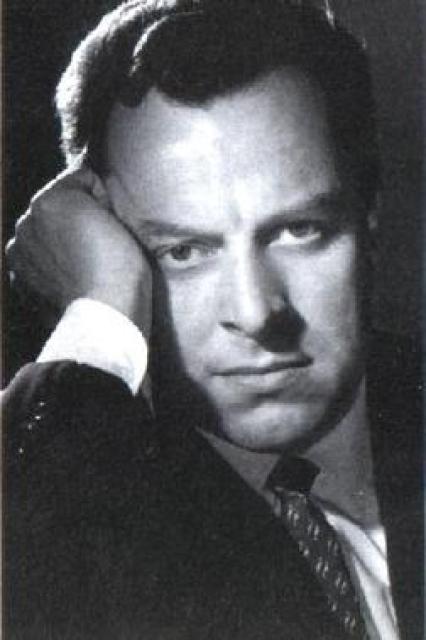
Although Hristov initially pursued a career in law, graduating from law school in the late 1930s and opening his own legal practice, he continued to sing in the Gusla Chorus in Sofia during his free time. In 1940, he achieved tremendous success as a soloist in the choir, which marked a significant turning point in his musical journey.
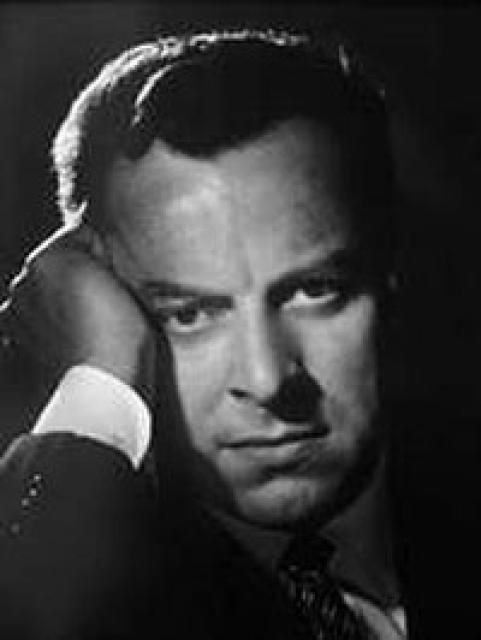
In May 1942, Hristov was awarded a state scholarship that allowed him to travel to Italy, where he studied the classical Italian bass repertoire under the guidance of Riccardo Stracciari, one of the greatest baritones of his time. However, his time in Italy was cut short when he was forced to return to Bulgaria in 1943. Undeterred, Hristov planned to go to Salzburg, Austria, in 1944 to study the German operatic repertoire. Unfortunately, his plans were disrupted when he was interned in a camp for displaced persons in Austria. Even in difficult circumstances, he organized a choir with his fellow internees.

In December 1945, Hristov was finally able to return to Italy and resume his studies with Stracciari. His professional operatic debut took place on March 12, 1946, when he performed the role of Colline in "La bohème" in Reggio Calabria. From then on, he received invitations to perform at prestigious venues such as La Scala in Milan, La Fenice in Venice, the Rome Opera, Covent Garden in London, and opera houses in Naples, Barcelona, Lisbon, and Rio de Janeiro, among others.
In 1950, Hristov was invited to sing at the Metropolitan Opera in New York, but he was denied entry to the United States based on immigration laws that prohibited citizens of countries within the Soviet bloc from entering the country. As a result, the role went to a young Italian bass named Cesare Siepi. Hristov eventually made his debut on the American opera stage in 1956, after the strictness of immigration laws had subsided. He performed at the San Francisco Opera but declined further invitations from the Metropolitan Opera and never appeared there.
In 1964, Hristov underwent brain surgery for a tumor, which temporarily interrupted his singing career. However, he resumed his performances the following year. In 1967, his mother passed away, and the socialist authorities in Bulgaria allowed him to return to his homeland for the first time since 1945 to attend her funeral. He concluded his career with a final concert at the Bulgarian Academy in Rome on June 22, 1986.
Boris Hristov left behind a legacy of numerous recordings, which are still available today in excellent quality. Although contemporaries often described him as a difficult person with an unpleasant temperament, his colleagues openly accused him of being demanding. After a high-profile scandal, for example, Hristov never performed on the same stage as Maria Callas, who also had a strong personality. Italian baritone Tito Gobbi was one of his closest friends and later became his relative when Hristov and Gobbi married sisters.
Hristov possessed a magnificent vocal range and a memorable timbre. Although he did not have an exceptionally powerful voice, he had no trouble filling even the most spacious auditoriums, such as the San Francisco Opera. With his remarkable dramatic talent and vibrant temperament, Hristov proved himself as a worthy successor to the great traditions of Russian basses, including Fyodor Stravinsky, Lev Sibiriakov, Vladimir Kastorsky, and Feodor Chaliapin. He excelled in Verdi's bass roles and was an outstanding interpreter of Russian bass repertoire, as well as a remarkable performer of chamber vocal works. Some of his most notable roles included Tsar Boris in "Boris Godunov," Philip II in "Don Carlo," Mephistopheles in operas by Gounod and Boito, Ivan Susanin in Glinka's "A Life for the Tsar," Zaccaria in "Nabucco," Ivan the Terrible in Rimsky-Korsakov's opera of the same name, Dosifei in "Khovanshchina," Gomez da Silva in "Ernani," Fiesco in "Simon Boccanegra," Attila in Verdi's opera of the same name, and Padre Guardiano in "La forza del destino," among others.
Boris Hristov passed away on June 28, 1993. His body was brought back to Bulgaria and buried in the Alexander Nevsky Cathedral in Sofia. Today, he is remembered as a legendary artist who left an indelible mark on the world of opera.