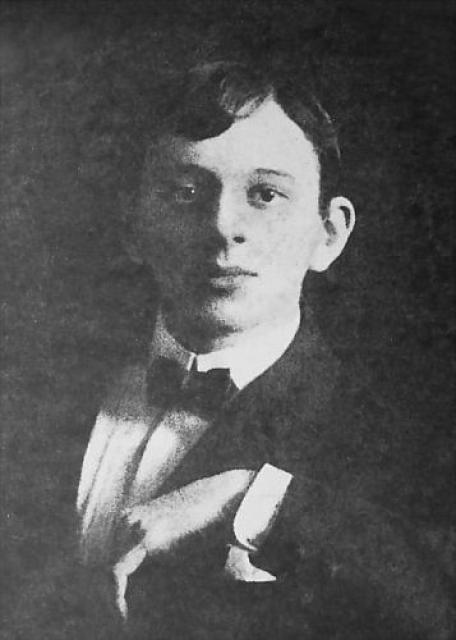
Boris Fomin
- Boris Ivanovich Fomin: A Musical Legacy
- Formative Years and World War I
- The Golden Age of Romance
- Competing Genres and Censorship
- Repression and Wartime Resurgence
- Post-War Decline and Legacy
Boris Ivanovich Fomin: A Musical Legacy
Early Life and Musical EducationBoris Ivanovich Fomin was born on March 8, 1900, into a distinguished family in St. Petersburg. His musical talent manifested early, and at the age of four or five, he could play the accordion with remarkable proficiency. Despite his father's aspirations to see him pursue a more traditional career, Fomin's love for music prevailed. He took music lessons from prominent teachers, including the renowned pianist Anna Yesipova, who became his primary musical mentor.
Formative Years and World War I
While attending high school, Fomin also excelled in music. His compositions and improvisations displayed a spontaneity and brilliance that impressed his teachers. However, his promising career was disrupted by the outbreak of World War I. At the age of 14, he enlisted as a volunteer on the front lines. Initially, he was assigned to repair and maintain railway lines, but his musical skills quickly earned him a role as a frontline entertainer.
The Golden Age of Romance
Upon returning to Moscow after the war, Fomin found himself at the forefront of a burgeoning revival of the traditional Russian romance. He composed a string of enduring hits, including "Tol'ko raz byvaet v zhizni vstrecha," dedicated to his future mother-in-law. His romances, characterized by their lyrical and heartfelt melodies, became immensely popular and were performed by renowned artists both in Russia and abroad.
Competing Genres and Censorship
Despite his success as a romance composer, Fomin also explored other musical forms. He wrote operettas, including the popular "Kar'era Pirpointha Bleka," and even worked as a theater accompanist and a member of a gypsy choir. However, the rise of other musical genres and the strict censorship of the Stalinist regime had a detrimental impact on the popularity of the romance genre.
Repression and Wartime Resurgence
In the 1930s, Fomin's work fell out of favor with the Soviet authorities, who deemed it to be frivolous and counter-revolutionary. He was arrested in 1937 and spent a year in prison under absurd charges. Despite the hardships he endured, Fomin continued to compose romances, though many of them remained unpublished and lost. With the onset of World War II, Fomin's music experienced a resurgence. He wrote numerous patriotic songs and established the "Yastrebok" frontline theater, which became a beacon of hope in war-torn Moscow.
Post-War Decline and Legacy
After the war, Fomin's reputation waned once more. His role in the revival of the romance genre was largely forgotten, and he was overshadowed by the return of composers from Soviet evacuation. His health declined, and he passed away in 1948 due to lack of access to medical care.
Despite the temporary eclipse of his music, Boris Ivanovich Fomin remains one of the most enduring figures in Russian music. His romances continue to be performed and cherished by generations of listeners, a testament to the enduring power of his lyrical genius.