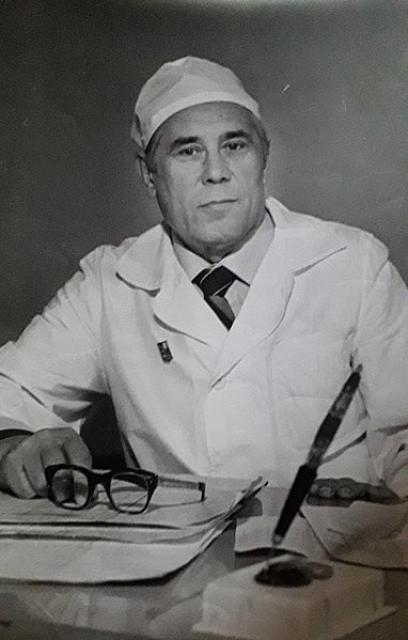
Boris Paradnya
 Belarus
- Boris Semyonovich Paradnya: A Distinguished Ophthalmologist
- Medical Career
- Founding the Ophthalmology Department in Yalta
- Advanced Ophthalmology in Yalta
- Surgical Innovations and the "Erizo-Vac"
- Recognition and Legacy
- Family and Personal Life
Boris Semyonovich Paradnya: A Distinguished Ophthalmologist
Early Life and EducationBoris Semyonovich Paradnya was a renowned Soviet ophthalmologist and microsurgeon. Born in Gomel, Belarus, Paradnya's early education took him to the Gomel Machine-Building Technical College. However, his academic journey was interrupted by World War II. He enlisted in the anti-aircraft forces in 1943, where he served as an officer until the war's end.
Medical Career
After the war, Paradnya pursued his passion for medicine at the Minsk Medical Institute. Upon graduating, he practiced at the Grodno Regional Clinical Hospital and simultaneously led the city's Sanitary Aviation Department.
Founding the Ophthalmology Department in Yalta
In 1963, Paradnya moved to Crimea. The following year, he established the specialized ophthalmology department at the Yalta City Hospital. For the next 25 years, until his untimely death in 1989, he served as its chief.
Advanced Ophthalmology in Yalta
Under Paradnya's guidance, the department provided comprehensive ophthalmological care to residents of Yalta, Alushta, and tourists visiting Crimea's курорты (resorts). It adopted innovative techniques in examination, diagnosis, and treatment, performing a wide range of surgical procedures. The department also collaborated in establishing glaucoma and strabismus clinics at local polyclinics and eyewear selection centers at Optics stores.
Surgical Innovations and the "Erizo-Vac"
Beyond his clinical practice, Paradnya was a dedicated researcher and inventor. He developed several modifications to surgical techniques, including an original method for cataract removal using a specialized instrument called the "Erizo-Vac." This device, patented in 1979, enabled vacuum-assisted cataract surgery, preserving the patient's round pupil. It provided greater precision and improved visual outcomes.
Recognition and Legacy
Paradnya's exceptional skills and dedication earned him the admiration of numerous patients. Newspapers carried expressions of gratitude for the restoration of their vision. He maintained a detailed record of his complex cases, carefully tracking their progress to refine his treatment methods.
Family and Personal Life
Paradnya's mother was Anastasiya Petrovna Pykhanova, and his father was Semyon Grigoryevich Paradnya. He married Elena Trofimovna Tikhonova, an otolaryngologist, in 1930. Their daughter, Tamara Borisovna Paradnya, was born in 1956. A man of wide interests and knowledge, Paradnya left behind a valuable library and a collection of art. He enjoyed close friendships with renowned writers and artists, including Mikhail Sholokhov and Viktor Petrenko.