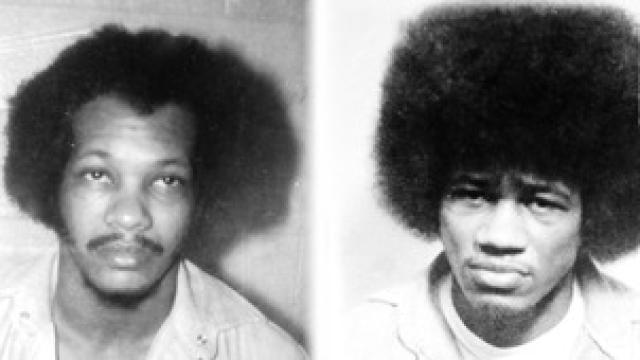
Briley Brothers
 USA
The Briley brothers—Linwood, James and Anthony—became central figures in a 1979 crime spree that left 11 people dead in and around Richmond, Virginia. The cases brought their victims’ families into public view, produced two death sentences and culminated in a dramatic escape from death row. The brothers’ paths then diverged: Linwood and James were executed, while Anthony remains imprisoned.
Background
The brothers grew up in Richmond, where they lived with their parents and siblings. Linwood was the eldest of the three, followed by James and Anthony. Public accounts of the later crimes focused less on their childhood than on the sudden violence that erupted in 1979, when the brothers and accomplice Duncan Meekins were linked to a series of robberies, sexual assaults and murders across the city.
The 1979 crimes
The victims came from different parts of the community. They included Michael McDuffie, killed during a robbery; Mary Gowen, a 76-year-old woman attacked as she returned home; and local radio personality Johnny “Johnny G” Gallaher. In another case, James Briley was convicted of murdering Judith Barton and her five-year-old son, Harvey. Prosecutors linked the four men to 11 murders in the Richmond area.
The crimes were tried across multiple cases, and each brother’s legal record differed. Linwood received a death sentence for Gallaher’s murder. James was sentenced to death for the murders of Judith and Harvey Barton, and was also convicted in other killings. Anthony received life sentences for his role in several murders. The cases drew national attention because of the number and range of victims, as well as the involvement of three brothers in the same group.
Escape from death row
On May 31, 1984, Linwood and James escaped from Virginia’s Mecklenburg Correctional Center along with four other condemned inmates. Their escape became one of the most widely reported death-row breakouts in the United States. The brothers were recaptured in Philadelphia after 19 days and returned to Virginia. Anthony, who was held at a different prison, was not part of the escape.
The episode added another chapter to a story already marked by trauma for the victims’ families and fear among Richmond residents. The escape also prompted scrutiny of security at Mecklenburg, a high-security prison designed to hold condemned inmates.
Executions and imprisonment
Linwood Briley was executed in Virginia on October 12, 1984, for Gallaher’s murder. James Briley was executed on April 18, 1985, for the murders of Judith and Harvey Barton. Their executions were surrounded by public debate over capital punishment, with demonstrators both opposing the death penalty and supporting the sentences.
Anthony Briley received life sentences rather than a death sentence. He remains in Virginia custody; the state parole board denied his release in 2024. His ongoing imprisonment marks the starkly different outcome for the youngest brother, who was convicted for his part in the crimes but was not executed.
Legacy
The Briley brothers’ case is remembered as a major chapter in Richmond’s history of violent crime and in Virginia’s use of capital punishment. The 11 people killed were not merely part of a statistic: they included parents, workers, neighbors and a familiar local broadcaster. The escape, trials and executions kept the case in the national news, but its lasting cost belongs above all to the people whose lives were taken and the families left to grieve them.


