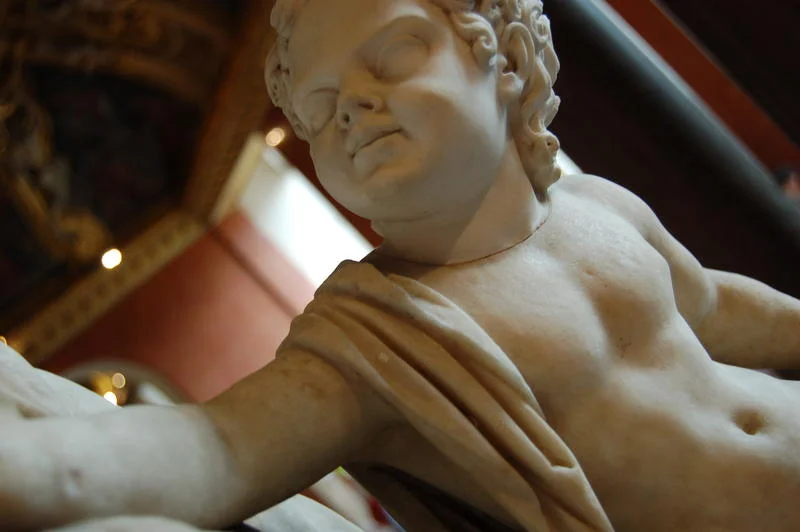
Britannicus
A prince born into the imperial family
Britannicus was born in Rome on 12 February 41, the son of Claudius and his third wife, Valeria Messalina. His birth came only weeks after Claudius became emperor. He was initially named Tiberius Claudius Germanicus; after Claudius’s conquest of Britain in 43, the Senate awarded the emperor the title “Britannicus,” and the name became associated with his son.
As the emperor’s only son at the time, Britannicus was presented as a possible heir, though succession to the Roman throne was never simply automatic. Claudius’s family life and political alliances soon changed the balance. In 48, Messalina was executed after a court scandal. The following year Claudius married Agrippina the Younger, who brought her son Lucius Domitius Ahenobarbus into the imperial household.
A rival heir to Nero
In 50, Claudius adopted Agrippina’s son, who took the name Nero. Nero was older than Britannicus and had the backing of his mother, influential advisers, and the imperial court. He was given public honors and prepared for political life, while Britannicus remained a young prince whose birth made him a potential rival.
When Claudius died in 54, Nero became emperor. Britannicus was only thirteen, but his status as Claudius’s biological son continued to carry political meaning. The ancient historian Tacitus describes an incident at a feast of Saturnalia in which Nero asked Britannicus to sing for the assembled youths. Britannicus reportedly chose a song that hinted at his loss of his father’s house and power. Whether the scene is exact or shaped by later political storytelling, it captures the threat that Nero’s court may have seen in the boy’s presence.
Death at court
Britannicus died in 55, shortly before his fourteenth birthday. Tacitus, Suetonius, and Cassius Dio all associate his death with poisoning, and Tacitus gives the most detailed account. He says that a poisoner named Locusta prepared the substance and that it was delivered in a drink during a banquet, after a taster had sampled the first, harmless portion. Nero then explained the sudden death as an epileptic seizure and arranged for the body to be buried quickly.
These accounts were written after the events, and their details cannot be independently verified. Still, the consistency of the ancient tradition, together with the political circumstances, has made the conclusion that Britannicus was murdered by Nero a longstanding historical view. His death removed a direct dynastic rival and became one of the most notorious episodes of Nero’s early reign.
Legacy
Britannicus left no political or military record of his own; he died before reaching adulthood. His importance lies in what his life reveals about imperial succession under the Julio-Claudians. Adoption, birth, public honors, and court influence could all shape a claim to power, but none guaranteed safety. In Roman memory, Britannicus became the displaced natural heir whose sudden death exposed the danger at the heart of Nero’s court.