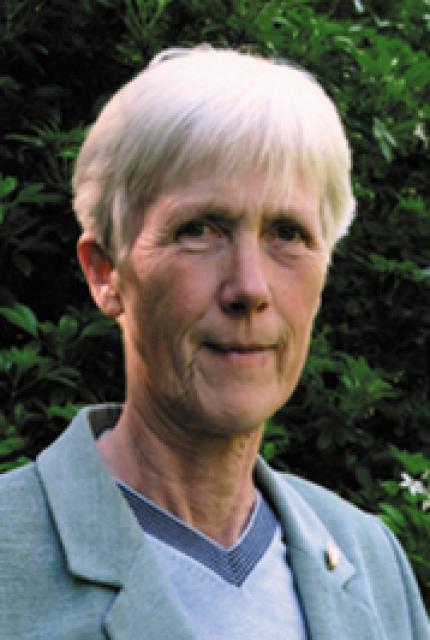
Bryony Coles
 Great Britain
- Education and Early Career
- The Somerset Levels and the Wetlands
- Naming Doggerland
- Beavers and Britain’s Past
- Personal Life and Recognition
Bryony Coles built a career around landscapes that had almost vanished. A British archaeologist and leading figure in wetland research, she helped reveal how prehistoric people lived among marshes, rivers and changing coastlines. Her work in the Somerset Levels brought fragile wooden trackways and tools into focus, while her later research helped give Doggerland—the lost land beneath the North Sea—its now familiar name.
Education and Early Career
Coles first studied history at the University of Bristol after completing A-levels in biology, French and history. Between 1965 and 1968 she volunteered on archaeological excavations, an experience that drew her toward prehistoric archaeology. She went on to complete a postgraduate diploma at the Institute of Archaeology in London and an MPhil in anthropology at University College London.
In 1972, she joined the University of Exeter as a lecturer in prehistoric archaeology. She became a reader in 1990 and professor in 1996, remaining in the post until 2008. She has since held emeritus status. Across those decades, her research repeatedly brought archaeology into conversation with environmental history, ecology and the study of landscape change.
The Somerset Levels and the Wetlands
One of Coles’s defining projects was the investigation of the Somerset Levels, a peatland landscape where waterlogged conditions preserved organic materials that usually decay. Working with archaeologist John Coles, she helped lead research in areas threatened by peat extraction. The discoveries showed that wetlands were not marginal backwaters: prehistoric communities built routes across them, worked wood and made practical use of a demanding environment.
The most celebrated find was the Sweet Track, a timber walkway constructed in the Neolithic period. Its preserved timbers offered an unusually vivid record of woodworking and movement through the landscape. The project’s results appeared in a series of Somerset Levels Papers and in the book “Sweet Track to Glastonbury: The Somerset Levels in Prehistory,” which Bryony and John Coles co-authored.
The work also helped establish wetland archaeology as a field with international reach. From 1986, Coles co-coordinated the Wetland Archaeology Research Project, known as WARP, bringing researchers together to share methods and findings. She also worked with English Heritage on approaches to managing wetland heritage in Britain and elsewhere in Europe, where drainage, development and resource extraction placed archaeological deposits at risk.
Naming Doggerland
In the late 1990s, Coles turned attention to the broad prehistoric plain now submerged beneath the southern North Sea. Her 1998 paper, “Doggerland: a speculative survey,” brought together evidence for a landscape that once linked Britain with continental Europe. The term Doggerland, inspired by the nearby Dogger Bank, gave researchers and the public a memorable name for this lost region.
Doggerland was not a single unchanging land bridge. Over millennia, rising seas reshaped its coastlines and river systems, gradually transforming inhabited terrain into seabed. Coles’s survey helped make the submerged landscape a serious subject of archaeological study and encouraged researchers to reconstruct its environments and human occupation from scattered geological and archaeological evidence.
Beavers and Britain’s Past
Coles’s curiosity about the relationship between people and their environments also led her to the history of beavers. With John Coles, she pursued research combining archaeological evidence with archival records, fieldwork, ecology and environmental history. The project included visits to places such as Canada, Poland and France, where observations of beavers and their lodges could inform comparisons with archaeological material.
The research culminated in “Beavers in Britain’s Past,” published in 2006. It explored the animal’s place in Britain’s changing landscapes and the traces it left in the archaeological record, including worked wood that could otherwise be mistaken for human craftsmanship. The project exemplified Coles’s wider method: treating artifacts, animals and landscapes as parts of the same story.
Personal Life and Recognition
Coles and John Coles were long-time research collaborators as well as partners in their personal life. They married in 1985, and their shared work shaped several influential studies of prehistoric Britain. Their partnership connected detailed excavation with broad questions about how people adapted to environmental change.
In 2007, Bryony Coles was elected a Fellow of the British Academy in recognition of her contribution to prehistoric archaeology. Her career helped rescue wetland archaeology from the fringes of the discipline, demonstrating that peatlands and drowned landscapes can preserve evidence unavailable at conventional sites. Through the Somerset Levels, Doggerland and her work on beavers, she has shown how seemingly remote environmental clues can transform the story of human life in the past.




