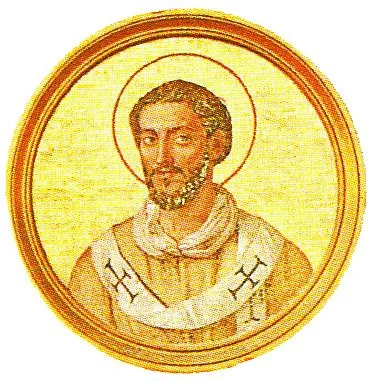
Caius
Caius, also known as Gaius, served as bishop of Rome from 283 to 296, during a period of relative calm for Christians before the Great Persecution under Diocletian. Very little is known about his personal life or policies. Early church records preserve his name and burial in Rome, while later legends linked him to the emperor Diocletian and to the martyr Susanna. Those stories are not considered reliable historical evidence.
Bishop of Rome
The dates traditionally given for Caius’s leadership are December 283 to April 296. He served the Roman Christian community at a time when the empire was ruled by Carus, Carinus, Numerian, and then Diocletian. Although later accounts place his death within a persecution, the earliest records do not identify him as a martyr, and the severe empire-wide persecution associated with Diocletian began only in 303.
The sources reveal little about the administration of the Roman church during Caius’s tenure. The surviving record is stronger on his memorial than on his actions: an early calendar of Roman bishops records his burial in the Catacomb of Callixtus on the Appian Way. The burial place indicates his connection to one of the major Christian cemeteries of the city.
Legends and veneration
Later accounts describe Caius as a Dalmatian and a relative of Diocletian. A legendary narrative associated him with Susanna, presenting her as his niece and connecting him to her martyrdom. Historians treat these details cautiously, since they appear in later hagiographic traditions rather than in contemporary documentation.
Caius was nevertheless honored as a saint in Christian tradition, with a feast day on April 22. Some accounts call him a martyr or say that he died after enduring persecution, while other early evidence supports the view that he died as a confessor of the faith rather than through execution. The distinction remains important when separating later devotional memory from what can be established historically.
Legacy
Caius’s place in the succession of early bishops of Rome is more secure than the stories told about his family and death. His episcopate fell between earlier waves of imperial repression and the later persecution that would test the church across the Roman Empire. Through the surviving burial record and his continued commemoration, his name has remained part of the church’s early history, even though the details of his life are largely lost.