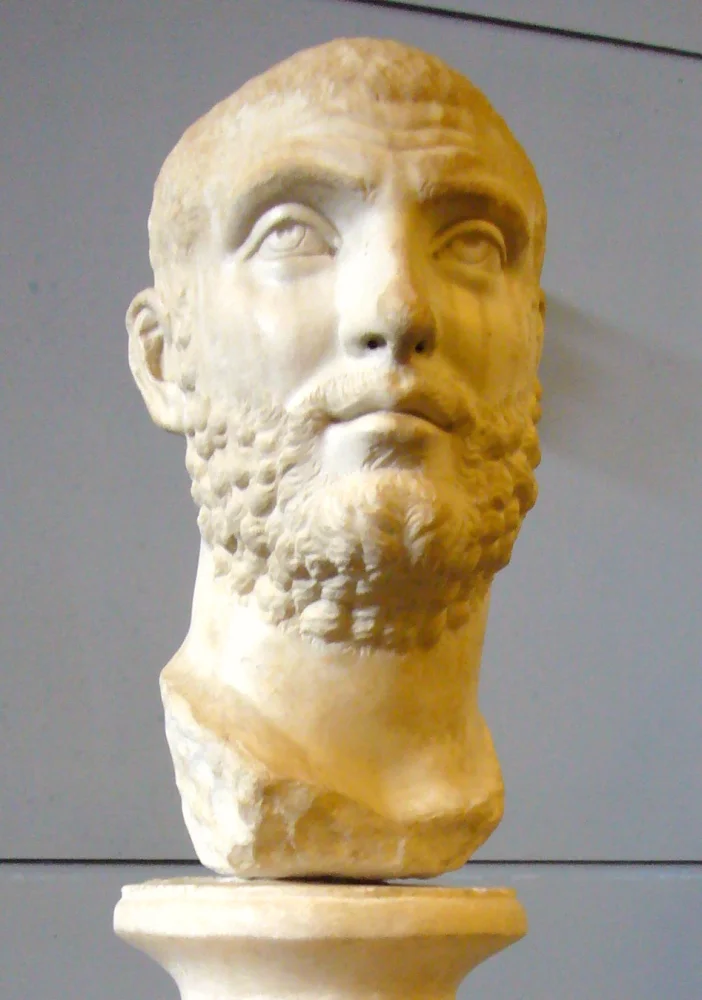
Carinus
- An Heir in a Military Empire
- Rivalry with Diocletian
- Reputation and the Limits of the Record
- A Brief Reign at a Turning Point
Carinus ruled the Roman Empire during a turbulent transition in the third century, when military commanders and armies could make or unmake emperors. The eldest son of Emperor Carus, he governed the western provinces before confronting Diocletian in a civil war that ended with his death in 285. Later writers painted him as a cruel and dissolute ruler, but historians caution that these accounts were shaped by the victorious regime and cannot be accepted at face value.
An Heir in a Military Empire
Carinus was born around the middle of the third century, the elder son of Carus. The details of his early life are largely unknown. His father came to power in 282, and Carinus and his younger brother Numerian were elevated as Caesars, junior emperors who could help govern the vast empire and secure the succession.
Carus soon departed east on a campaign against the Sasanian Persian Empire, leaving Carinus in charge of the western territories. These included Italy, Gaul, and the Danubian provinces. In 283, Carinus was raised to the rank of Augustus, the title of a full emperor. His responsibilities demanded attention to frontier security and the loyalty of regional armies, a constant challenge in an era of rapid political change.
Carus died during the Persian campaign in 283. The circumstances were uncertain even in ancient accounts, which variously blamed illness, lightning, or political intrigue. Numerian remained with the eastern army, while Carinus held authority in the West. When Numerian died the following year during the return march, his death triggered another contest over imperial power.
Rivalry with Diocletian
In 284, eastern troops proclaimed Diocletian emperor. Diocletian accused the praetorian prefect Aper of murdering Numerian and executed him, presenting himself as the avenger of the dead prince. Carinus rejected the rival claim and marched east to defend his position.
Before the decisive encounter, Carinus defeated another challenger, the usurper Julianus, in northern Italy. He then met Diocletian’s forces near the River Margus in Moesia, in 285. The battle was part of a struggle over control of the empire, not simply a personal rivalry: each ruler depended on armies whose commanders and soldiers could change sides as the outcome became clear.
Carinus was killed during or just after the battle. Ancient accounts differ on the precise circumstances. Some say he was murdered by one of his own officers, while other narratives imply that his army’s defection decided the contest. Diocletian emerged as the undisputed ruler and began the next phase of imperial reorganization.
Reputation and the Limits of the Record
The most dramatic stories about Carinus come from hostile literary sources. They describe him as sexually immoral, violent, and given to punishing political rivals. One late account claims he went through a succession of wives. Such tales fit a familiar Roman pattern in which a ruler’s defeat was followed by a moral portrait that justified his removal.
The evidence does not allow historians to reconstruct his personality with confidence. Coins, inscriptions, and the broad sequence of military events provide firmer ground than anecdotes written after his downfall. Carinus governed during intense instability, and his struggle with Diocletian was shaped by competing armies and the unsettled rules of succession.
A Brief Reign at a Turning Point
Carinus’s defeat brought the empire under Diocletian, whose later reforms divided responsibilities among multiple rulers and transformed imperial administration. The new system developed in response to problems that had long troubled Rome, including civil wars, frontier pressure, and the difficulty of governing a huge territory from a single court.
Carinus left little certain personal legacy. His short career nevertheless marks a hinge between the crisis-ridden third century and Diocletian’s more structured imperial order. The gap between the military realities of his reign and the hostile legends told about him is itself a reminder of how much the history of Roman emperors was written by their successors.



