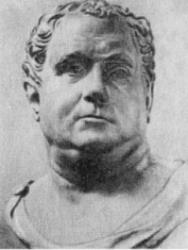
Carl
 Italy
Italy- Charles IV: Emperor of the Holy Roman Empire
- Early Life and Education
- Ascent to the Throne
- Consolidation of Power
- Golden Bull of 1356
- Land Peace Alliances
- Imperial Expeditions
- Patron of Prague
- Successors
Charles IV: Emperor of the Holy Roman Empire
Charles IV, born in Prague in 1316, ascended to the throne of the Holy Roman Empire in 1346 after the death of Louis the Bavarian. As emperor, he played a pivotal role in shaping the empire's political landscape through the establishment of land peace alliances.
Early Life and Education
Charles IV's father, John of Bohemia, was a member of the Luxembourg dynasty. At a young age, Charles spent time in Paris, where he received an education that developed his literary abilities and administrative skills. He later assumed control of his father's territories in Upper Italy in 1331.
Ascent to the Throne
In 1346, with the assistance of Pope Clement VI, Charles IV was elected king of the Romans by five electors. However, his reign was initially contested by rivals from the Wittelsbach family and others. Despite these challenges, Charles IV managed to secure his position and was crowned emperor in 1349.
Consolidation of Power
Through a marriage alliance with Anna of Palatinate and other diplomatic maneuvers, Charles IV gradually pacified the Wittelsbachs. He also acquired additional territories, including Upper Palatinate, Silesia, and Brandenburg. Additionally, he invested in his Czech homeland, granting privileges to the nobility and promoting economic growth.
Golden Bull of 1356
One of Charles IV's most significant achievements was the issuance of the Golden Bull in 1356. This decree codified the electoral process, ensuring the supremacy of the electors and granting them extensive territorial rights. It also established a standardized procedure for imperial elections, reducing papal influence.
Land Peace Alliances
Recognizing the need for peace and order within the empire, Charles IV initiated numerous land peace alliances. These agreements aimed to limit inter-city conflicts, improve public safety, and promote economic prosperity.
Imperial Expeditions
Charles IV embarked on two expeditions to Italy. In 1354, he was crowned king in Milan and emperor in Rome. Later, he intervened in the conflict between the pope and the Visconti family of Milan.
Patron of Prague
Beyond his imperial responsibilities, Charles IV was an avid patron of the arts and sciences. He founded the Archbishop of Prague and established the first German university in Prague in 1348. He also ordered the construction of Charles Bridge, the Old Town Hall, and the New City of Prague.
Successors
Following his death in 1378, Charles IV left an extensive legacy to his sons. He bequeathed Bohemia, Silesia, and the imperial crown to Wenceslas IV. Brandenburg was inherited by Sigismund of Luxemburg, and the Lusatian territories went to John of Gorlitz.