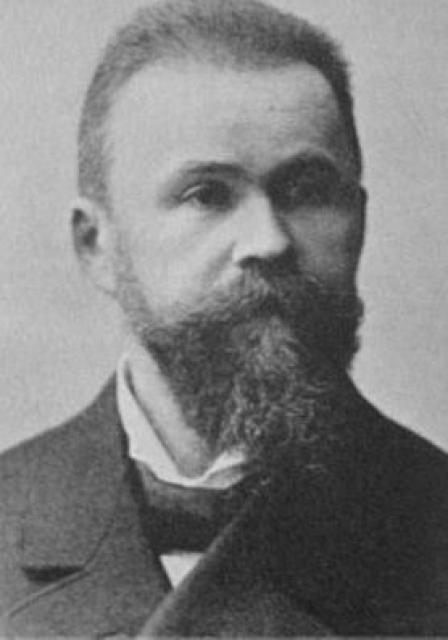
Carl Wernicke
 Germany
Biography of Karl Wernicke
Karl Wernicke was a German psycho-neuropathologist and the founder of the psychomorphological approach in psychiatry. He was born in the small town of Tarnowitz, which is now known as Tarnowskie Gory, Poland. He grew up in a modest environment, and after the death of his father, the family's financial situation worsened. Wernicke received his secondary education at the Royal Gymnasium in Oppeln and St. Mary Magdalene Gymnasium in Breslau.
Despite his mother's initial desire for him to become a minister, Wernicke pursued medical education at the University of Breslau. He faced many challenges along the way, including the death of his mother just before his final exams. Wernicke began his career in psychiatry at the Allerheiligen Hospital in Breslau under the guidance of G. Neumann. He completed his medical education in 1870 and worked as an assistant in the ophthalmology department for six months.
During the Franco-Prussian War, Wernicke served as an assistant to surgeon Fischer. He then underwent specialized training in psychiatry under the guidance of Neumann. Wernicke had the opportunity to spend six months in Vienna with T. G. Meynert, a renowned neuropathologist who later greatly influenced S. Freud. Meynert's impact on Wernicke was evident by the fact that he mentioned him in his lectures, and only Meynert's portrait hung on the wall of his clinic.
In 1872, under Meynert's guidance, Wernicke made his first discovery. He described a groove that is present in some individuals within the temporal and occipital lobes. This discovery marked the beginning of his medical career.
Wernicke became a specialist in psychiatry and a lecturer at the University of Breslau in 1875. He later held positions in Berlin and became the director of the psychiatric clinic at Allerheiligen Hospital. In 1885, he became an adjunct professor of neurology and psychiatry in Breslau. Wernicke's career flourished during this period, and his clinic became a center for neuropsychological research.
In 1894, due to conflicts with the city and university authorities, Wernicke left Breslau and became the head of the Department of Mental and Nervous Diseases in Halle. He intensified his research and focused on studying brain tumor localization using punctures. Upon his death, Wernicke discovered brain lesions in the posterior temporal and occipital regions of the left hemisphere of a patient, concluding that this area, which is close to the auditory area, is involved in speech comprehension.
Wernicke's most significant contribution came at the age of 26 when he published his work titled "The Symptom Complex of Aphasia" in 1874. In this work, he first described sensory aphasia, or what he called "conduction aphasia," localized in the temporal lobes. Wernicke also described agraphia and alexia. He later discovered that damage to the arcuate fibers connecting Broca's and Wernicke's areas also leads to motor and sensory aphasia.
Wernicke's classification of aphasia, known as the Wernicke-Lichtheim model, is still popular today. He also emphasized the dominance of one hemisphere of the brain in its functioning. His work provided the first pathological substrate for a psychiatric disorder.
Wernicke's classification of psychiatric disorders was based on his belief that they were caused by disturbances in the associative system of the brain. He sought to identify the "elementary psychiatric symptom" from which all pathology originated. His classification greatly influenced future German psychiatrists and neurologists.
Wernicke was a reserved individual, but his clinical examinations and demonstrations were highly regarded and inspired his students to further explore neurological and psychiatric issues. His unexpected death in 1905, just as his career was taking off, was a great loss to the field. Many of his works continued to be published and remained relevant long after his death.


